Few haircut names have moved from social media trend to salon staple as quickly as the wolf cut. What started as a TikTok-driven style has become one of the most consistently requested cuts across both of our locations, and the reason is practical: it delivers volume, movement, and texture in a package that works across a wide range of hair types and face shapes.
Despite its popularity, it is also one of the most commonly misunderstood cuts. Clients come in having seen it on Instagram without a clear sense of what the cut actually involves or whether it will behave the same way on their specific hair. This guide addresses that directly.
Below, the team at David Ryan Salon at our Flower Mound and Trophy Club locations breaks down what the wolf cut is, how it is executed, who it works best for, and what to expect from the appointment and the upkeep.
What the Wolf Cut Actually Is
The wolf cut is a hybrid haircut that takes structural elements from two older styles: the shag and the mullet. From the shag, it borrows heavy, choppy layers and textured volume throughout the length. From the mullet, it borrows the front-to-back length variation, with shorter layers at the crown and longer sections at the back and sides.
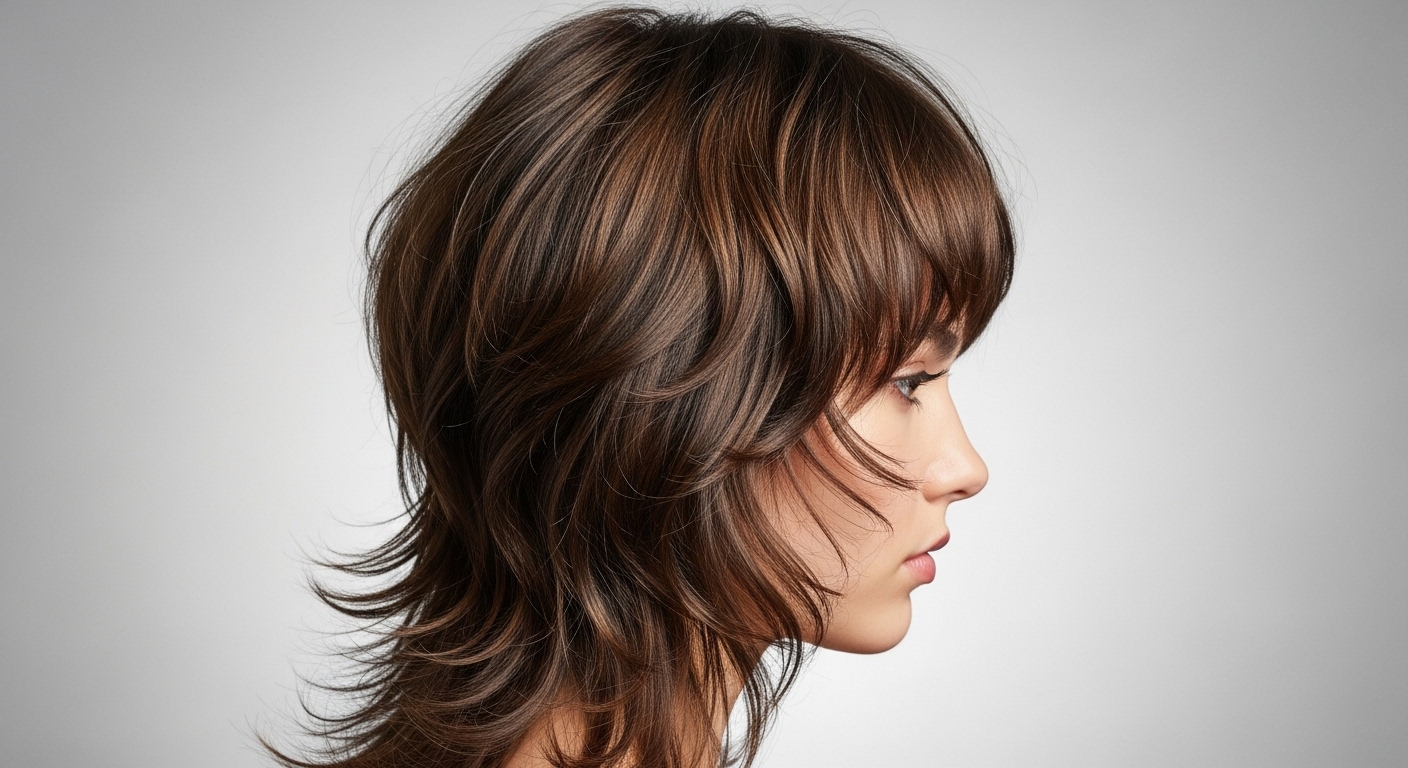
The defining features are short, chunky layers at the top of the head that create lift and volume, and longer, feathered or wispy layers through the mid-lengths and ends that give the cut its flowing, slightly undone quality. The overall silhouette is fuller at the crown and tapered toward the ends, with a noticeable contrast between the length on top and the length at the back.
The look is intentionally imperfect. It is not a polished, structured cut. The appeal is in the movement and the texture: hair that looks like it has its own energy rather than sitting flat or uniform. When styled, the wolf cut produces a lived-in, high-volume finish that looks like considerably more effort was put into it than actually was.
How It Differs From the Shag and the Mullet
The shag, which became iconic in the 1970s through styles worn by Jane Fonda and Farrah Fawcett, is a heavily layered cut with gradual tapering and feathered ends throughout. It tends to be more balanced and even in its layering and is typically paired with curtain bangs. The overall shape is softer and more symmetrical than a wolf cut.
The mullet creates a deliberate contrast between short front and side sections and significantly longer back sections. The classic mullet is more structured in that contrast and cleaner at the sides. The wolf cut borrows the length variation idea from the mullet but softens the transition with choppy, blended layers rather than a hard line between lengths.
The wolf cut sits between these two: less balanced than the shag, less extreme than the mullet. The layers are choppier and more dramatic than a shag’s gradual feathering, and the length contrast is present but blended rather than abrupt. The result reads as modern and wearable in a way that a true mullet does not for most clients.
Which Hair Types Work Best
Wavy and Curly Hair
Wavy and curly hair is the strongest natural match for the wolf cut. The natural texture does the heavy lifting. Choppy layers encourage the wave or curl to spring upward and separate, producing exactly the volume and movement the cut is designed to create, with minimal styling effort.
For curly-haired clients, the cut should be done dry rather than wet. Cutting curly hair dry allows the stylist to see exactly where each curl falls and place layers accordingly. Cutting wet and then drying often produces a different result than the client or stylist intended.
Thick, Straight Hair
Thick straight hair benefits from the wolf cut’s heavy layering because it removes bulk while adding internal movement and texture. Without layers, thick straight hair often sits flat and heavy. The choppy, aggressive layering of the wolf cut breaks that up and introduces the separation that thick hair needs to feel light and animated.
Styling requires more product effort on straight hair than on naturally textured hair. A texturizing spray applied to damp hair before diffusing or rough-drying brings out the movement the cut is built for.
Fine, Straight Hair
Fine straight hair can wear a wolf cut, but the approach needs to be more measured. The choppy layering that gives the cut its volume can also thin out already-fine ends if applied too aggressively. A skilled stylist will use lighter, more strategic layering that builds structure at the crown without stripping the ends of the weight they need to look full.
Styling fine hair into a wolf cut typically involves volumizing mousse at the roots and diffusing rather than blow-drying flat. The result is achievable but requires more daily effort than it does on naturally textured hair.
Which Face Shapes It Flatters
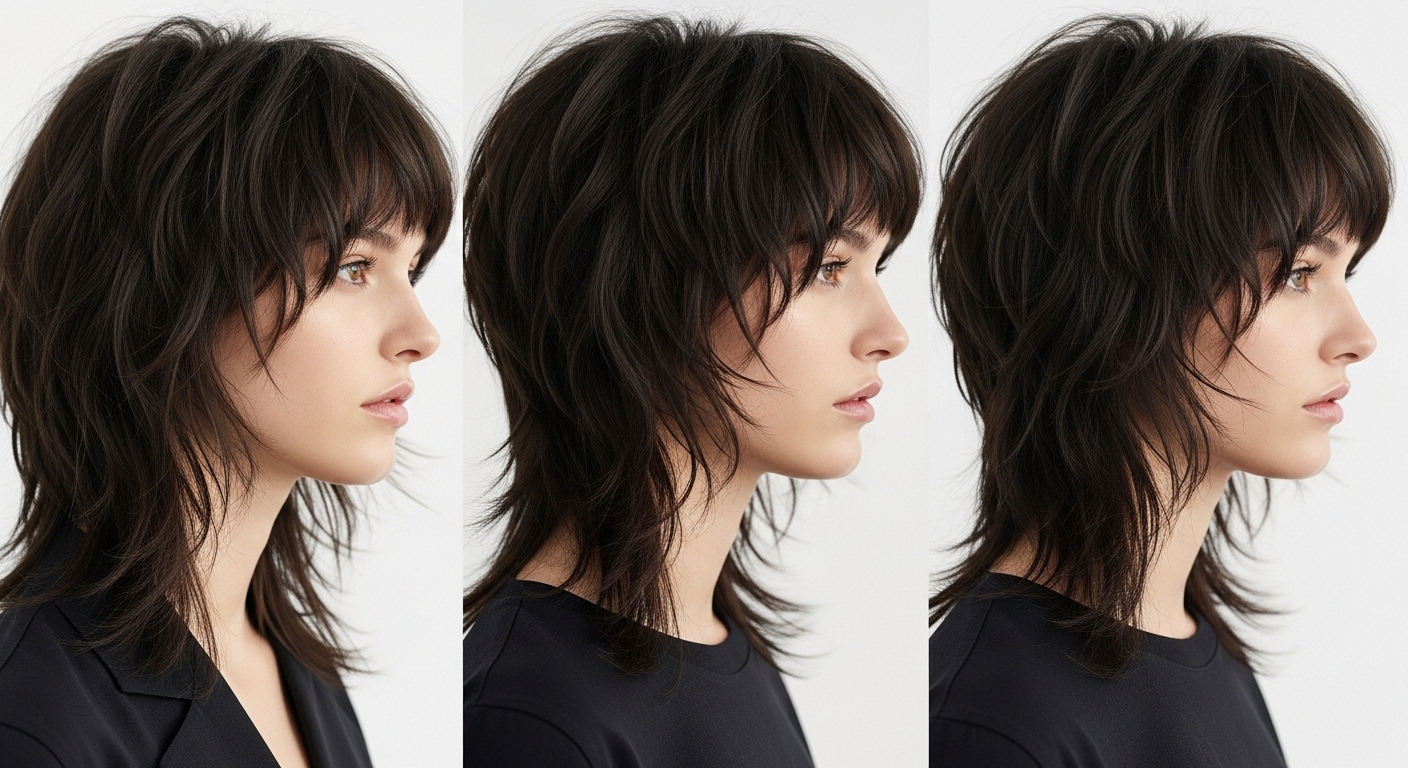
The wolf cut is one of the more face-shape-flexible cuts on the menu because its layering can be adjusted in length and placement to suit different proportions. For a deeper look at face shapes and which cuts flatter them most, see our guide on hairstyles for your face shape. Here is how the wolf cut adapts to the most common shapes.
Oval
Oval faces handle the wolf cut without adjustment. The balanced proportions work with the cut’s volume and length variation naturally, and the stylist can focus on texture and preference rather than structural correction.
Round
Round faces benefit from a wolf cut with longer layers that draw the eye downward and create a vertical line. The volume at the crown adds height, which reduces the impression of width. Layers should start below the cheekbones and flow through the lengths rather than flaring out at the sides.
Square
Square faces suit the wolf cut when the layers are kept soft and choppy rather than blunt. The textured ends offset the jaw’s angular quality, and curtain bangs paired with the cut add a further softening effect at the forehead.
Heart
Heart-shaped faces are widest at the forehead and narrow toward the chin. The wolf cut helps by adding volume and width at the jaw and mid-lengths through the longer layers, which balances the upper and lower halves of the face. Keeping the crown layers from flaring too wide at the temples avoids amplifying the forehead.
Oblong
Oblong faces are longer than they are wide. A wolf cut with shorter top layers and volume distributed through the sides adds horizontal width that reduces the impression of length. Avoiding too much height at the crown keeps the face from appearing even taller.
The Role of Bangs in a Wolf Cut
Curtain bangs are the most common fringe pairing with a wolf cut. They part naturally in the center and sweep to either side of the face, which reinforces the cut’s overall face-framing movement and adds a soft, slightly retro quality that complements the wolf cut’s 1970s shag influences.
Bangs are optional. A wolf cut without any fringe is equally valid and looks more understated than one with curtain bangs. Some clients prefer a clean forehead, particularly if they have a shorter brow-to-hairline distance or if they prefer not to deal with the maintenance of trimming fringe every four to six weeks.
Choppy, textured bangs are another option for clients who want something edgier than curtain bangs. These sit closer to the middle of the forehead with a deliberately uneven, piecey edge that adds to the wolf cut’s undone aesthetic. For a full breakdown of bang styles and which ones suit different face shapes, see our post on hairstyles with bangs.
What to Expect From the Appointment
A wolf cut appointment at David Ryan Salon begins with a consultation where the stylist assesses hair texture, density, face shape, and lifestyle before settling on the specific layer placement and length variation for that client. The inspiration photo a client brings is the starting point, not the blueprint, because the same wolf cut photograph can look significantly different on different hair textures.
The cut itself is executed with point cutting and sometimes razor work rather than the blunt scissor technique used for more structured cuts. Point cutting involves cutting into the ends at an angle rather than straight across, which removes weight and creates the soft, feathered texture the wolf cut relies on. Razoring produces an even lighter, more diffused edge on the ends.
For clients with curly or wavy hair, much of the cutting may be done on dry hair to account for how the texture behaves once it is fully dried. For straight hair, the cut is typically done wet with the understanding that styling will create the volume and movement the finished result requires.
A wolf cut appointment runs slightly longer than a standard trim, usually 60 to 90 minutes depending on hair length and density. Allow extra time if you are also scheduling color at the same appointment. Our hair cuts and treatments menu includes wolf cut appointments at both locations, and many clients combine the cut with a color service on the same visit.
Maintenance, Styling, and the North Texas Climate
The wolf cut needs a trim every six to eight weeks to stay looking intentional. The choppy layers that give it its character are also the first thing to lose definition as the hair grows. After ten or twelve weeks without a trim, the cut starts to read as grown-out rather than lived-in, and the volume at the crown begins to collapse as the layers lengthen.
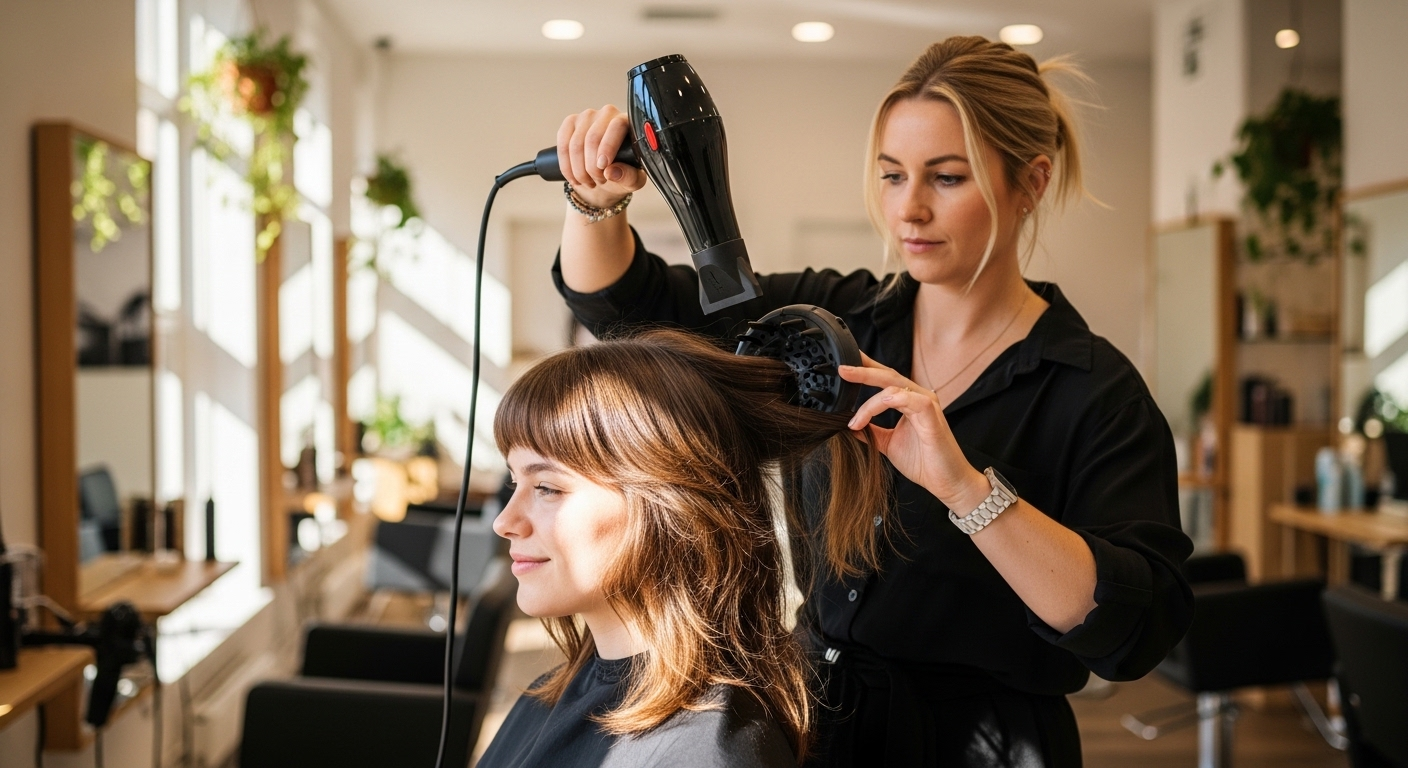
Styling at home is built around product and technique rather than precision. A lightweight texturizing spray or mousse applied to damp hair, followed by diffusing or rough-drying with the fingers, brings out the movement and volume the cut creates. The goal is to encourage the texture rather than smooth it out. A flat iron or tight blow-dry will work against the cut’s intention.
For clients with color-treated hair, the choppy ends of a wolf cut can be prone to dryness and frizz, particularly after bleach or repeated color services. Incorporating a bond-building treatment like Olaplex into the color appointment maintains the structural integrity of the ends. Using a color-safe, sulfate-free shampoo between visits extends both the color and the cut’s freshness.
North Texas summers present one practical styling challenge: humidity. The wolf cut’s intentional texture means it is already working with movement rather than against it, which makes it more humidity-resistant than cuts that rely on smooth, sleek lines. Clients who live in Flower Mound, Trophy Club, and the surrounding areas tend to find that the wolf cut requires less daily intervention in summer than a blowout or a structured cut, because a little extra movement only adds to the look rather than disrupting it.
The color options that pair most naturally with a wolf cut are those that enhance the cut’s dimensional quality. Balayage placed through the mid-lengths and ends adds contrast that makes the layer separation more visible and gives the cut additional depth. Face-framing highlights near the hairline draw attention toward the cut’s face-framing structure. Talk to your colorist at the same consultation to plan placement that works with the specific layer structure of your cut.
Frequently Asked Questions
How long does my hair need to be to get a wolf cut?
Most wolf cuts work best with at least medium-length hair, roughly collarbone length or longer. Shorter hair can carry a modified version of the cut with significant layering, but the length contrast that defines the wolf cut is harder to achieve on hair that is already very short. Your stylist will assess what is achievable with your current length during the consultation.
Is a wolf cut high maintenance?
The styling itself is low to moderate maintenance because the cut works with texture and movement rather than requiring a precise finish. The trim schedule is more demanding than some cuts, however: the choppy layers lose their definition after eight to ten weeks and the cut starts to look grown-out. Plan for a trim every six to eight weeks to keep the shape looking intentional.
Can I get a wolf cut if I have fine hair?
Yes, with the right approach. A wolf cut on fine hair requires more measured layering than it does on thick or textured hair. The stylist will build volume at the crown without over-thinning the ends, which need weight to look full. Styling with volumizing mousse and diffusing rather than flat-drying produces the best result on fine hair.
Is the wolf cut the same as the shag?
They are related but distinct. The shag features gradual, balanced layers throughout the hair with soft, feathered ends and is typically more even in its length distribution. The wolf cut has a more pronounced length contrast between the shorter crown layers and the longer back and side sections, choppier texture at the ends, and a more dramatic overall silhouette. The wolf cut is bolder and less symmetrical than a classic shag.
What products do I need to style a wolf cut at home?
A lightweight texturizing spray or mousse is the most important tool. Apply it to damp hair before drying to build movement and separate the layers. A diffuser attachment on your blow-dryer enhances the texture without smoothing it flat. Avoid heavy creams or oils applied to the roots, which will weigh down the crown volume the cut is built to create.
Can I get a wolf cut and color at the same appointment?
Yes, and many clients do. Scheduling both at the same appointment allows your stylist and colorist to coordinate the layer placement and color placement so they work together rather than independently. Plan for a longer appointment when combining both services, and let the salon know at booking so the right amount of time is reserved.
Will a wolf cut work in North Texas summers?
The wolf cut tends to hold up well in humidity because its defining quality is intentional movement and texture rather than sleek, smooth lines. A little extra frizz or wave adds to the look rather than disrupting it. Using a lightweight texturizing spray rather than a heavy hold product gives the cut flexibility to move with the humidity rather than fighting against it.
About David Ryan Salon
David Ryan Salon has served clients across North DFW since 2010, with full-service locations in Flower Mound and Trophy Club.
Founded by master stylist and educator David Ryan, the salon specializes in precision cuts, custom color, and personalized styling for every hair type and face shape. Every cut begins with a thorough consultation because a wolf cut that works on your favorite influencer needs to be translated through your specific texture, face shape, and lifestyle before it works on you.
David Ryan Salon is here to help you find the version of the wolf cut that fits your hair and your real daily routine.
Book Your Wolf Cut Appointment at David Ryan Salon
Ready to try the wolf cut? Our stylists at Flower Mound and Trophy Club are ready to walk you through the cut, customize it to your texture and face shape, and set you up with a styling routine you can actually manage at home. Call us at (972) 691-0022 or book online through our website.