There is a reason the same haircut can look completely different on two people. Length, layers, and fringe all interact with your facial proportions in ways that either add harmony or create imbalance. A cut that looks effortless on one person can feel off on another, not because of the stylist’s execution but because the shape was wrong for the face it was framing.
Understanding your face shape is one of the most practical tools you have when walking into a salon. It helps your stylist make faster, more confident decisions and helps you communicate what you actually want rather than pointing at a photo and hoping for the best. Below, the team at David Ryan Salon covers the six most common face shapes, which cuts our stylists recommend most often for each, and what to keep in mind when translating that guidance to your own hair.
How to Identify Your Face Shape Before Your Appointment
Pull your hair back completely so your hairline and jawline are fully visible. Stand in front of a mirror in natural light and take a photo straight on. From that photo, note three things: where your face is widest, where it is narrowest, and whether your overall shape reads as longer than it is wide or roughly equal in both dimensions.
The six most common shapes are oval, round, square, heart, diamond, and oblong. Most people fall close to one of these with traits from another, which is completely normal. If you are uncertain, your stylist can identify your face shape during a consultation at either our Flower Mound salon or Trophy Club salon. Getting the shape right from the start makes every cut and color decision that follows more precise.
1. Oval Face Shape: The Layered Lob
An oval face is balanced and proportionate, with a forehead that is slightly wider than the chin and a gentle curve through the cheekbones. The length is noticeably greater than the width, but not so much that the face reads as long. This is widely considered the most versatile shape for hairstyles because its natural balance is difficult to disrupt.
The goal with an oval face is to maintain that balance rather than accidentally elongate it further. Very long, straight hair with no layers can pull the face downward, and extremely short crops worn very close to the skull can expose the length in a way that tips the proportions. Almost everything in between works well.
What Our Stylists Recommend
The cut our stylists reach for most often on oval faces is the layered lob, a longer bob that lands anywhere from the collarbone to a few inches below. Soft layers throughout the length add movement and keep the face feeling framed rather than exposed. Face-framing pieces around the cheekbones enhance the natural structure without adding weight.
If you prefer longer hair, loose waves or long layers that begin at the cheekbones are equally flattering. Curtain bangs also work beautifully on oval faces, adding softness across the forehead without shortening the face. The one thing to avoid is a blunt, heavy fringe that sits at the brow, which can make the face appear shorter than it is.
Oval faces also happen to be one of the best shapes for experimenting with color. Balayage and dimensional highlights work naturally with the face’s symmetry, adding depth without any need to compensate for proportional imbalances.
2. Round Face Shape: Long Layers With Side-Swept Bangs
A round face has a soft, curved jawline with cheeks that are the widest point of the face. The overall width and length are close to equal, which gives the face a full, youthful quality. The goal with hair on a round face is typically to create the visual illusion of length and to introduce some angles where the face naturally has curves.
Styles that add width at the sides, such as chin-length blunt bobs or very full curls at the cheekbones, tend to amplify the roundness rather than balance it. Thick, straight-across bangs at brow level do the same by cutting the face horizontally and shortening its apparent length.
What Our Stylists Recommend
Long layers are the most reliably flattering choice for round faces. Length past the collarbone draws the eye downward and creates a vertical line that elongates the face. Layers starting from the cheekbones and cascading down add movement without puffing out the sides. Pairing this with a deep side part further breaks the symmetry and introduces a diagonal line that slims the face.
Side-swept bangs are a strong addition for round faces because they frame the forehead asymmetrically, creating the angles the face shape naturally lacks. Curtain bangs are another good option, as they part in the center and fall softly to either side of the face rather than cutting straight across the forehead.
For clients who prefer shorter styles, an angled bob that is shorter at the back and longer toward the front creates a flattering diagonal line. This is a better option for round faces than a blunt, even-length bob, which can make the face appear wider than it is.
3. Square Face Shape: Soft Layers With Curtain Bangs

A square face has a strong, defined jawline and a broad forehead, with similar measurements across the forehead, cheeks, and jaw. The overall impression is angular and structured. There is nothing to hide with a square face shape; the goal with most cuts is simply to soften the angularity rather than minimize it, letting the bone structure read as a strength rather than an edge.
Cuts that mirror the squareness of the face tend to amplify it. Blunt bobs that end at the jawline sit at exactly the wrong point, drawing attention directly to the jaw’s width. Sleek, straight styles with no layers reinforce the angular impression the face already makes.
What Our Stylists Recommend
Soft layers are the most effective tool for square faces. Layers that begin around the cheekbone and flow through the length introduce curves and movement that offset the jaw’s definition. The gentler and more textured the layers, the softer the overall effect.
Curtain bangs pair especially well with square faces because they drape softly from a center part and draw the eye toward the center of the face rather than toward the outer jaw. This inward focus naturally de-emphasizes width. Wispy, face-framing pieces that fall forward around the jaw also help by adding softness right at the point where the squareness is most prominent.
Length past the jawline is generally more flattering than anything ending right at it. Lobs, shoulder-length cuts, and longer styles all avoid the visual widening that comes from a hem that lines up with the jaw. Loose waves are an easy styling choice that adds softness to any of these lengths and works particularly well on square faces.
Our hair cuts and treatments menu includes precision cuts and finishing treatments that help square-faced clients achieve the softness and movement their cut needs to look its best between salon visits.
4. Heart Face Shape: The Shoulder-Length Lob
A heart-shaped face is widest at the forehead and temples, with high cheekbones that taper down to a narrow, often pointed chin. The forehead is usually the dominant feature. The styling goal for heart-shaped faces is to balance the wider upper half with the narrower lower half, adding visual weight at or below the jawline to create a more even proportion.
Styles that add volume at the crown or temples amplify the width at the top of the face and make the contrast with the narrow chin more pronounced. Very long, straight styles with a center part can also emphasize the taper by drawing a clean vertical line from a wide forehead down to a narrow point.
What Our Stylists Recommend
The shoulder-length lob is the cut our stylists recommend most consistently for heart-shaped faces. Landing at or just below the shoulder, it adds width exactly where the face needs it, at and around the jawline, without pulling the face downward the way very long hair can. Soft waves through the length enhance this effect by creating horizontal movement at the jaw that visually broadens the lower half of the face.
A deep side part is another useful tool for heart shapes. It breaks up the width of the forehead asymmetrically, reducing its visual prominence and drawing attention across the face rather than straight down from a wide top to a narrow chin.
Curtain bangs are worth mentioning specifically for heart faces. They soften the forehead without covering it completely, and the way they part and fall to either side creates a gentle frame that reduces the forehead’s apparent width. Avoid heavy, straight-across bangs that sit directly on the brow, which actually draw more attention to the forehead rather than less.
For clients interested in adding volume and length, hair extensions can be a great option for heart-shaped faces, adding the fullness at the lower half of the hair that this face shape benefits from most.
5. Diamond Face Shape: Soft Waves With Side-Swept Bangs
A diamond face is widest at the cheekbones, with a narrow forehead and a narrow, sometimes pointed chin. The cheekbones are the standout feature, often dramatically prominent. The styling goal is to add width at both the forehead and jaw to balance the face’s widest point, creating a more even distribution across all three zones.
Styles that add volume at the cheekbones, such as very full curls or wide, puffy layers that begin mid-face, can make the cheekbones appear even more pronounced. Very sleek, pulled-back styles also emphasize the narrow forehead and jaw by removing any softness around those areas.
What Our Stylists Recommend
Soft waves are the most versatile recommendation for diamond faces. Waves that move through the full length of the hair add diffuse volume at both the crown and jaw, widening both the top and bottom of the face without concentrating fullness at the cheekbones. The texture also softens the face overall, which works in favor of this shape’s angular quality.
Side-swept bangs address the narrow forehead directly by adding coverage and visual width across the hairline. This is one of the few face shapes where bangs are not just a style choice but practically useful in creating better proportions. A side-swept fringe that grazes the brow adds horizontal width at the forehead without the heaviness of a full blunt bang.
Chin-length bobs and lobs also work well for diamond faces because they add width at the jaw, balancing the prominent cheekbones from below. Layers should be placed thoughtfully to avoid building extra volume specifically at the cheekbones, where the face is already at its widest.
Pairing the right cut with strategic hair color services can enhance these proportions further. Lighter tones around the hairline and jaw draw the eye to those areas, while deeper tones at the cheekbones reduce their visual prominence.
6. Oblong Face Shape: Shoulder-Length Waves With Curtain Bangs
An oblong or rectangle face is noticeably longer than it is wide, with a relatively uniform width from forehead to jaw and a face that reads as tall. The jawline may be softly squared or rounded. The styling goal for oblong faces is to add horizontal width and break up the vertical length, creating the impression of a shorter, more balanced face.
Very long, straight hair worn without layers or texture pulls an oblong face further downward, extending its length visually. A center part with long, sleek hair is one of the most elongating combinations possible for this face shape, and it is generally best avoided.
What Our Stylists Recommend
Shoulder-length waves are the top recommendation for oblong faces because they work on both fronts simultaneously. The length stops before it can elongate the face further, and the waves add horizontal movement and width that offset the face’s vertical proportion. This combination creates a fuller, more balanced appearance without requiring any dramatic structural changes.
Curtain bangs are a particularly useful addition for oblong faces. They reduce the forehead’s contribution to the face’s overall length by covering part of it, and the way they part and fall to either side adds horizontal width at the top of the face. This is one of the most effective single changes an oblong-faced client can make if they have been wearing their hair without fringe.
Blunt bobs that end at the chin are another strong option for oblong faces, as they add width directly at the jaw and keep the length completely contained. Layers should be avoided in very short cuts for this shape, as they can remove the width and body that the face needs. In longer styles, however, soft waves and body through the mid-lengths and ends are exactly the kind of horizontal movement that helps.
Our stylists at both locations work with oblong-faced clients regularly and can adjust the cut’s weight distribution, graduation, and texture to suit your specific hair density and lifestyle.
Why Hair Texture Matters as Much as Your Face Shape
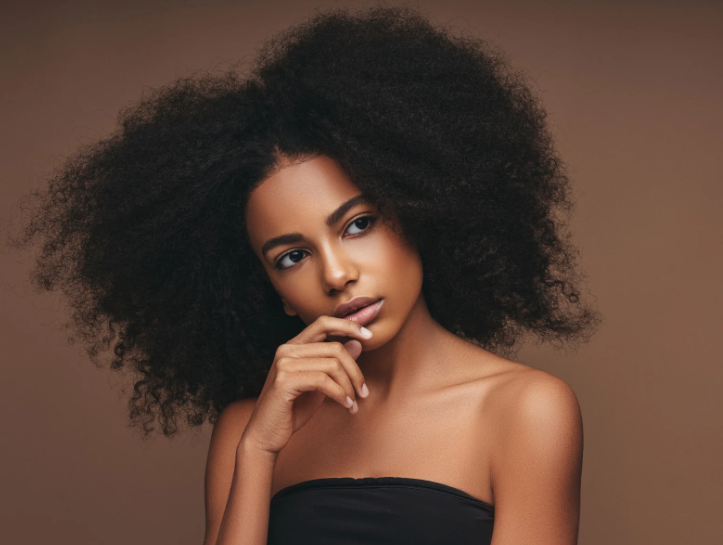
Face shape guidelines are a starting point, not a prescription. How a cut actually behaves on your head depends just as much on your hair’s texture, density, and natural movement as it does on the shape of your face.
Fine hair tends to lie flat, which means cuts that rely on volume and body need extra support from styling products or a blow-dry technique that builds lift at the root. Thick hair, on the other hand, can resist the softness that many face-shape recommendations rely on, and may need internal layering to reduce bulk and let the cut fall the way it is supposed to. Curly and wavy hair behaves differently wet versus dry, which means your stylist needs to account for how much your texture will contract the finished length.
This is why the best haircut for your face shape is always determined in a consultation rather than from a guide alone. A skilled stylist reads your texture, your density, your natural growth patterns, and your lifestyle alongside your face shape before recommending a cut. The same lob that works effortlessly on fine, straight hair may need to be adjusted in weight and length to deliver the same result on thick, wavy hair.
If you are unsure where to start, the right move is simply to book a consultation. Our team at David Ryan Salon will work through all of these variables with you before a single cut is made.
Frequently Asked Questions
How do I know for sure what face shape I have?
Pull your hair back, stand in front of a mirror, and take a straight-on photo in good lighting. Look at where your face is widest, where it tapers, and whether it reads as longer or more equal in length and width. If you are still uncertain, your stylist can identify it during a consultation before your cut begins.
Can I get a hairstyle that does not match my face shape?
Yes, and many people do. Face shape guidelines help predict which cuts will be most flattering, but personal style, texture, and lifestyle are equally valid factors. A skilled stylist can often adjust a cut you love to work better with your proportions without losing the elements that drew you to it.
What is the most flattering haircut for a round face?
Long layers past the collarbone with a side part and side-swept or curtain bangs are the most reliably flattering combination for round faces. The length and the diagonal lines introduced by a side part both work to elongate the face and reduce the impression of roundness.
What haircuts should square faces avoid?
Blunt bobs that end directly at the jawline, very sleek straight styles, and any cut that adds horizontal width at the jaw tend to amplify the squareness. Styles with soft layers, movement, and length below the jaw are more flattering for this face shape.
Do curtain bangs work for all face shapes?
Curtain bangs are one of the most versatile fringe styles and work well for oval, square, heart, and oblong faces. They are slightly less ideal for round faces if worn very full, as they can add width at the forehead. For diamond faces, a side-swept bang tends to be more flattering than curtain bangs because it adds width to the narrow forehead more directly.
Does hair color affect how my face shape looks?
It can, noticeably. Lighter tones draw the eye toward whatever area they are placed. Adding brightness around the hairline or jawline can widen or lengthen those zones visually. Dimensional color like balayage also adds depth that can soften features. Your colorist can use placement strategically to complement your face shape alongside your cut.
How often should I come in for a trim to keep my cut looking its best?
For most cuts, every six to eight weeks is enough to keep the shape clean and the ends healthy. If your cut relies heavily on a precise length or a blunt line, such as a bob or lob, you may want to come in every four to six weeks to keep the shape looking intentional.
About David Ryan Salon
David Ryan Salon has served clients across North DFW from locations in Flower Mound and Trophy Club since 2010. Founded by master stylist and educator David Ryan, our team specializes in precision cuts, custom color, extensions, and transformative treatments, all delivered within a welcoming, high-end salon environment.
Every appointment begins with a thorough consultation because we believe the right cut starts with understanding your face shape, your texture, and your life. David Ryan Salon is here to help you find the style that actually works for you.
Book Your Consultation at David Ryan Salon
Ready to find the cut that works with your face shape, your texture, and your life? Our team at David Ryan Salon in Flower Mound and Trophy Club is here to help. Call us at (972) 691-0022 or book online through our website to schedule your appointment. Not sure where to start? A consultation is always a great first step.