Short hair has a reputation it does not fully deserve. The idea that it only suits certain face shapes, certain ages, or certain personalities has kept more than a few women from a cut they would have loved. The reality is more specific and more useful: the question is never whether short hair suits you, but which short cut suits you and how it needs to be tailored to your face’s proportions and your hair’s texture.
That distinction matters because short haircuts are not a monolithic category. A pixie cut and a French bob are both short, but they interact with the face in completely different ways. Length, angle, texture, and where weight falls all shift depending on the specific style, which means the same client with a round face might thrive in a French bob and struggle in a classic pixie, or vice versa depending on her texture.
The stylists at David Ryan Salon at our Flower Mound salon and Trophy Club salon work with clients considering short cuts regularly. Below is a breakdown of six short haircut styles: what each one actually is, which face shapes it flatters most, and what you need to know before booking the appointment.
Why Short Hair Works Differently Than You Might Expect
With longer hair, the cut has room to recover. Layers blend, length softens transitions, and even an imperfect cut often looks passable once the hair settles into its natural movement. Short cuts remove that buffer. Every angle, weight line, and length decision is immediately visible, which is precisely why a well-chosen short cut can look so clean and confident, and why the wrong one feels off in a way that is hard to articulate.
The face is also more exposed with short hair. There is less length below the chin to draw the eye downward, less framing around the cheeks and jaw to soften or redirect attention. This is not a disadvantage. It is simply why cut selection matters more with short hair than with longer styles. A chin-length bob that lands at the right point can widen a narrow jaw, sharpen cheekbones, or create the illusion of length in a round face. A pixie cut with the right fringe can completely reframe a wide forehead. The cut is doing proportional work that longer hair disperses across twelve inches of length.
For clients in the northwest Fort Worth area, there is another practical reason short cuts make sense: the North Texas climate. Humidity in this region climbs sharply through spring and summer, and long hair loses its styling in those conditions faster than short hair does. A well-cut short style with the right texture is significantly easier to maintain looking intentional through a Texas afternoon than a blowout on longer hair. Our stylists factor climate into styling and product recommendations as part of every short cut consultation.
The Pixie Cut: More Versatile Than Its Reputation
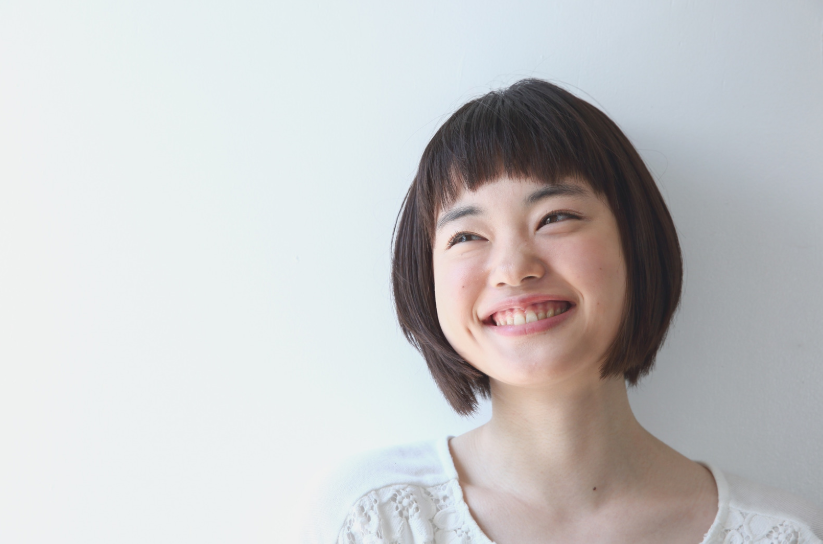
The pixie is the shortest cut on this list and the one most women hesitate over longest. It is also one of the most misunderstood. A pixie is not a single fixed style. It is a family of cuts defined by cropped sides and back with variable length on top, and the differences within that family are significant enough to change which face shapes it flatters and how dramatic the change actually feels.
A classic short pixie keeps everything tight, with minimal length on top. A long or textured pixie leaves considerably more length at the crown and sometimes at the sides, allowing for styling options that a shorter version cannot accommodate. A pixie with a side-swept fringe behaves differently from a pixie worn with the top swept back or with a center part. These variations are not superficial. They determine who the cut flatters and how it reads on a given face.
Best Face Shapes for a Pixie
Oval faces handle the pixie most easily because the face’s natural balance is not disrupted by the removal of length. Nearly any pixie variation works. Heart-shaped faces also suit pixie cuts well, particularly variations with texture or a side-swept fringe at the crown. The fringe draws the eye inward and downward rather than across the wide forehead, which offsets the face’s primary proportional challenge.
Round faces can work with a pixie, but the cut needs to be selected carefully. Volume concentrated at the crown rather than the sides is essential: a pixie that sits full and round on the head reads as round on the face. A pixie with height on top and tighter sides introduces the vertical line a round face needs. Square faces benefit from pixie cuts with softer texture and less geometric precision, since extremely clean, structured pixies can mirror the jaw’s angularity rather than offset it.
The one consistent caution across face shapes is fringe. A heavy, blunt fringe cut at the brow shortens the face regardless of shape and works against almost every proportional goal. Wispy, side-swept, or textured fringe is nearly always a more flattering option for any face.
The Classic Bob: The Most Face-Shape-Flexible Short Cut
The classic bob lands somewhere between the chin and the jaw, cut to a relatively even length all the way around. It is the safest and most adaptable entry point into short hair for most women, not because it is boring but because the chin is a remarkably effective length for flattering a wide range of faces. Hair that ends at the chin creates a natural horizontal line that draws the eye across the face rather than upward or downward, which can add apparent width to a narrow jaw, soften a wide forehead, or create structure under a soft one.
The classic bob is one of the few cuts that works on all six face shapes with relatively minor adjustments rather than significant structural changes. For oval faces, a clean chin-length bob with minimal layering highlights the face’s natural symmetry. For heart-shaped faces, the same length adds volume and visual weight at the jaw, directly balancing the wider forehead. For oblong faces, the chin-length hem breaks up the face’s vertical length by establishing a strong horizontal line mid-face.
Adjustments That Change Who It Suits
The biggest variable within the classic bob is parting. A center part worn with a blunt bob emphasizes symmetry, which works for oval and square faces. A side part introduces a diagonal line that benefits round and oblong faces by breaking up the face’s even proportions. A deep side part on a bob is one of the most reliably slimming adjustments for a round face in all of short haircut styling.
Texture is the second variable. A sleek, blunt bob reads as more structured and is a stronger choice for oval, square, and heart shapes where the goal is clean framing or jawline definition. A textured bob with softer, layered ends introduces movement that works better for round and oblong faces, where the horizontal weight of a blunt hem can actually amplify the face’s fullness rather than balance it.
The Angled Bob: Diagonal Lines That Work for Round and Oval Faces
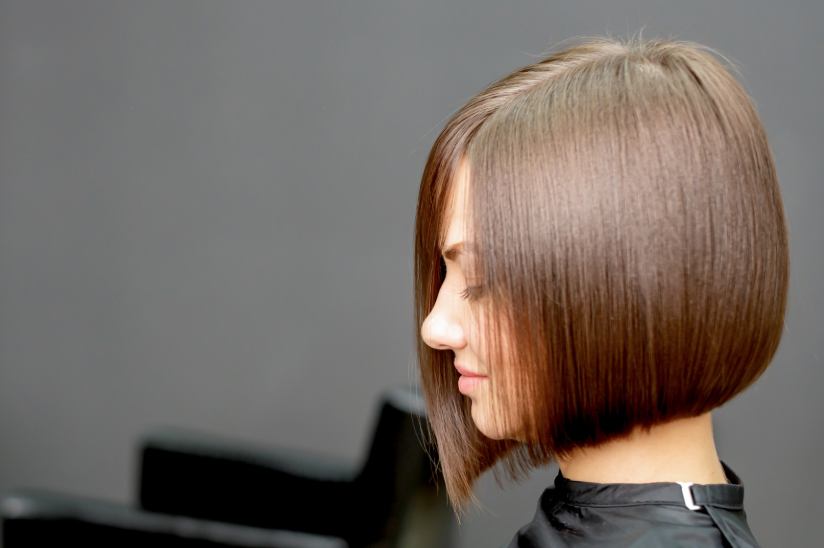
The angled bob, sometimes called the A-line bob, is shorter at the back and longer at the front, creating a diagonal line when viewed from the side. The front pieces typically fall at or below the chin while the back may be considerably shorter, creating a stacked or graduated effect at the nape. This diagonal is the cut’s defining feature and its most flattering attribute: it introduces an angular line into a silhouette that may otherwise be round or even, and it draws the eye toward the face rather than downward along the jaw.
For round faces, the angled bob is one of the strongest available options in the short hair category. The longer front pieces sit at the chin and below, which is precisely the zone where round faces need volume and framing to offset the fullness of the cheeks. The shorter back prevents the cut from appearing bottom-heavy, and the diagonal itself introduces the angle that the face shape lacks. The net result is a cut that simultaneously frames the jaw and creates the visual impression of angles where the face is naturally soft.
Oval and Square Face Considerations
Oval faces carry the angled bob without any structural adjustments needed. The cut works with the face’s balanced proportions and can be worn at a subtle or more dramatic angle depending on personal preference. Square faces benefit from the angled bob when the layers at the front are soft and textured rather than blunt and geometrically precise. A blunt A-line on a square face can frame the jaw too sharply; a textured front with some movement softens the angular impression and makes the cut more flattering.
Heart-shaped faces should approach the angled bob with some care. The shorter back and longer front is generally flattering, but the cut needs to avoid adding volume at the crown or temples, which would amplify the forehead’s width. Keeping the top relatively flat and the front pieces longer does the job without creating extra width where the face already has it.
The Inverted Bob: Volume, Stacking, and Structure for Square and Heart Faces
The inverted bob is defined by stacked, graduated layers at the back of the head that create volume and lift at the crown and nape, combined with longer front pieces that frame the face at the chin or jaw. Where the angled bob’s drama is primarily visible from the side, the inverted bob’s drama is visible from both sides and from behind. The stacking at the back builds a rounded, full silhouette that adds height and shape without relying on styling products or tools to hold it.
For square faces, the inverted bob works particularly well because the stacked back rounds out the overall silhouette. Square faces have strong, angular jawlines, and a cut that introduces curves at the back of the head creates a counterpoint to those angles. The longer front pieces also fall past the jaw, which avoids the unflattering effect of a hem that ends directly at the jaw’s widest point, a common problem with shorter cuts on square faces.
Heart and Oval Fit
Heart-shaped faces benefit from the inverted bob’s volume at the back, which adds weight and visual mass at the lower portion of the head, directly offsetting the wider upper face. The longer front pieces at the jaw or chin also add apparent width at the face’s narrowest point, addressing both of the heart shape’s proportional priorities in a single cut.
Oval faces carry the inverted bob without modification. The stacked back suits the oval’s natural balance and adds an architectural quality to the silhouette that makes the cut read as intentional and structured rather than simply short. For clients with fine hair, the inverted bob is particularly practical because the stacking creates genuine volume without requiring the client to build it artificially with products every morning.
The Textured Crop: Smart, Low-Maintenance, and Built for Texas
The textured crop sits between a pixie and a bob in length, typically landing between the jaw and the ear, with choppy layers and piecey texture throughout rather than a clean, defined hem. It is not as structured as a bob or as minimal as a pixie, and that in-between quality is exactly what makes it appealing. The texture does the styling work. A textured crop that air-dries with the right product can look finished and deliberate without any heat tools or blow-drying technique.
This is particularly relevant for clients in the Flower Mound and Trophy Club area. North Texas summers are hot, and the combination of heat and humidity makes a quick-dry, low-maintenance cut a practical choice rather than just a styling preference. A textured crop with the right cut can be washed, product-applied, and out the door in under fifteen minutes while still looking like a considered style rather than a compromise.
Best Face Shapes for the Textured Crop
Oval faces handle the textured crop without adjustment. The face’s natural balance is flexible enough that the choppy, non-uniform layers do not disrupt the proportions, and the texture can be customized to suit the client’s personal aesthetic from softer and more romantic to more edgy and defined.
Square faces are actually a particularly strong match for textured crops. The irregularity of the layers works against the jaw’s geometric definition, softening the angular impression with movement and variation rather than trying to frame or redirect attention from the jaw with length. A textured crop on a square face reads as effortless and modern, with the texture doing the proportional work that other cuts achieve through structure.
Round faces can wear a textured crop when the cut adds height at the crown rather than volume at the sides. The key is directing the texture upward to create a vertical line rather than outward to create width. Fine-haired clients with round faces often find the textured crop more flattering than expected because the internal layers create the lift they need without the density that heavier hair provides naturally.
The French Bob: Structured, Chic, and Broadly Flattering
The French bob is a chin-length or slightly above-chin bob, typically with a blunt hem and either soft, blunt fringe or no fringe at all. The defining quality is its clean, deliberate shape: there is nothing accidental about a French bob. The blunt line at the hem and the clean silhouette around the face create a structured, polished impression that sits comfortably between classic and current. It has been one of the most requested short cuts across salon chairs in 2024 and 2025, and the reason is simple: it flatters almost every face shape without requiring significant modification.
Unlike the classic bob, which can be worn at various lengths and with varying amounts of texture, the French bob is more specific. The blunt hem at or just above the chin is what makes it work. That precision is also what makes it one of the most face-shape-flexible cuts on this list, because the chin-length blunt line distributes visual weight in a way that happens to balance most facial proportions rather than amplifying any particular feature.
Fringe Variations by Face Shape
The French bob can be worn with or without fringe, and the fringe decision changes who it flatters and how. For oval faces, either option works. The classic French bob without fringe lets the face’s natural symmetry show, while a soft, blunt fringe adds a polished, vintage quality without disrupting the balance.
For heart-shaped and oblong faces, curtain bangs are a particularly effective pairing with the French bob. Curtain bangs part in the center and falls to either side of the face, covering part of the forehead without the heaviness of a full fringe. On a heart-shaped face, they soften the forehead’s width. On an oblong face, they reduce the forehead’s contribution to the face’s overall length. In both cases, the combination of a chin-length hem and curtain bangs creates a cut that addresses both the top and bottom of the face’s proportional needs simultaneously.
For round faces, the French bob works best with a side part and without a full fringe. A center part on a round face with a blunt bob emphasizes the face’s symmetry and width. Shifting to a side part introduces an asymmetry that slims the impression of the cheeks and creates the diagonal line the face benefits from. A light side-swept fringe achieves the same effect with even more refinement.
Color placement can strengthen what the French bob is already doing structurally. Balayage through a French bob adds dimension and draws the eye toward the mid-lengths and ends, which enhances the clean shape of the cut without distracting from it. Our hair color services can be tailored to work with whichever short cut you choose, and our colorists account for face shape alongside hair condition and skin tone when making placement decisions.
Before You Cut: What Your Stylist Needs to Know
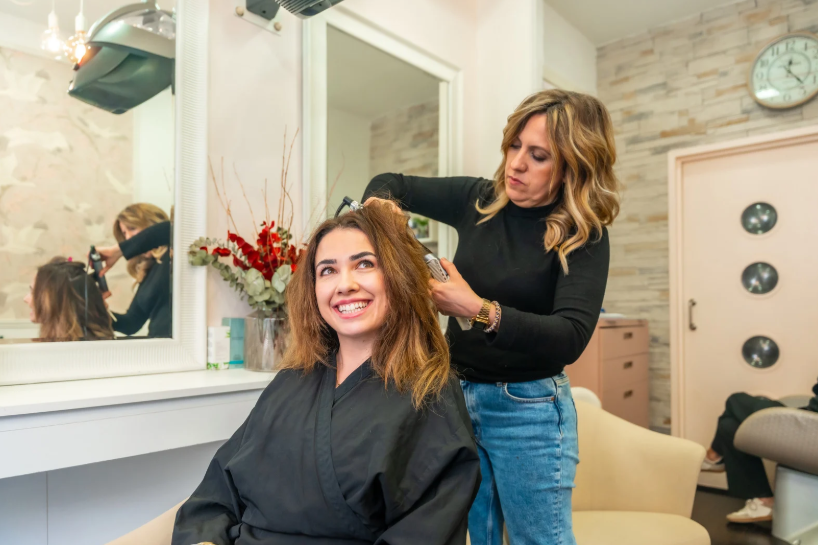
A short cut is one of the more permanent commitments in hair, in the sense that growing it out takes time. The consultation before the cut is where most of the important decisions actually happen, and arriving prepared makes the conversation more productive for both client and stylist.
Photos are the single most useful thing you can bring. Not one photo, but several: cuts you love, cuts that are close to what you want, and ideally a few cuts you like the overall feel of even if the specific details are not quite right. Photos give your stylist a clearer window into your aesthetic instincts than any verbal description can provide. A stylist who sees five photos you love can identify the common thread faster than any description of length in inches.
Your styling routine is equally important to communicate. A short cut that depends on a blow-dry technique, a round brush, and fifteen minutes of product work is meaningfully different from one that air-dries well with a single texturizing product. Neither is better, but the cut needs to match the actual routine you will maintain rather than the ideal routine you aspire to. Your stylist will ask, but being direct about how much time you spend on your hair each morning leads to a more realistic recommendation.
For clients with previously colored or chemically treated hair, the condition of the hair matters to the short cut decision as well. Very porous or damaged hair behaves differently when cut short: it may not hold the shape of a blunt line as crisply, or it may dry in an unexpected direction once the length is removed. A deep conditioning treatment in the weeks before a major cut can bring the hair into better condition and give your stylist a more accurate read of how it will behave at the shorter length.
For a full breakdown of which cut suits which face shape across all lengths, not just short styles, see our guide to hairstyles for your face shape. And for clients ready to book their short cut consultation, our hair cuts and treatments menu covers everything from precision cuts to finishing treatments that help new short styles hold their shape between appointments.
Frequently Asked Questions
Which short haircut is most flattering for a round face?
The angled bob and the French bob with a side part are the two most reliably flattering short cuts for round faces. Both introduce diagonal lines that offset the face’s even proportions and add apparent length. High pixie cuts with volume at the crown also work well. The key across all options is avoiding styles that add width at the sides without any corresponding height or length.
Can short haircuts work for fine hair?
Yes, and in many cases short cuts actually perform better on fine hair than longer styles do. Longer fine hair tends to go flat under its own weight, while shorter cuts remove that weight and allow natural volume to show at the crown. Textured crops, inverted bobs, and angled bobs are particularly good choices for fine hair because their structural elements create shape that does not depend on density.
How often do I need to trim a short haircut to keep it looking right?
Most short cuts need a trim every four to six weeks to maintain their shape. Pixie cuts and inverted bobs with stacked backs grow out fastest and show the most quickly when they need attention. French bobs and classic bobs can often stretch to six to eight weeks depending on how precisely the shape needs to be maintained. Your stylist will give you a timeline specific to your cut at your appointment.
What is the difference between an angled bob and an inverted bob?
Both cuts are shorter at the back and longer at the front, but they achieve different effects. The angled bob creates a clean diagonal line when viewed from the side and is primarily about the contrast in length. The inverted bob adds stacked, graduated layers at the back that build volume and a rounded silhouette at the nape, making the cut visible and dimensional from the back as well as the sides.
Does hair texture affect which short cut I should get?
Significantly. Curly and wavy hair adds natural volume and contracts when dry, which means a cut that accounts for that shrinkage is essential. A chin-length bob on wavy hair may actually land well above the chin once dry. Thick hair may need internal layers removed to allow a short cut to fall and move correctly. Fine hair may need the cut to preserve length and weight in specific places to avoid going too flat. Your stylist assesses your texture as part of the consultation.
I want to go short but I am nervous. Is there an entry point that is lower risk?
The classic bob and the French bob are the most forgiving entry points. They are short enough to feel like a real change but long enough to grow into other styles relatively quickly if you want to adjust. They also have enough face-shape flexibility that the cut is unlikely to feel wrong, which makes the transition to short hair more confident. If you want to go shorter eventually, starting with one of these cuts lets you experience short hair before committing to a pixie or crop.
Can I color my hair at the same appointment as my short cut?
Yes, and combining a cut and color appointment is common. It is worth knowing that some stylists prefer to cut before coloring so the color is applied to the final shape, while others may color first depending on the service. For significant changes like a first-time short cut with a new color, booking a consultation first lets your stylist plan the order and timing of the services for the best result.
About David Ryan Salon
David Ryan Salon has served clients across North DFW from our locations in Flower Mound and Trophy Club since 2010. Founded by master stylist and educator David Ryan, our team specializes in precision cuts, custom color, and personalized styling for every face shape and hair type. Every appointment begins with a thorough consultation because the right short cut starts long before the scissors do. David Ryan Salon is here to help you find the style that works for your face, your hair, and your life.
Book Your Short Cut Consultation at David Ryan Salon
Ready to make the cut? Our team at David Ryan Salon serves clients throughout the Flower Mound, Trophy Club, and northwest Fort Worth area from two full-service locations. Call us at (972) 691-0022 or book online through our website to schedule a consultation or your next cut and color appointment. Bring your inspiration photos and we will take it from there.