
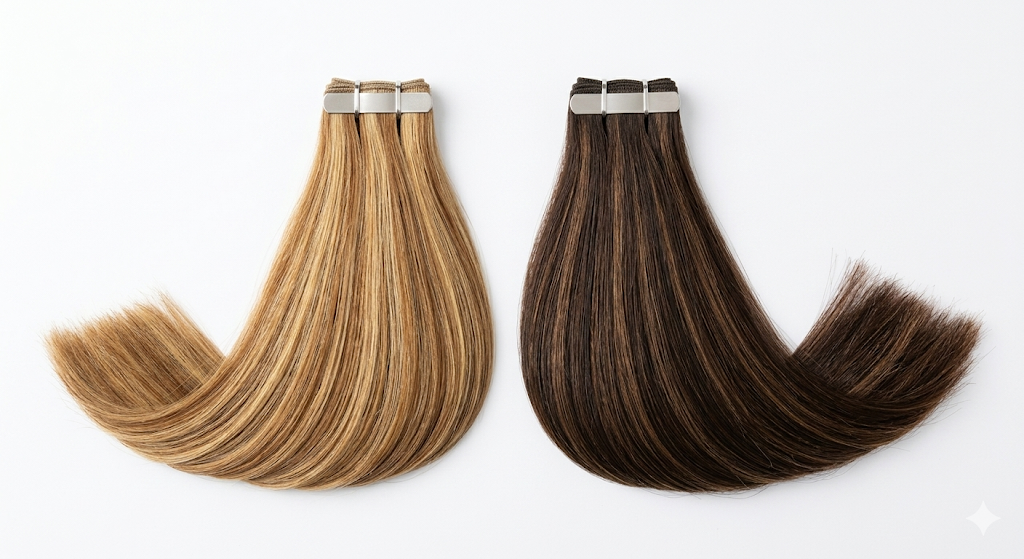
Clients ask our colorists about highlights vs lowlights more than almost any other color question. The short answer: highlights lighten selected sections of your base, while lowlights involve darkening selected sections to add depth and contrast. Our color specialists at David Ryan Salon analyze your base tone, texture, and goals before recommending which technique, or which combination, fits your hair. The right choice depends on whether you want brightness, dimension, or a richer multi-tonal finish.
Ready to plan your next color service? Call (972) 691-0022 to schedule a consultation.
Key Takeaways
- Highlights lighten selected strands above the base color, while lowlights darken sections to add depth and contrast.
- The choice between highlights vs lowlights depends on your base shade, natural contrast, and desired finish.
- Combining both techniques creates dimensional, multi-tonal color that reads more natural than a single process.
- A color consultation with a trained stylist prevents tonal mismatches and protects hair integrity during the lift process.
Two Techniques, Two Completely Different Results
Clients in Trophy Club ask us about the difference between highlights and lowlights almost daily during color consultations. The terms get used interchangeably, but they produce fundamentally different effects on how the eye reads dimension. Highlights lighten selected strands above your base shade, while lowlights involve darkening strategic sections two to three levels below it.
That distinction matters because each technique solves a different problem. Highlights brighten and create the illusion of light catching the hair, while lowlights restore depth, anchor a too-uniform blonde, or rebuild contrast in over-lightened color. In the sections ahead, our color team covers the mechanics of each technique, who suits which approach, how we combine them, and the consultation factors that drive the recommendation. For broader context on our color menu, see our full range of hair color services.
What Is the Core Difference Between Highlights and Lowlights?
The core difference between highlights and lowlights comes down to direction: highlights lighten selected sections above the natural base, while lowlights darken selected sections below the base. Both techniques add dimension, but they move tone in opposite directions and rely on different chemistry. Understanding this distinction helps you and your stylist choose the right approach for your starting color and end goal.
Highlights: Lifting Above the Base
Highlights involve lifting strands one to several levels brighter than your natural base color. The process uses a lift agent, either bleach or a high-lift permanent color, that opens the cuticle and removes pigment from the strand. The result reads as brightness and movement, especially in natural light.
Foil highlights, balayage, and babylights all sit within the highlights family, each using a different placement and saturation method. Babylights are fine, densely woven sections that mimic natural sun lightening, while balayage is hand-painted for a softer grow-out. For a closer look at painted techniques, our ombre vs. balayage comparison covers placement and maintenance in detail.
Lowlights: Depositing Below the Base
Lowlights use permanent or semi-permanent deposit color, typically one to three levels darker than the base, with no lift agent involved. Because no pigment is being removed, the process is less chemically aggressive than lightening and is generally gentler on the strand.
Lowlights are especially effective for hair that has been over-highlighted and lost its natural contrast. Weaving darker pieces back through the mid-lengths and ends restores depth, anchors the face frame, and makes existing highlights read as intentional rather than uniform. Our stylists often combine both techniques in a single appointment to rebuild balance, which is one of the most common requests within our hair color services.
Which Technique Suits Your Base Color and Hair Type?
The right technique depends on where your hair starts, not where you want it to end. Our colorists analyze your natural level, existing color history, and texture before recommending highlights, lowlights, or a combination. The question of lowlights vs highlights which is better only has a real answer once we read the canvas in front of us.
Dark and Medium Bases
Dark brown hair at a natural Level 3 to 5 often produces the most visible dimension from lowlights because contrast builds without aggressive lift. Adding deeper sections against a medium brown base creates shadow and movement that pure highlights cannot replicate on darker hair.
Highlights on very dark hair require substantial processing and carry real risk of brassiness or uneven lift, especially over previous color. For Level 3 to 5 clients seeking dimension, a partial lowlight or a partial highlights vs lowlights blend often delivers cleaner results than chasing pale ribbons through a dark base.
Light and Previously Colored Hair
Years of highlighting create a specific problem: the mid-lengths and ends already sit at high-lift level, so adding more highlights compounds damage and flattens contrast. Lowlights restore depth, break up that washed-out uniformity, and give the eye somewhere to rest.
Naturally light hair at Level 7 and above usually benefits more from highlights because the base already provides contrast. Our colorists conduct a strand assessment to determine whether a single-process refresh, targeted lowlights, or a multi-step protocol best fits your current condition.
Texture and Density Considerations
Fine hair shows every section line, so soft, face-framing placement prevents a stripy result. Dense hair supports bolder sectioning and weaves more pieces without looking overdone. Type 3 and Type 4 curls read color differently once dry because the curl pattern bends light, which means placement that looks balanced and wet can disappear when the hair springs up.
For curly and coily clients, we map placement to the curl pattern rather than to straight parting lines. Healthy texture also depends on the cut and condition of the hair, so pairing color with appropriate haircuts and treatments protects the integrity of every dimensional piece we place.
How Stylists Combine Highlights and Lowlights for Full Dimension

Yes, highlights and lowlights are routinely applied in the same appointment. Our colorists rarely use only one technique in isolation, because natural hair carries both bright reflective strands and deeper shadow strands. Combining the two recreates the way sunlight and shadow fall across the head, which is the foundation of believable hair dimension techniques.
The Dimensional Color Method
Dimensional color depends on the ratio of light sections to dark sections. A heavier weighting of lifted foils produces a warm, bright finish, while a heavier weighting of darkened foils produces a richer, deeper result. Our stylists set this ratio during consultation by analyzing your natural undertone, skin tone, regrowth pattern, and how often you can return for maintenance.
The conversation also covers partial highlights vs lowlights placement. A partial service concentrates foils around the face and parting, while a full application distributes them across the entire head for uniform movement.
Foil Placement and Sectioning
Foil mechanics drive the final pattern. Our colorists alternate a highlight foil, a lowlight foil, and a skipped base section, then repeat the sequence through each subsection of the head. Tighter sectioning with thinner weaves produces a soft, blended finish that reads almost hand-painted.
Wider sections with thicker weaves produce chunkier contrast and more visible separation between tones. The base color stays untouched between foils, which preserves depth at the root and prevents the result from flattening into a single shade. You can review our full hair color service menu to see how foil work fits alongside balayage and gloss options.
Post-Color Treatment Protocol
Any lift service breaks disulfide bonds inside the hair shaft. Our targeted bond-building protocol uses Olaplex during and after the color process to repair those bonds and protect structural integrity. Read more on how Olaplex supports color-treated hair if you want the technical breakdown.
At home, use sulfate-free shampoo, a weekly deep conditioner, and heat protectant before any hot tool. Clients who also struggle with frizz often layer a Brazilian blowout into the appointment to smooth the cuticle and extend color shine between visits.
Ready to combine highlights and lowlights for a custom dimensional result? Call (972) 691-0022 to schedule a color consultation with our team.
Maintenance, Grow-Out, and Long-Term Color Strategy
Dimensional color requires a systematic maintenance plan to hold tone and blend regrowth. The grow-out behavior of highlights and lowlights differs significantly, and your at-home protocol determines how long the result holds between salon visits.
Highlight Grow-Out Timeline
Most clients see a visible root line at the six to eight week mark, depending on hair growth rate and placement proximity to the scalp. Face-framing highlights show contrast earlier than mid-shaft pieces because the lifted strands sit closest to the natural base.
A root smudge or gloss refresh around week six can soften the transition without committing to a full foil service. This targeted protocol extends the life of the original highlight by another four to six weeks for many clients.
Lowlight Longevity and Fade
Lowlights grow out more gracefully than highlights because deposit-only color creates softer demarcation than lift. The darker pieces blur into the natural base rather than producing a hard line at the regrowth zone.
Semi-permanent lowlights typically soften over six to ten weeks. Permanent lowlights last longer through wash cycles but may need a tonal refresh as warm undertones surface. Pairing lowlights with periodic gloss services keeps the dimension reading true.
At-Home Care for Dimensional Color
A sulfate-free shampoo paired with weekly deep conditioning slows fade and maintains cuticle integrity between appointments. Heat tools should stay below 350 degrees, and a heat protectant is non-negotiable on colored hair.
Weekly conditioning masks penetrate deeper than rinse-out conditioners; you can read more about the difference between deep conditioning and daily conditioner to understand why both belong in a color-safe routine. Mineral buildup from hard water can shift tone toward brassy or muddy reflections over time, so a monthly chelating treatment helps maintain the intended result.
For a tailored long-term plan, our colorists pair these hair dimension techniques with refresh services and bond-building treatments through our Hair Color Services menu.
What Trophy Club Clients Should Know Before Their Color Appointment

Two regional factors influence how highlights and lowlights wear between visits: North Texas sun exposure and local water chemistry. Understanding both helps you plan maintenance and decide whether lowlights vs highlights which is better for your routine.
North Texas Climate and Water Effects
Summers in Trophy Club and across Denton County bring extended UV exposure, which accelerates brassiness in highlighted sections and fades low-deposit lowlights faster than cooler climates. Porous, previously lightened hair absorbs ambient minerals from tap water more readily, which can shift tone toward warm or dull over several weeks.
Between appointments, our stylists often recommend a clarifying treatment or a quick toner refresh to manage these regional effects. Pool chlorine and frequent heat styling compound the issue, so a targeted at-home routine extends the life of your color service noticeably.
What Our Stylists Cover in a Color Consultation
A thorough consultation is where the right technique gets matched to the right client. Our stylists review color history first, including box dye, prior lightener, and any gloss or toner you have used, since residual product affects how new color lifts or deposits.
From there, we analyze your natural level and undertone, check scalp sensitivity, and ask about lifestyle factors: swim frequency, heat tool use, and how much maintenance you are willing to commit to. Across 1,207 reviews averaging 4.9 of 5 stars, clients consistently describe the initial consultation as thorough and unrushed, which is the standard we hold at David Ryan Salon’s Trophy Club location.
If you are weighing highlights, lowlights, or a combination, book a color consultation with our team. We will look at your natural level, color history, and lifestyle before recommending an approach. Call (972) 691-0022 to schedule.
Frequently Asked Questions
Can I Switch From Highlights to Lowlights Without Damaging My Hair?
Yes, transitioning from highlights to lowlights is generally low-risk because lowlights deposit color rather than lift it, which means less chemical stress on the hair. However, if your hair is heavily bleached or compromised, a stylist at David Ryan Salon will likely recommend a bond-building treatment before adding deeper tones. The key is a thorough consultation so your stylist can assess porosity and plan the color placement correctly.
How Much Do Highlights or Lowlights Typically Cost in the Trophy Club Area?
Pricing varies depending on hair length, density, and the complexity of the technique used. Partial applications generally cost less than full foil services, and combining highlights with lowlights in a dimensional color service will fall toward the higher end of that range. David Ryan Salon provides personalized quotes during the consultation so there are no surprises on the day of your appointment.
Is It Safe to Get Highlights or Lowlights While Pregnant?
Most dermatologists and OB-GYNs consider professional hair color services low-risk after the first trimester, since scalp absorption of color chemicals is minimal in a well-ventilated salon environment. That said, every pregnancy is different, and you should always confirm with your healthcare provider before booking. The stylists at David Ryan Salon are happy to discuss ammonia-free or gentler formula options to give you added peace of mind.
Will Highlights Make Fine Hair Look Thinner?
When done correctly, highlights actually create the illusion of volume and movement in fine hair by adding contrast at different depths. The concern arises only if highlights are applied too uniformly or too close to the scalp, which can flatten the effect. David Ryan Salon stylists use strategic foil placement to ensure fine-haired clients get dimension without sacrificing the appearance of fullness.
How Soon After a Color Service Can I Use a Clarifying Shampoo?
You should wait at least two to three weeks after a highlight or lowlight service before reaching for a clarifying shampoo, since these formulas strip color molecules along with buildup. Frequent use can cause highlights to turn brassy and lowlights to fade faster than expected. A color-safe cleansing shampoo used weekly is a better long-term routine for maintaining dimensional results.
Do Lowlights Work on Gray Hair?
Lowlights can be an effective tool for blending gray rather than covering it completely, adding depth and a more natural, lived-in appearance. This approach works especially well for clients who want to reduce the harsh contrast of a solid gray-coverage color as it grows out. The stylists at David Ryan Salon often recommend a mix of lowlights and soft highlights to create a seamless blend for gray-transitioning clients.
How Many Sessions Does It Take to Achieve a Full Dimensional Color Look Starting From a Single Process?
For most clients, one well-planned session combining highlights and lowlights is enough to create a visible dimension, but the result depends heavily on your starting color and the level of contrast you want. Clients coming from a flat, single-process dark shade may need two appointments spaced four to six weeks apart to lift enough base color for highlights to read naturally. Your stylist at David Ryan Salon will outline a realistic session timeline during your initial consultation.
Ready to Get Started with David Ryan Salon?
Call (972) 691-0022 to speak with our team directly.