
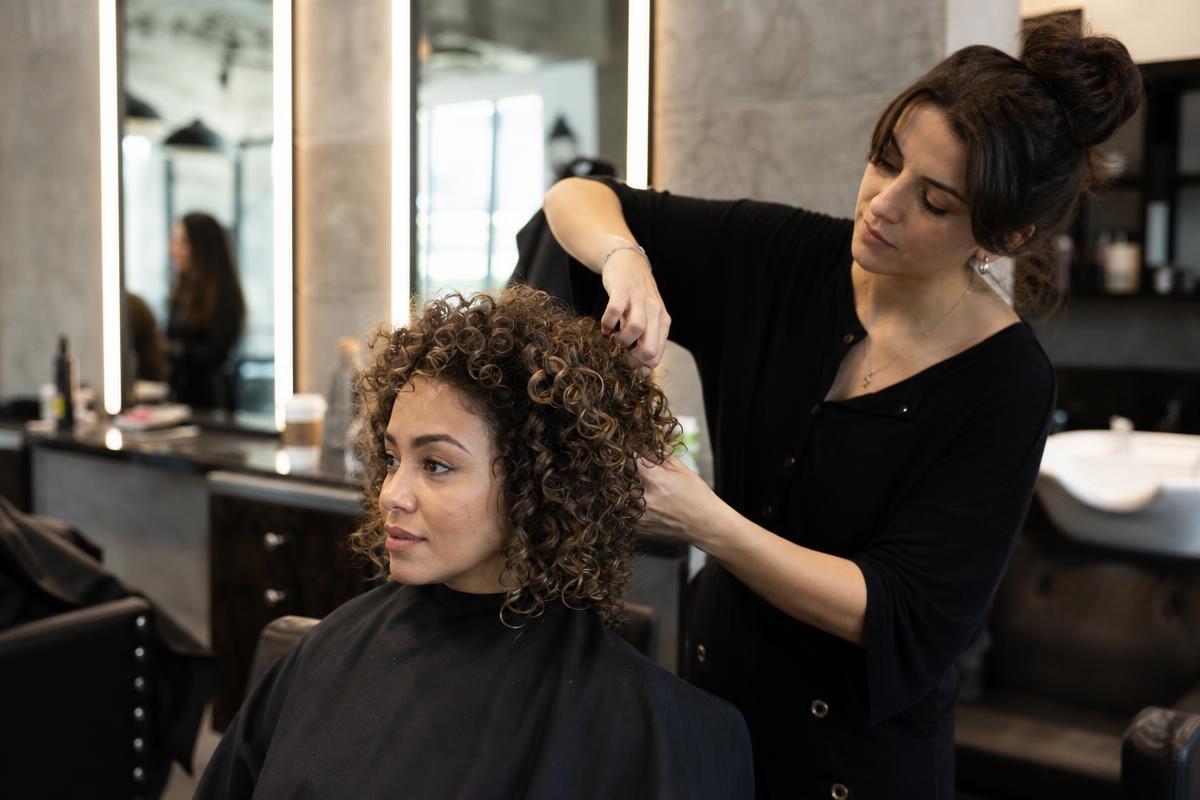
Curly hair in North Texas faces real challenges. Trophy Club’s hard water, summer humidity surges, and intense UV exposure all work against curl definition and moisture retention. Our stylists at David Ryan Salon have worked with clients across Trophy Club and the surrounding communities long enough to know that generic curly hair tips rarely account for these regional conditions.
The nine recommendations below are grounded in what actually works for curly hair in this climate, from daily hydration routines to cut and color decisions that support your curl pattern long-term. Ready for a consultation tailored to your curl type? Our Trophy Club team is here to help.
Key Takeaways
- Local hard water raises mineral buildup that disrupts curl definition and hair porosity.
- Summer humidity causes hygral fatigue, making a hydrating routine non-negotiable.
- Effective curly hair tips address both your curl pattern and local climate.
- Cold water rinses seal the cuticle and improve curl shape and shine.
- Detangling after the shower, in sections, reduces breakage and frizz.
Why Curly Hair Behaves Differently in Trophy Club’s Water and Climate
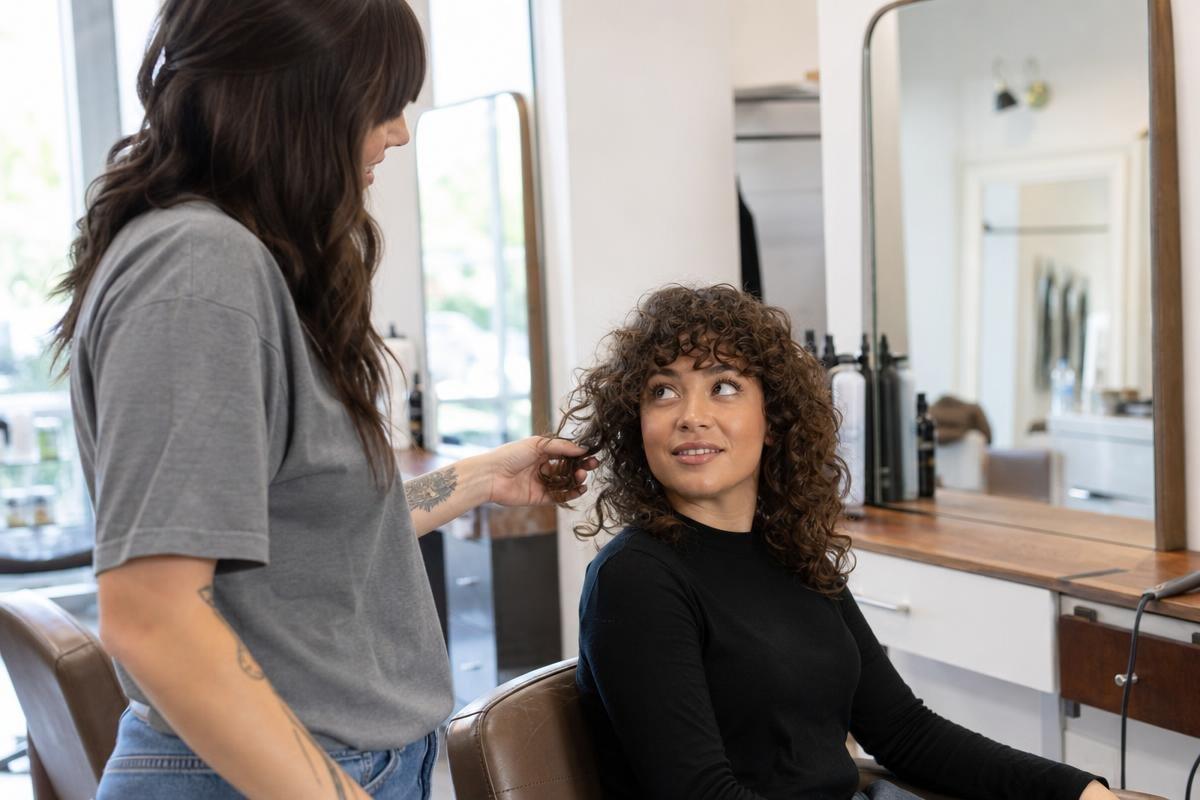
Curly hair requires a layered approach to moisture retention, definition, and frizz control that straight hair simply does not demand. For clients in Trophy Club, that challenge compounds quickly. Municipal water carrying elevated calcium and magnesium mineral content coats the hair shaft, disrupts moisture absorption, and gradually degrades curl pattern definition.
Gulf moisture surges from May through September add hygral fatigue to the equation, cycling the cuticle through repeated swelling and drying that weakens protein bonds over time.
David Ryan Salon serves clients throughout Trophy Club and the surrounding North Texas communities, and the following nine tips are drawn directly from stylist experience with those specific regional conditions. Generic advice found on broad lifestyle sites does not account for hard water mineral interference, high UV index exposure, or the compounding effect of Texas humidity on curl porosity.
Our recommendations do. Our team has earned a 4.9-star average across 1,207 client reviews, with consistent recognition from clients managing type 3B curls through color correction, precision cuts, and targeted conditioning protocols. For clients ready to book, our haircuts and treatments page outlines available services and scheduling options at our Trophy Club location.
Tip 1 and Tip 2 – Why Humidity and Hard Water Change Your Curly Hair Tips
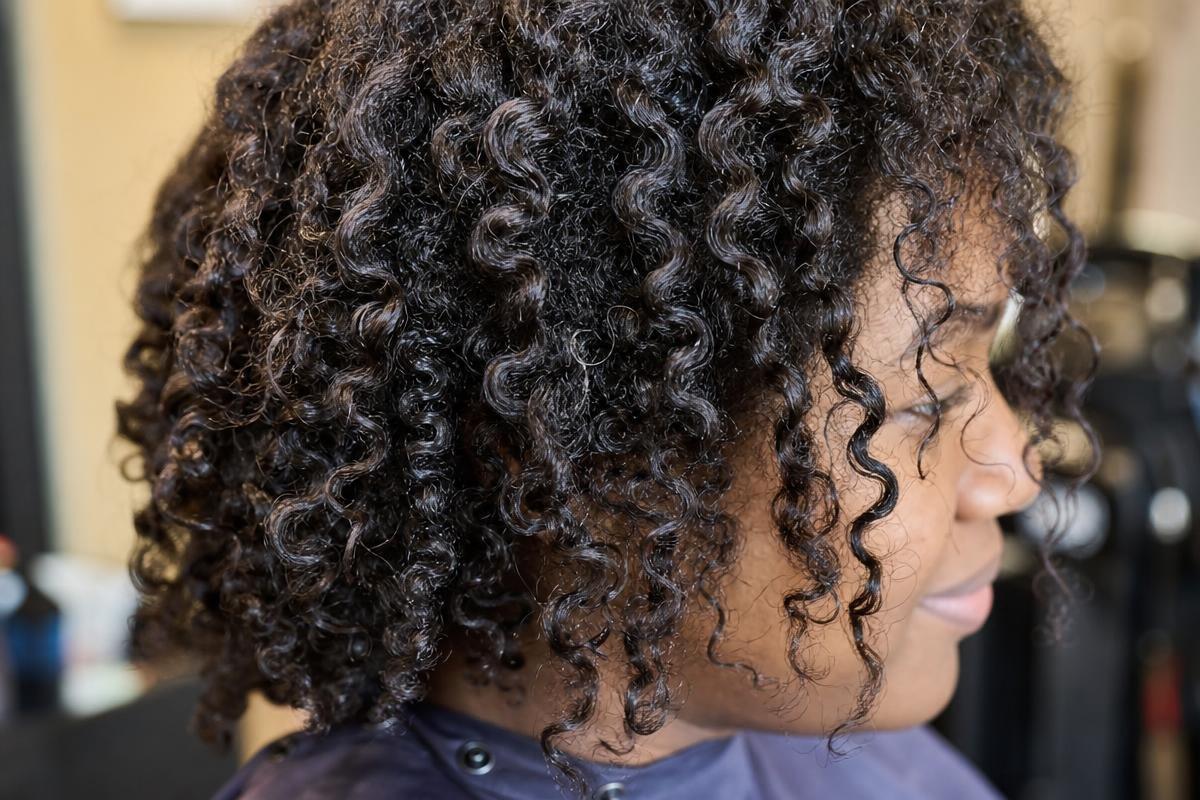
David Ryan Salon’s stylists work with clients who face two specific environmental challenges most curly hair advice ignores entirely: seasonal humidity surges and mineral-heavy municipal water. Understanding both is foundational to any effective curly hair routine in this region.
Tip 1 – Manage How Humidity Affects Curl Pattern and Frizz
Frizz is not simply excess moisture. It is the result of atmospheric water vapor penetrating a raised or damaged cuticle unevenly, causing individual strands to swell at different rates. From May through September, Gulf moisture pushes relative humidity locally into ranges that repeatedly trigger this cuticle-swelling cycle.
Each cycle of swelling and drying weakens the hair’s elasticity over time, a condition known as hygral fatigue. Curls lose definition, spring, and structural integrity through repeated exposure.
The most effective preventive step is applying a leave-in conditioner or curl cream to soaking-wet hair, not damp hair. Sealing the cuticle while the hair shaft is fully saturated limits how much atmospheric moisture can penetrate once you step outside. This single adjustment to a curly hair routine produces measurable improvement in frizz control during the region’s most humid months.
Tip 2 – Address Hard Water Mineral Buildup That Flattens Curl Definition
Trophy Club’s municipal water carries elevated concentrations of calcium and magnesium. These minerals coat the hair shaft with each wash, gradually reducing porosity and blocking the moisture absorption that curls depend on for definition. The result is curl clumps that feel coated, appear dull, and resist styling products regardless of how carefully they are applied.
Incorporating a chelating or clarifying shampoo every two to four weeks removes accumulated mineral deposits before they compromise curl structure. Following that clarifying wash immediately with a deep conditioning treatment restores the moisture balance that the clarifying process temporarily disrupts. Clients visiting our Trophy Club location face comparable hard water conditions, so this protocol is worth building into any routine across the area.
Tip 3 – Always Start With a Curl-Specific Consultation Before Your Cut
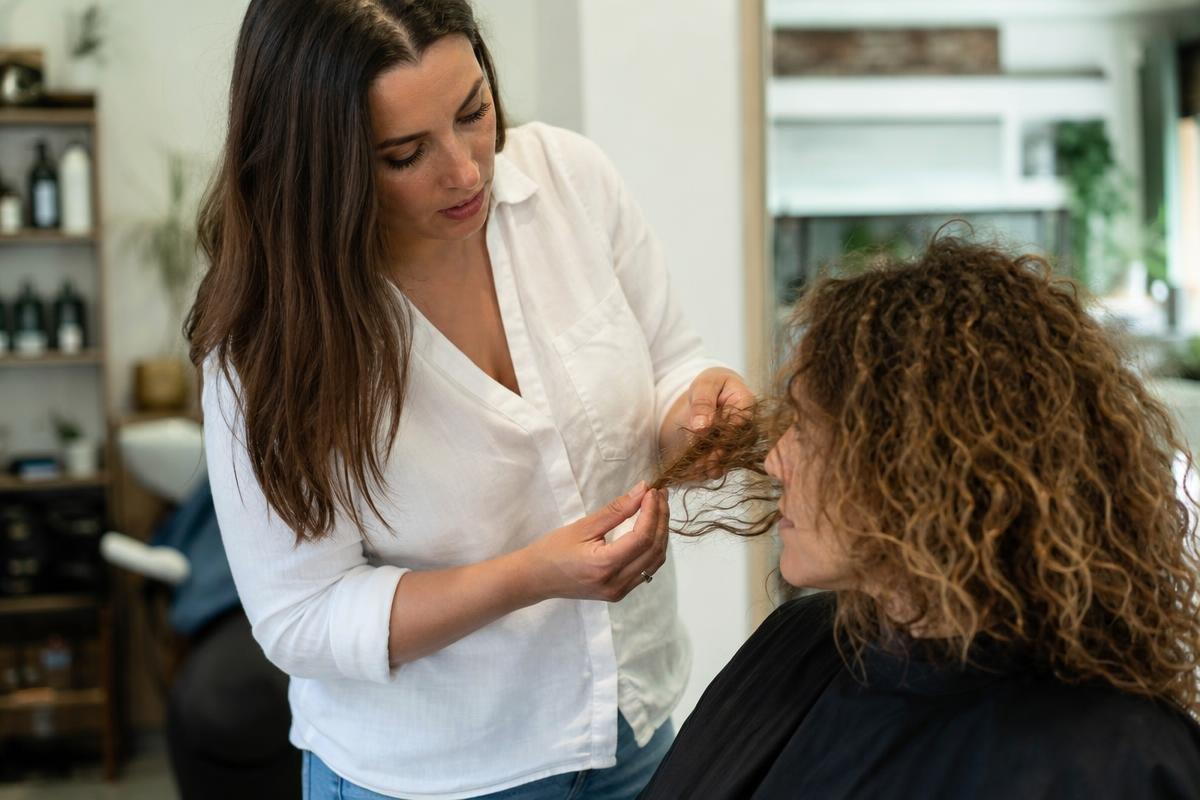
A curl-specific consultation is not a formality. For clients carrying hard water mineral buildup, seasonal humidity exposure, and a history of chemical processing, a thorough pre-cut assessment is the difference between a cut that works with your curl pattern and one that fights it. Our stylists evaluate your hair before any water touches it, because wet hair tells an incomplete story.
What to Tell Your Stylist About Your Curl Type
Arrive at your appointment with your hair in its natural, dry state. This allows our team to assess your true curl pattern, measure shrinkage percentage, and identify whether your curl formation is uniform or mixed across sections. Clients with type 3 curly hair, for example, often present with tighter coils at the nape and looser waves at the crown. That variation changes how the cut is mapped entirely.
Prepare to share your full chemical history, including box dye, bleach, relaxers, and any keratin treatments. Chemical processing alters hair porosity at the cuticle level, which directly affects how your hair absorbs moisture, responds to the scissors, and holds definition after styling.
Clients with type 3B curl patterns and prior color processing have noted measurable improvements in moisture retention and curl definition after a consultation-based approach to their haircuts and treatments. If you have received color services at any point, that information shapes the entire cutting and product protocol.
Why Dry Cutting Technique Matters for Curls
Wet hair stretches. On a client with significant shrinkage, a wet cut can remove two or more inches of perceived length that the curl reclaims once dry. Dry cutting allows our stylists to see exactly where each curl falls at its natural resting length, so the shape is built around your actual curl behavior rather than a stretched approximation of it.
This technique is especially relevant along the Lake Lewisville corridor, where mineral-heavy water and periodic Gulf humidity surges affect curl elasticity season to season. Our stylists factor these conditions into every curl consultation, treating the assessment as a clinical baseline rather than a brief pre-service exchange.
Tips 4 and 5 – Shampoo Strategy and the Cold-Water Rinse
Tip 4 – Do Not Skip Shampoo, Choose the Right Formula Instead
Co-washing alone is not sufficient for most curly hair types, particularly here where mineral-heavy municipal water accelerates product buildup on the curl shaft. Sulfate-free shampoos formulated specifically for curly or textured hair cleanse the scalp thoroughly without stripping the natural sebum that lubricates each curl from root to tip. Skipping shampoo entirely allows styling product residue and scalp debris to accumulate, weighing down curl clumps and creating conditions for scalp irritation over time.
Most curly hair benefits from shampooing one to two times per week, adjusted for scalp oiliness and how heavily your curly hair routine relies on hold-based products. Our stylists frequently recommend clarifying with a gentle sulfate-free formula every four to six weeks to remove hard-water mineral deposits that standard co-washes cannot address. If you are uncertain which formula suits your porosity level, our haircuts and treatments appointments include a thorough scalp and strand assessment before any product recommendation is made.
Tip 5 – Finish Every Conditioning Session With a Cold-Water Rinse
Rinse water temperature directly affects curl definition, and the mechanism is physical rather than anecdotal. Warm and hot water open the hair cuticle, allowing conditioner molecules to penetrate the cortex and deliver moisture. Cold water, applied for 10 to 15 seconds immediately after conditioning, closes the cuticle flat against the strand. A sealed cuticle locks in the conditioning benefit, creates a smoother surface that reflects light, and holds the curl’s natural shape more precisely through the drying process.
From May through September, the region’s humidity already works against curl definition by repeatedly forcing the cuticle open through hygral swelling cycles. A consistent cold-water rinse counters that effect at the source. For clients exploring how to care for curly hair alongside hair color services, our team also recommends reviewing the differences between deep conditioning treatments and daily conditioners to build a routine that addresses both moisture retention and cuticle integrity between salon visits.
Want a curl care routine built around your porosity and curl pattern? Call our team at (972) 691-0022 to schedule your curl consultation.
Tips 6 and 7 – Detangling Protocol for Defined, Breakage-Free Curls
Improper detangling is one of the most common causes of breakage in type 3 curly hair care routines. The sequence and method matter as much as the tools. Two targeted adjustments to your curly hair routine can eliminate most of the mechanical damage that disrupts curl definition and causes frizz.
Tip 6 – Detangle After the Shower, Not During
Post-shower detangling outperforms in-shower detangling for one specific reason. Running water rinses away the conditioner’s slip coating before it has fully penetrated the hair shaft. Once you step out of the shower, residual conditioner remains on the cuticle, and the hair is at peak elasticity. That combination reduces friction and allows a wide-tooth comb to move through curl clumps without fracturing them.
Work from ends to roots in two-to-three inch increments. Fine-tooth combs and brushes applied to dry or damp curly hair fracture the curl clump and introduce frizz before styling even begins. The detangling protocol should always begin at the most vulnerable point, the ends, and progress upward in a systematic approach.
Tip 7 – Divide Hair Into Four Sections Before Detangling
Separating hair into four quadrants, two front and two back, before beginning targeted section work prevents already-detangled hair from re-tangling while you address the rest of the head. A single pass through the full head misses interior knots, particularly in dense type 3 or type 4 curl patterns where curl clumps compress against each other. Sectioning ensures complete, even coverage.
Clients with tighter curl patterns also accumulate more split ends between appointments, and split ends are a primary driver of recurring tangles. A professional curl cut every eight to twelve weeks removes those compromised ends before they worsen the detangling process. Consistent trims are part of the protocol, not optional maintenance.
Ready to build a detangling and curl care routine that actually works for your hair? Call our team at (972) 691-0022 to schedule a curl consultation.
Tips 8 and 9 – Deep Conditioning Masks and Protective Styling for Trophy Club’s Climate
Tip 8: Incorporate a Hydrating Mask Into Your Weekly Routine
Curly hair benefits from a dedicated deep conditioning treatment applied weekly, not only when strands feel dry or brittle. Curly hair’s helical structure creates an inherently porous surface, meaning moisture escapes faster between wash days than it does in straight hair. Waiting until your curls feel compromised means the lipid layer is already depleted. Apply your mask to clean, damp hair, cover with a shower cap to trap heat, and leave it on for 10 to 20 minutes before rinsing.
Clients with color-treated curls should select a mask specifically formulated for chemically processed hair. Standard hydrating masks can accelerate color fade, while specialized formulations replenish moisture without stripping pigment. For clients who receive balayage or color services, pairing your curly hair routine with Olaplex for chemically processed hair provides additional bond-building support between appointments.
Our stylists can recommend the appropriate mask weight based on your curl type and porosity level during your next visit.
Tip 9 – Use Protective Styling to Minimize Heat and Humidity Exposure
Protective styling provides a practical, climate-specific defense for curls in Westlake, Roanoke, and surrounding areas of the DFW corridor, where summer UV index readings and periodic humidity surges both degrade protein bonds in the curl shaft. Braids, twists, buns, and structured updos reduce the surface area of hair exposed to direct UV radiation and moisture fluctuation. This is a functional seasonal strategy, not simply a style preference, for anyone managing how to care for curly hair through a Texas summer.
Limiting direct heat tool use to once per week maximum, always paired with a heat protectant, preserves the integrity of your curl pattern over time. A diffuser set to low heat is the preferred alternative for volume and definition without cumulative heat damage. Ask our team about hair styling services that incorporate diffusing technique, protective finishing, and product layering tailored to your curl texture and the season’s specific conditions.
How Our Stylists Support Curly Hair Clients in Trophy Club
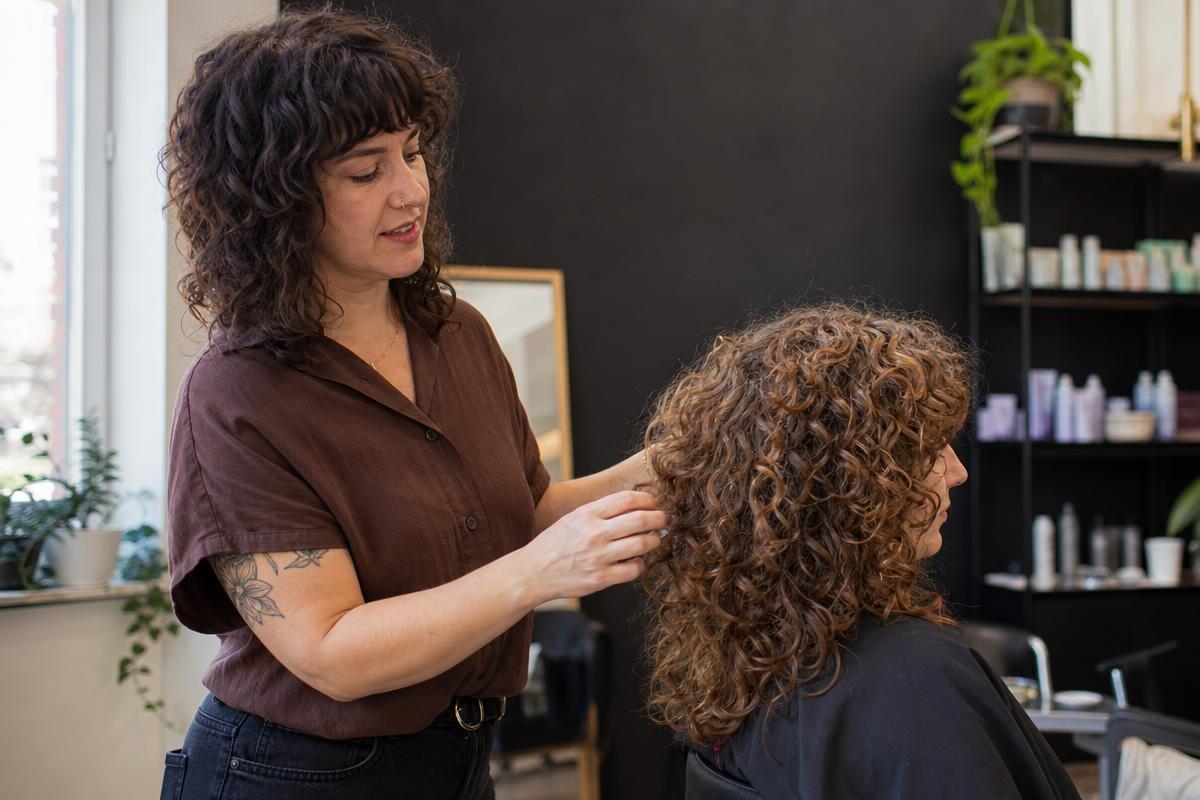
Our team works with curly hair clients across Trophy Club, Westlake, Southlake, and the broader DFW area, delivering consultation-based services tailored to your curl pattern, porosity, and styling goals. Clients visiting our Trophy Club salon receive a thorough intake process before any service begins. Our location is accessible to clients throughout the region and surrounding communities including Westlake, Southlake, and Roanoke.
Curl-Specific Services Available at David Ryan Salon
David Ryan Salon provides precision dry cuts, Brazilian blowouts, and hair color services specifically adapted for curly and textured hair types. Brazilian blowouts are available for clients seeking temporary frizz reduction without permanently altering their curl pattern, a distinction our stylists discuss in detail during consultation.
Our balayage technique is applied with curly hair porosity in mind, adjusting saturation timing and product selection to ensure even color distribution across each curl section. Clients with type 3 curly hair benefit from this porosity-specific approach, which reduces the risk of uneven lift or color banding common in standard application protocols.
What Clients With Curly Hair Say About Their Results
Our team holds a 4.9-star average across more than 1,200 client reviews, with consistent recognition from clients with type 3B curls who received consultation-based color correction and cut services. Clients with tighter curl patterns have specifically noted improved curl definition and reduced frizz following cut and conditioning treatments performed here.
That depth of feedback reflects a team that understands how regional water mineral content and humidity affect curly hair tips and long-term curl health. If you are searching for curly hair care support in Trophy Club or the surrounding area, our stylists are ready to build a protocol tailored to your specifications.
Frequently Asked Questions
What is the single most important step in a curly hair routine for a humid climate?
Moisture sealing takes priority over moisture adding in a humid curly hair routine. Apply your leave-in conditioner to soaking-wet hair immediately after showering, then layer a curl cream or gel on top to seal the cuticle before humidity can force it open. Diffuse on low heat or air-dry completely, and avoid touching your hair while it dries.
This sequence is especially relevant in the Grapevine and Southlake corridor, where summer humidity surges arrive quickly and frizz sets in fast if the cuticle is left unsealed. This applies across the Trophy Club area where summer humidity arrives quickly.
How often should I wash curly hair in this climate?
One to two times per week with a sulfate-free shampoo is the standard curly hair care protocol for this region. During peak summer months, twice weekly washing removes sweat and product buildup without stripping protective oils. Incorporate a chelating shampoo every two to four weeks to clear mineral deposits from local hard water, which coat the shaft and reduce moisture absorption over time.
Does hard water damage curly hair?
Yes. Elevated calcium and magnesium content coats each strand, dulling curl definition and blocking conditioner from penetrating fully. A chelating shampoo used monthly addresses this buildup. Clients in the Trophy Club and Roanoke areas drawing from mineral-heavy water report the same porosity issues.
What is the best haircut type for curly hair?
A dry cut performed by an experienced stylist delivers the most accurate result for curly hair. Cutting dry allows your stylist to see how each curl naturally falls, then remove bulk and shape layers to encourage curl clump formation. Our team offers precision haircuts and treatments tailored to curly and textured hair at both locations.
Can balayage work on chemically processed curly hair?
Yes, with proper assessment of curl type and porosity before application. Freehand balayage follows each curl’s natural movement, making it well-suited to textured hair. On previously processed hair, our colorists evaluate strand integrity and adjust developer volume accordingly to protect curl structure throughout the service.
How do I reduce frizz during summer humidity?
Seal your cuticle immediately after washing by applying product to fully wet hair, never damp. A cold-water rinse at the end of your shower closes cuticle scales before you step into humid air. For longer-term frizz control, a Brazilian blowout reduces hygral fatigue through repeated humidity exposure cycles, which is a recurring concern for curls in this climate zone.
Ready to work with a stylist who understands regional hard water and summer humidity? Call our team at (972) 691-0022 or visit our Trophy Club salon location page to book a curl consultation. Our stylists assess curl type, porosity, and chemical history before recommending any curly hair products or service plan, covering type 2 through type 4 patterns.
Ready to Get Started with David Ryan Salon?
Call (972) 691-0022 to speak with our team directly. We’re ready to answer your questions, walk you through your options, and help you find the right solution for your needs. Whether you’re just starting to plan or ready to move forward, we’ll make the process simple and stress-free.
Reach out today and let’s talk about how we can help.