Most people wait until their hair feels unmanageable before they book an appointment. By that point, the damage is already visible, the style has lost its shape, and the fix takes longer than a simple trim would have. Knowing when to get a haircut is less about following a calendar and more about reading the specific signals your hair is sending. The stylists at David Ryan Salon, located at 4151 Cross Timbers Rd. Suite 150 in Flower Mound, see the same patterns every week, and the signs are more consistent than most clients expect.
This guide covers eight observable signs you need a trim, plus a practical frequency guide by hair type, so you can stop guessing and start maintaining. For a full look at what our cut appointments include, visit our haircut and treatment services page. Ready to get your shape back? See how your hair type affects your schedule and book your next cut today.
Key Takeaways
- Knowing when to get a haircut depends on your hair type, style, and length, not just the calendar.
- Short cuts and fades typically need a trim every four to six weeks to hold their shape.
- Longer styles can go eight to twelve weeks, but split ends and texture loss are early warning signs.
- Heat, humidity, and mineral buildup can contribute to end damage, which may shorten the time between cuts.
- Eight specific physical signs signal that your next appointment is overdue, regardless of how long it has been.
Most people schedule a haircut when their hair starts bothering them, not before. The ponytail goes in because the ends look rough. The hat comes out because the shape is gone. By that point, you are already two to three weeks past the window where a simple trim would have kept everything looking clean and intentional. There is no single answer to when to get a haircut. The right interval depends on your hair type, the cut you are maintaining, and the signals your hair is actually sending you. The clients who stay ahead of it consistently look better between appointments than those who wait for an obvious problem.
How Often Should You Get a Haircut? A Starting Point by Hair Type

How often you should get a haircut depends on your hair type, cut shape, and how your hair is responding between appointments. Frequency is less about personal preference and more about mechanics. Your hair type, cut shape, and whether you color-process all determine how quickly a style breaks down. The ranges below are what our stylists recommend most consistently. Local climate conditions can compress these windows, and that fuller explanation comes in the climate section below.
Short Cuts: Bobs, Pixies, Fades, and Tapers
Many short precision cuts benefit from regular maintenance to preserve their shape. The entire visual effect of a bob, pixie, fade, or taper depends on a clean perimeter. Once that perimeter softens past 4 to 5 weeks of growth, the cut reads as grown out rather than simply longer. There is no built-in forgiveness in a short shape the way there is in longer styles.
Medium-Length Hair
Medium-length cuts may need maintenance when the shape or movement starts to change. The weight and movement of medium-length hair absorb some growth, which buys you a few extra weeks. That said, split ends can worsen over time, particularly when ends are already showing visible wear. Waiting beyond that point means removing more length than you planned at your next appointment.
Long Hair
Long hair can often go longer between trims when the ends remain in good condition. A stylist can recommend a trim schedule that supports your length goals while addressing visible wear at the ends. If you are asking when to trim hair and your priority is growing it out, this schedule still protects your progress.
Color-Processed Hair
Trim appointments should align directly with your Hair Color Services schedule. Fresh color applied over frayed ends creates a visual mismatch: the tone looks current, but the ends tell a different story. This is one of the most common oversights we see. Keeping both appointments on the same cycle solves it cleanly. Get a trim before your next color appointment so your ends match your fresh tone. Call to line up both on one cycle.
The 8 Signs Your Hair Is Telling You It’s Time

Most clients do not walk in saying they know they need a trim. They walk in saying their hair feels off, or they have been wearing it up, or something just stopped working. These are not vague complaints. They are specific, readable signals. Below, the team at David Ryan Salon breaks down the eight signs your hair is actually telling you it is time to schedule a cut.
Your Ends Feel Rough or Snag on Each Other
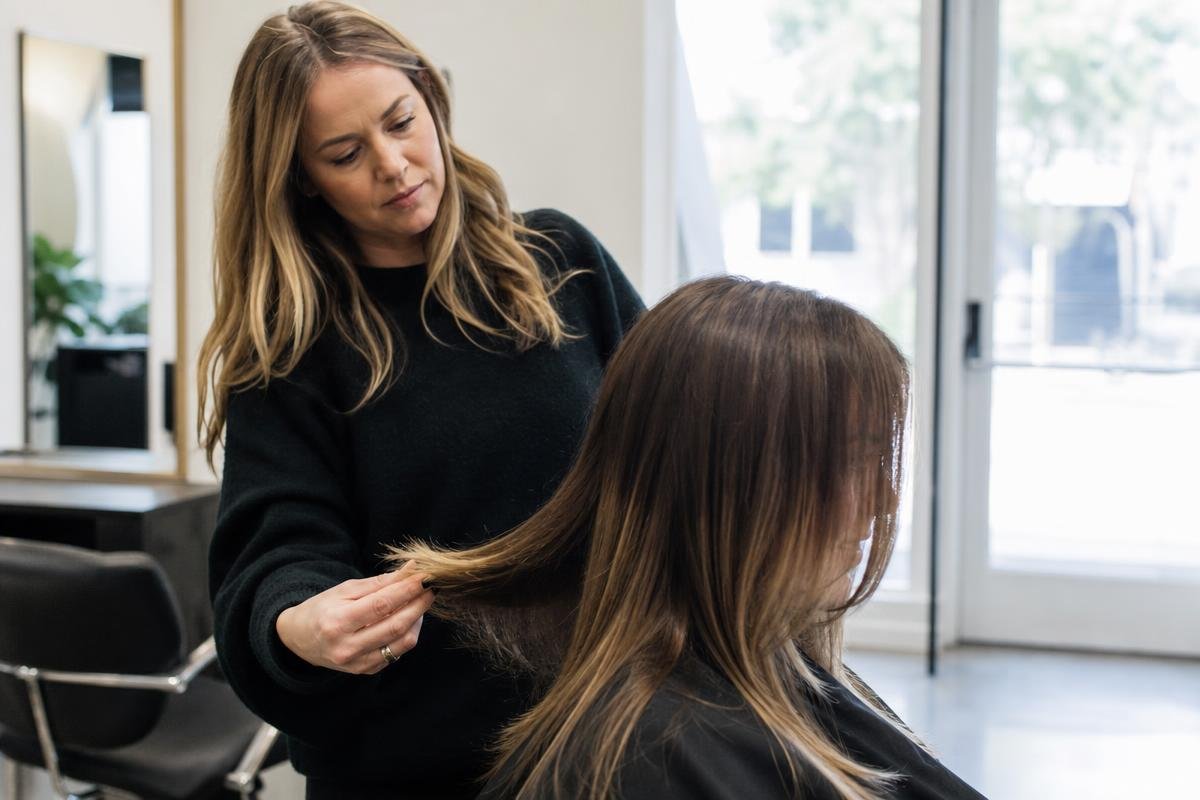
Run your fingers through your ends. If they catch, feel rough, or tangle against each other, that is split-end damage lifting the cuticle. If the ends are catching or tangling, a stylist can assess whether a trim would help preserve the shape and condition of the cut. This can be a useful sign to discuss with a stylist when deciding whether it is time for a trim.
The Shape Has Softened and the Cut Stopped Working
Every cut is built around a specific perimeter and internal weight distribution. A round bob that has grown a quarter inch past its line no longer reads as a bob. The shape is the cut. When growth disrupts the perimeter, the style stops working regardless of how the hair feels to the touch, and no amount of blow-dry technique will bring it back.
You Are Using More Product Than Usual
A well-fitting cut needs product to enhance, not to compensate. If you are adding more dry shampoo, more cream, or more spray to manage the same hair you have always had, the shape is gone. The product is doing the work the cut used to do. That is a reliable behavioral signal that knowing when to get a haircut matters more than finding a better product.
Your Hair Looks Dull Even After Washing
Healthy ends have a smooth cuticle that reflects light. Split and frayed ends scatter it. If your hair looks flat and dull on clean, freshly dried hair, that is an end-condition problem, not a shampoo or formula problem. Switching products will not fix it. A trim could. If the damage is more significant, pairing the cut with a deep conditioning treatment can restore the cuticle and bring back the reflectivity that frayed ends have lost.
Your Layers Have Grown Out and the Weight Is Wrong
Layers are cut to remove weight at specific internal points. When they grow, that weight redistributes. Hair that was designed to move and lift starts falling flat or heavy in exactly the places the original cut was trying to address. The style loses its shape from the inside out, which is why the problem can be hard to name. You just know it stopped looking right.
Your Part Is Shifting or Your Crown Is Behaving Differently
When the cut is right, the hair falls where it is supposed to. When internal layers have grown out, the crown starts to lift unevenly, the part migrates on its own, or the hair starts doing something you cannot explain or replicate at home. Clients describe it as their hair having a mind of its own. What is actually happening is that the weight distribution has shifted past the point the cut was designed to manage. This is one of the most overlooked signs you need a trim.
You Have Been Wearing Your Hair Up Every Day
This one is behavioral, and we hear it consistently at the front desk. A client sits down and says, “I have just been putting it up.” That sentence almost always means the style stopped working and the ponytail became the workaround. Wearing your hair up every day can be one sign that the current cut is no longer fitting your routine or styling goals.
You Are Calculating How Many More Weeks You Can Wait
If you are doing the math on how much longer you can push the interval, the answer is probably zero. Waiting can allow visible wear to become more noticeable. The longer the gap, the more length a stylist has to remove to get back to healthy ends, which often means losing more than you planned. The practical implication is that consistent appointments protect your length better than stretching them out does. If any of these signs sound familiar, our haircuts and treatments page covers what to expect when you come in.
What Flower Mound’s Climate Does to Your Hair Between Appointments
Heat, humidity, sun, and wind can leave hair feeling drier between visits. If your ends are becoming rough or your style is losing shape faster than usual, a shorter trim schedule may help.
Mineral buildup can leave hair feeling rough or dull between appointments. If your texture has shifted noticeably, discuss your routine and treatment options with a stylist. The Hair Treatments That Repair and Restore Salon Results in North DFW page covers common damage patterns and treatment options.
For clients dealing with humidity-driven frizz and cuticle damage between appointments, we often recommend looking into a Brazilian Blowout as a protective option. It smooths the cuticle and gives your hair a layer of defense against the heat and moisture swings that are simply part of living here. It is one of the treatments our stylists suggest most consistently for clients who feel like their hair deteriorates faster than it should between cuts.
If the North Texas climate is shortening your hair’s good days, we can help. Call us at (972) 691-0022 to talk through the right schedule and protective treatments for your hair.
Does Your Hair Type Change When to Get a Haircut?
Yes, and the reason matters more than the number. Haircut frequency by hair type is not just about how fast your hair grows. It is about how quickly your specific hair structure shows wear, loses shape, or accumulates weight. The right interval for one client can be completely wrong for another, even if both are growing at the same rate.
Fine Hair
Fine hair has a smaller strand diameter, which means split ends become visible at the perimeter faster than they do on thicker hair. The ends thin out and the overall shape loses density quickly. Our stylists consistently recommend fine-hair clients stay toward the shorter end of their frequency range, not because fine hair grows faster, but because the damage shows sooner. Waiting an extra two or three weeks tends to cost more length in the correction than the wait was worth.
Thick and Coarse Hair
Thick and coarse hair holds its perimeter shape longer, so the ends do not fray as visibly. The problem builds from the inside. Weight accumulates between the layers and eventually collapses the style before the tips show obvious damage. By the time you notice something is off, the shape has already been gone for a few weeks. Knowing when to trim hair on thicker textures means watching the volume and silhouette, not just the ends.
Curly and Textured Hair
Many curly and textured clients prefer a dry trim because it lets the stylist assess the curl pattern at its natural length. Curl pattern changes significantly when wet, and shrinkage means a wet trim can remove more length than intended. Cutting dry lets the stylist see the actual curl shape and work with the real length. Our clients with curly and textured hair consistently tell us that dry trimming changed how their curl pattern looked after the appointment. Understanding how cut and hair styling work together is part of every consultation we do.
When a Trim Is Not Enough: Signs You Need More Than a Haircut
Sometimes the issue is not length. A trim removes the visible evidence of damage, but it does not fix what caused the damage. Knowing the difference between split ends, breakage, and grown-out color helps you book the right appointment instead of the wrong one.
Split Ends vs. Breakage
Split ends form at the tip of the strand and travel upward over time. A trim handles them. Breakage is different. It snaps mid-shaft, which means the structural integrity of the hair itself is compromised, usually from over-processing, heat damage, or a protein and moisture imbalance. If you are seeing short, wispy pieces that are not new growth, that is breakage, not splits. A trim alone will not resolve it. Our stylists typically recommend pairing the cut with a deep conditioning treatment to address the underlying cause before the damage travels further up the shaft.
The Elasticity Test
Wet a single strand and gently stretch it. If a wet strand snaps immediately or stays stretched after gentle tension, ask a stylist to assess its elasticity and condition. That result tells you a treatment is needed alongside the trim, not instead of it.
Color Timing Is a Separate Cycle
Visible roots, brassiness, and faded tone are not haircut problems. They are color problems. A client can have healthy ends and still need a color appointment on a completely different schedule. Our Hair Color Services page covers service options, and if you want to understand your specific interval for highlights or balayage, those two maintenance cycles rarely align with your trim schedule.
Frequently Asked Questions
How Often Should I Get a Haircut for Healthy Hair?
The right interval depends on your cut, hair type, and the condition of your ends. Ask your stylist for a maintenance schedule that fits your goals. The goal is to maintain the condition and shape of the ends while working toward your hair goals.
Does Hair Grow Faster in the Summer?
Hair growth varies from person to person and can be affected by multiple factors. What changes in a Texas summer is end damage. Heat and humidity can contribute to dryness and breakage between appointments, which may shorten the practical window before you need a trim. The growth rate has not changed; the condition of your ends has.
Should I Trim My Hair While I Am Growing It Out?
Yes. Split ends that are not removed cause breakage, which slows your length progress rather than helping it. Regular trims can help maintain the appearance of the ends while you work toward your length goals. Skipping trims to grow faster usually produces the opposite result.
How Do I Know If I Need a Haircut or a Treatment?
Shape, length, and visible split ends point to a trim. Texture changes, elasticity loss, frizz, and mid-shaft breakage point to a treatment. If you are unsure which category your hair falls into, the deep conditioning treatment page covers the difference in detail and can help you decide before your appointment.
What Happens If I Go Too Long Without a Haircut?
Split ends travel up the hair shaft and cause breakage higher up. When you finally come in, the stylist has to remove more length to reach healthy hair. You end up losing more than you would have if you had kept a regular schedule. It is one of the most common reasons clients feel like they never make length progress.
How Do I Book an Appointment at the Flower Mound Location?
You can call us directly at (972) 691-0022 or stop by at 4151 Cross Timbers Rd Ste 150, Flower Mound, TX 75028. Call ahead to discuss appointment availability. David Ryan Salon’s team is ready to assess where your hair is and get it back to where it should be.
Ready to Get Started with David Ryan Salon?
Call (972) 691-0022 to speak with our team directly. We’re ready to answer your questions, walk you through your options, and help you find the right solution for your needs. Whether you’re just starting to plan or ready to move forward, we’ll make the process simple and stress-free. Reach out today and let’s talk about how we can help.