
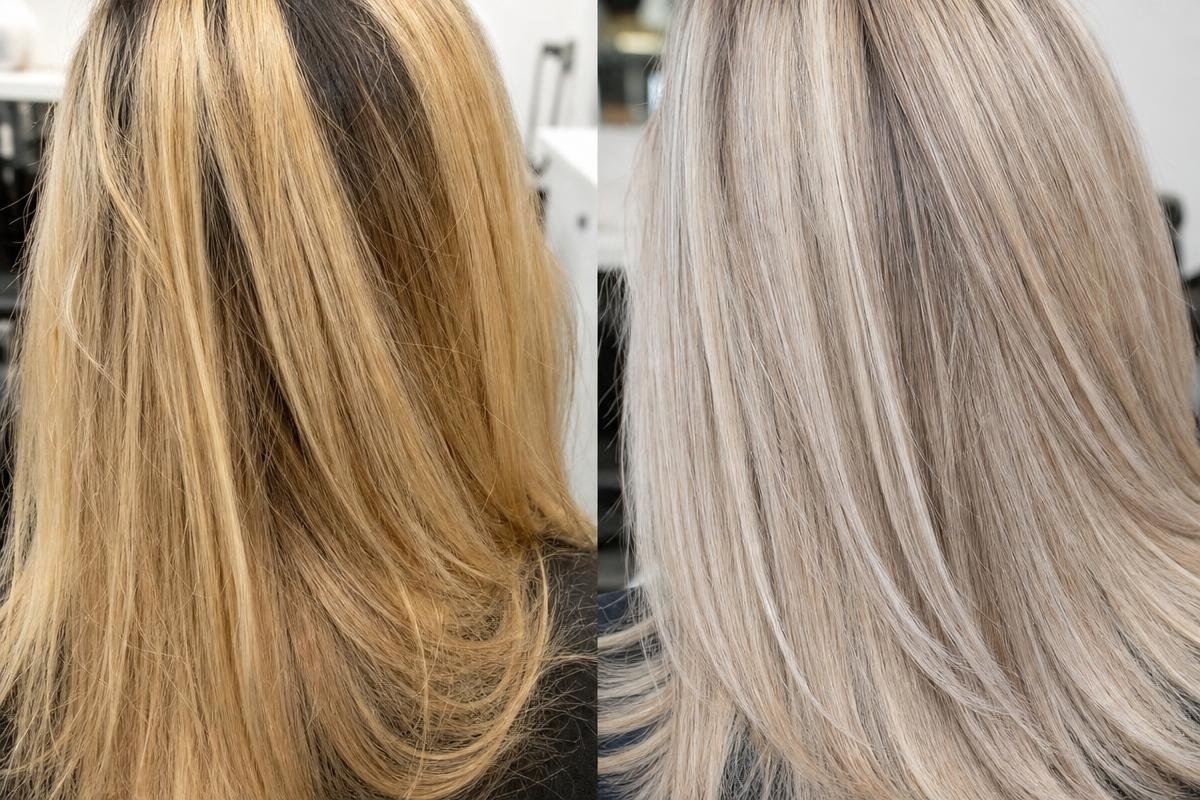
Brassy hair is not necessarily a sign that your color was done wrong. It can happen as toner fades and warm pigments underneath become more visible. Mineral buildup and sun exposure can also affect how color looks between appointments.
Knowing how to fix brassy hair at home, and when to call a professional, makes a real difference in how long your color holds. Our color team, led by founder David Ryan, works with clients from the 76262 area regularly and can help you get ahead of brassiness before it becomes a bigger correction.
Key Takeaways
- Brassiness happens when warm base pigments are exposed as toner or color fades over time.
- Hard water can contribute to dullness and faster color fade, making at-home maintenance important.
- Purple and blue shampoos can fix brassy hair temporarily, but they do not replace a professional toning service.
- Sun exposure can contribute to color warmth returning between salon visits.
- Professional color correction may be the right next step when at-home remedies no longer keep up with brassiness.
You step out of the shower, look in the mirror under that bright bathroom light, and your highlights have shifted. What was a cool, ashy blonde a few weeks ago now looks distinctly orange at the ends. Your colorist did not make a mistake. Your hair did exactly what hair does when toner fades and the warm tones beneath your natural color become visible again. Brassiness is not fading in the traditional sense. It is warm pigment surfacing as the toner washes out.
Clients who make the drive from the 76262 zip code to our salon at 2210 TX-114 Suite 240 in Trophy Club often ask about brassy highlights during color consultations. This article covers why brassiness happens at the chemistry level, which at-home fixes actually work and which ones overcorrect, and how to know when a professional toning appointment is the only real solution. If your highlights have shifted and you want to understand why before reaching for a product, start here.
What Is Brassy Hair, Really?
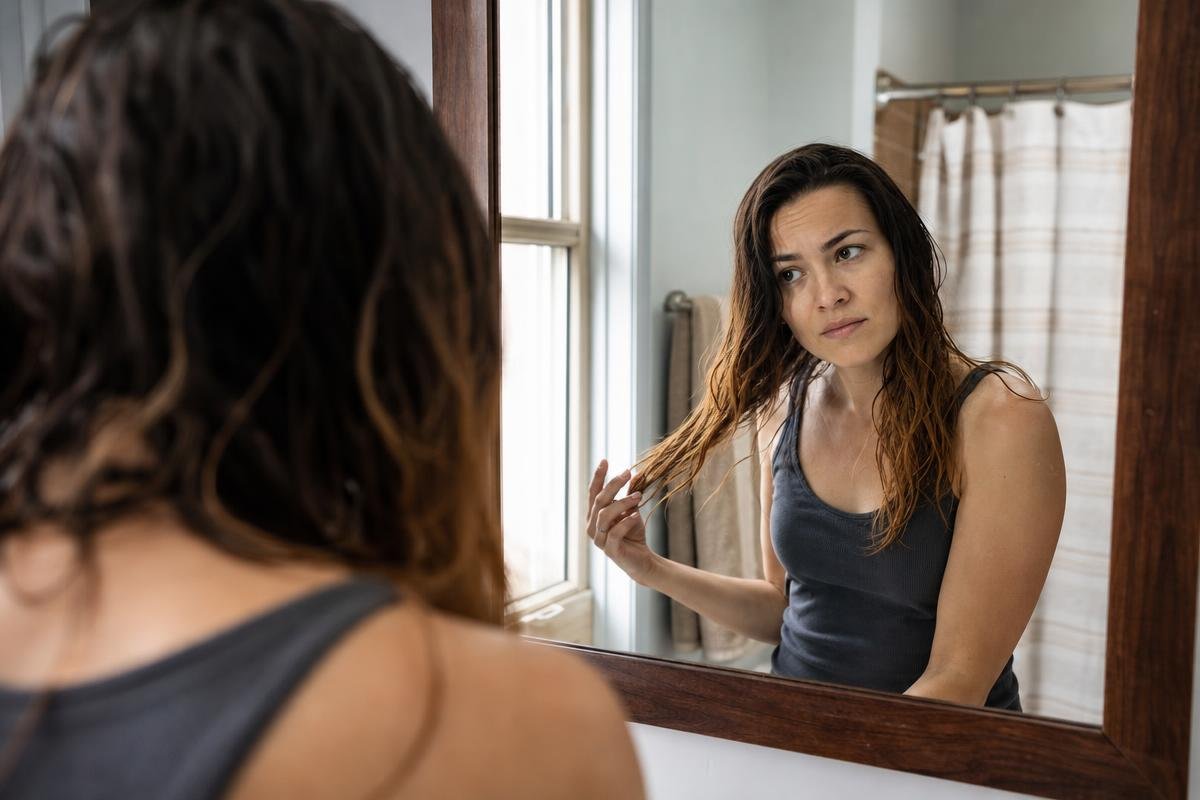
Brassy hair is the result of toner fading and the warm base pigments in your strands becoming visible again, not a salon error. It is the expected behavior of any toner-based color result over time. Understanding why it happens makes it much easier to address, whether you are reaching for a product at home or booking a correction appointment.
The Underlying Pigment Spectrum
Every strand of hair contains natural pigments arranged across a spectrum. At the darkest end, those tones are red and red-orange. As hair gets lighter, the spectrum moves through orange, then gold, then yellow, and finally pale yellow at the lightest point. Bleach removes pigment in stages, working through that spectrum in order. If the lift stops too early, orange or yellow warmth is left exposed. That is why hair looks orange after bleaching: the process did not go far enough to clear those warm tones from the strand.
A color-neutralizing toner works by depositing a temporary violet or blue-based color directly onto the hair shaft. Violet cancels yellow; blue cancels orange. This is straightforward color theory. Toner is doing neutralizing work that a longer or more thorough lift would have eliminated at the source. For services like balayage and blonding, where graduated color is the goal, toner is applied precisely to control how warm or cool each section reads after the lift.
Why Warm Tones Come Back Over Time
Toner is temporary, and how long it lasts can vary with hair condition, wash routine, and water exposure. As it washes out, the residual warmth beneath becomes visible again. That returning warmth is not a sign the color was applied incorrectly. It is simply the toner doing its job until it runs out.
For clients in this area, there is an added factor. Mineral buildup can affect how color looks and contribute to a yellow or orange cast on the hair shaft. That means brassiness can have two separate sources: fading toner and mineral buildup. Clients often attribute the problem to one cause when both are contributing. The next section covers how to get rid of orange hair caused specifically by water mineral deposits, separate from the base pigment issue explained here.
Why Trophy Club’s Water Can Make Brassiness Worse
Mineral buildup from hard water can accumulate on the hair shaft over time. That mineral film reads as yellow or orange under light, completely separate from any warm base tone your toner is trying to address. Brassiness can involve both mineral buildup and color chemistry.
Mineral buildup can affect how color looks and may limit the results of violet-pigment shampoo.
What Hard Water Actually Does to Color-Treated Hair
Mineral buildup can be difficult to remove with a regular shampoo and may affect how toning products perform. For some clients, buildup may contribute to warm or dull-looking results even when they follow a toning routine. Sun exposure can also contribute to color fade and dryness.
What Clarifying Does (and What It Does Not Do)
A clarifying shampoo may help remove buildup and prepare the hair for toning products. Follow the product directions and your stylist’s recommendation for frequency. Skipping this step means your color-neutralizing shampoo is landing on film, not fiber, which produces inconsistent and short-lived results. Clarifying resets the surface. It does not tone hair itself.
Clarifying can leave hair feeling dry, so follow with a conditioner or treatment that fits your hair type. Ask your stylist which routine is appropriate for your color and condition. If clarifying and toning at home is not holding, a professional service resets your color at the source.
At-Home Fixes That Actually Work (and One That Does Not)
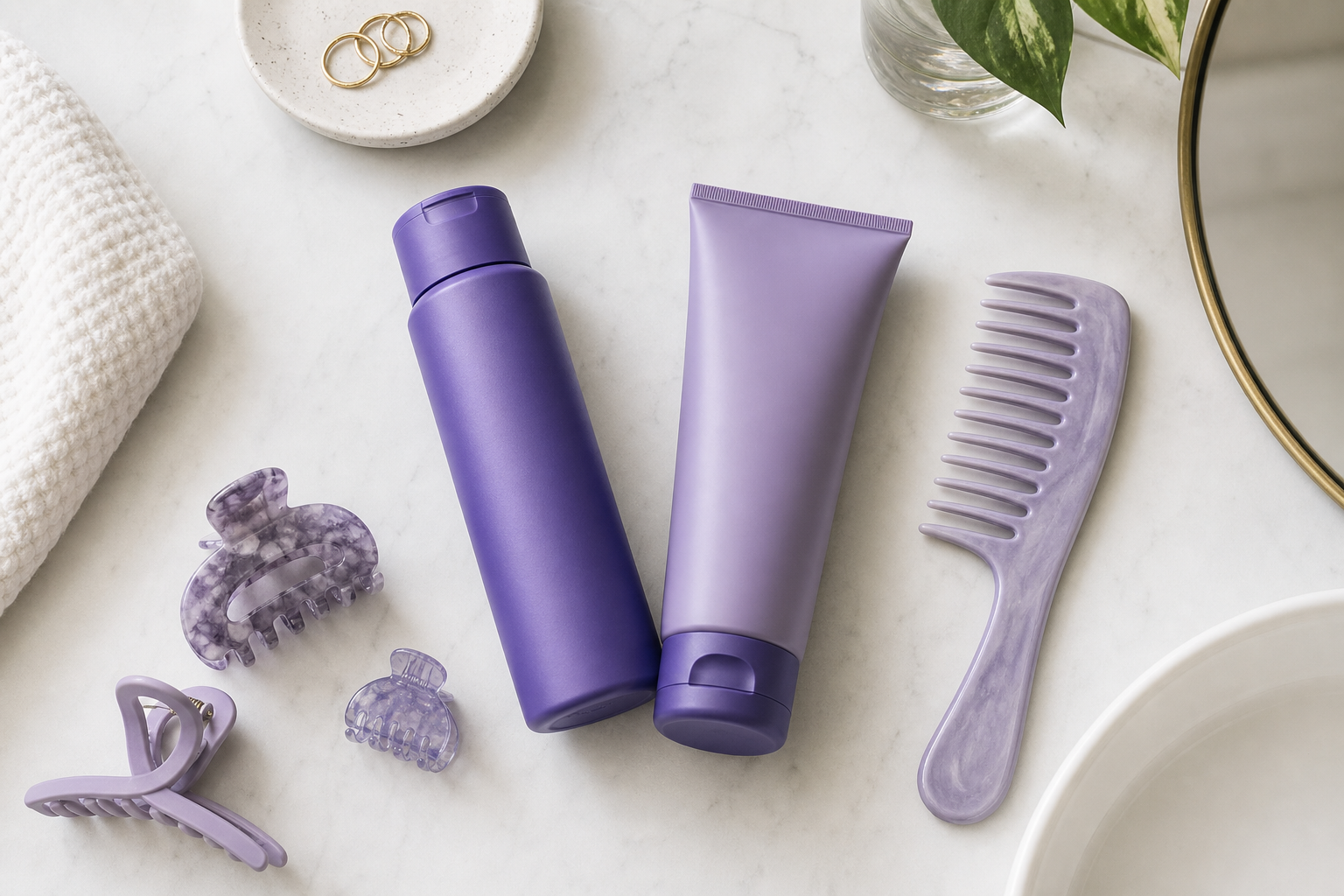
Most clients who call us about brassy highlights have already tried a violet shampoo. That is a good instinct, but it is not a universal fix for how to fix brassy hair, and using the wrong one for your tone can make things worse. Here is what actually works, and where the line is.
Purple Shampoo: Right Tool for Yellow, Wrong Tool for Orange
Purple and blue shampoos are commonly used to manage unwanted warmth. The right product and routine depend on your hair color, porosity, and current condition, so follow the product directions and ask your stylist for a recommendation.
Contact Time Is Where Most People Go Wrong
Follow the directions for your specific toning shampoo. If your hair is porous, damaged, or color-treated, ask your stylist about the safest routine and frequency.
The One That Does Not Work: Daily Use as a Substitute for Toning
Using toning shampoo every day to compensate for fading color is the most common overcorrection we see. It does not replace a professional toner, and it will eventually shift your color into muddy or ashy territory. If you are washing daily with a toning product and still seeing brassiness return within a week, that is a signal that your underlying color needs professional attention, not more product. Our Hair Color Services address the root cause rather than managing symptoms at the surface.
Is Your Hair Brassy or Is It Something Else? A Simple Diagnostic
Not all brassiness is the same problem, and treating the wrong kind is why so many at-home fixes fall short. Before reaching for another bottle of violet shampoo or a brassy highlights fix product, look at the actual color your hair is showing you. Yellow, orange, and red each point to a different stage of the lifting process and require a different correction.
Reading the Color Your Hair Is Showing You
Yellow brassiness means your lift was sufficient but your toner has faded. This is the easiest scenario to manage at home. Purple shampoo neutralizes yellow tones because purple and yellow sit opposite each other on the color wheel. If you need to know how to get rid of orange hair, that is a different issue entirely. Orange brassiness means your lift stopped too early, or a mid-level blonde has lost significant tone. Blue shampoo can soften it temporarily, but a professional re-tone is the more lasting solution.
Red or copper brassiness is the most serious signal. It means the base pigment was never fully lifted, which is common in natural brunettes transitioning to blonde. No at-home product corrects this because the problem exists at the lifting stage, not the toning stage. Our Hair Color Services page covers the correction options our team uses for each of these situations.
Porosity: The Variable Most Guides Ignore
If your toner fades quickly despite a consistent routine, porosity may be one factor a stylist can assess. Highly porous hair, caused by heat damage, chemical processing, or mechanical stress, grabs color quickly and releases it just as fast. Mineral buildup may also affect how color looks between appointments. Violet shampoo applied to porous hair is like filling a bucket with holes. You need to address the structure of the hair first.
A bond-building or protein treatment before your next color service does the actual work here. Our haircuts and treatments page outlines the treatment options our team recommends most consistently for clients dealing with this exact combination of brassiness and porosity. Not sure which category your hair falls into? Our stylists can read your color and give you a clear answer.
When At-Home Fixes Stop Working: The Case for Professional Toning
Violet shampoo has a ceiling. If you are using it every other day and still seeing warm, orange-leaning tones by the end of the week, the product is not failing you. The underlying issue is simply beyond what a deposit-only shampoo can address. A professional toner can provide a more tailored color adjustment than a rinse-out product. How long the result lasts depends on hair condition, wash routine, and the service performed.
Toner Gloss vs. Full Color Correction: How We Decide
These are two different services, and the distinction matters. A toner gloss is the right call when your hair was lifted to the correct level but the tone has simply faded over time. A full color correction is necessary when the lift itself was insufficient, meaning the hair never got light enough to hold a cool tone in the first place. No at-home product can make that call accurately.
Our stylists read the actual hair during the consultation, checking the base pigment and the condition of the cuticle before any color goes in. The exact plan, whether a gloss or a correction, is always discussed before we start.
What Clients From the 76262 Area Find When They Come In
Clients making the short drive down Trophy Club Drive to our location at 2210 TX-114 Suite 240 in Trophy Club consistently tell us the same thing: they spent weeks managing brassiness at home before realizing one appointment would have resolved it faster. Our team begins with a consultation each time.
If you have been managing warm tones at home without the results you want, a professional toner consultation may be the next step. You can see the full range of what our team offers on our Trophy Club salon page.
Maintaining Your Color Between Salon Visits
A good toning appointment only stays good if the week-to-week routine supports it. That routine should account for mineral buildup, sun exposure, and chlorine, not just which shampoo to buy.
Build a Weekly Wash Routine
Use a sulfate-free, color-safe shampoo for most washes. Add a violet-pigment shampoo one to two times per week, leaving it on for three to five minutes before rinsing. Going longer than five minutes risks an ashy or violet cast, especially on fine hair. Every two to three weeks, run a clarifying shampoo through to clear mineral buildup from hard water. Follow every wash with a moisturizing conditioner or mask. A deep conditioning treatment done consistently will also help the cuticle stay sealed, which slows how fast toner escapes between appointments.
Protect Against Heat and UV
Use heat protectant and follow your stylist’s recommendations for hot-tool settings, especially if your hair is color-treated or fine. UV exposure is just as damaging. Sun exposure can add to color fade, especially during extended time outdoors. A UV-protective leave-in or hair sunscreen is a practical maintenance tool here, not an optional extra.
Pool Days and a Brassy Highlights Fix That Often Gets Missed
Chlorine does not cause brassiness directly, but it deposits green-yellow tones on blonde hair that are easy to confuse with a brassy highlights fix situation. Wet your hair with clean water before getting in the pool, then apply a leave-in conditioner as a barrier. If you are considering a smoothing service, a Brazilian Blowout seals the cuticle and genuinely slows color fade between visits, which makes it a practical pairing with any color service.
Frequently Asked Questions
Does purple shampoo work if I rinse it out right away?
No. Purple shampoo needs three to five minutes of contact time to deposit enough violet pigment to make a visible difference. Most people apply it in the shower and rinse within a minute, which is why they see little to no change. Leave it on, then rinse. Results will still be temporary, lasting a wash or two, but you will actually see them.
Can I use purple shampoo every day to speed up results?
Using a toning shampoo more often than directed can lead to unwanted results. Follow the product directions and adjust your routine with guidance from your stylist.
Why does my color go brassy so fast after a salon visit?
Fast fade can be related to porosity, wash routine, heat exposure, or product selection. Sulfate-heavy shampoos and very hot water in the days immediately after color also pull toner out quickly. If you are also dealing with hard municipal water, mineral deposits compound the problem by coating the hair shaft and blocking how toning products deposit.
Do apple cider vinegar rinses actually tone hair?
No. ACV can help remove mineral buildup, which may make your color look cleaner, but it has no toning effect. Lemon juice is a mild UV-activated lightener and is unpredictable on color-treated hair. Purple and blue shampoos are common at-home products used to neutralize unwanted warmth. For a deeper explanation of how treatments affect color-treated hair, see our page on deep conditioning treatment.
Can hard water cause brassiness even if my toner is fine?
Hard water can leave mineral buildup that affects how color looks and how toning products perform. A clarifying wash before toning is especially important if you are in an area with hard municipal water. If toning shampoo is not keeping up after two consistent weeks of use, the issue may be mineral buildup, not your product.
When should I stop trying to fix brassy hair at home?
If your hair looks orange or copper, or if your at-home routine is not helping, schedule a professional color consultation before trying additional products. At-home fixes address surface tone. They do not correct base pigment.
If your highlights have shifted and toning shampoo is not keeping up, the next step is a consultation. Call David Ryan Salon at (972) 691-0022 or book online. Our team will look at your actual hair, determine whether you need a gloss or a full correction, and put together a plan before any color goes in. Clients from the 76262 area can visit us at 2210 TX-114 Suite 240, Trophy Club, TX 76262. Come in and let us sort it out.
Ready to Get Started with David Ryan Salon?
Call (972) 691-0022 to speak with our team directly. We’re ready to answer your questions, walk you through your options, and help you find the right solution for your needs. Whether you’re just starting to plan or ready to move forward, we’ll make the process simple and stress-free. Reach out today and let’s talk about how we can help.