
Finding short, snapped strands in a brush can be frustrating. Hair breakage often builds through repeated stress rather than one dramatic event, so the most useful response is to look at the small habits that happen every wash day and styling session. Gentle handling, fewer high-heat passes, and less tension can all help reduce avoidable wear.
Hair does not behave the same way for everyone. Straight hair, curls, coils, fine strands, and thick strands can need different detangling routines. The American Academy of Dermatology (AAD) recommends adjusting how and when you comb based on texture. If you live in Flower Mound and want help reviewing your everyday routine, you can bring your questions to a stylist at David Ryan Salon’s Flower Mound location.
Key Takeaways
- Repeated pulling, friction, high heat, and tight styles can put extra stress on hair.
- Detangle according to your texture; there is not one wet-versus-dry rule for everyone.
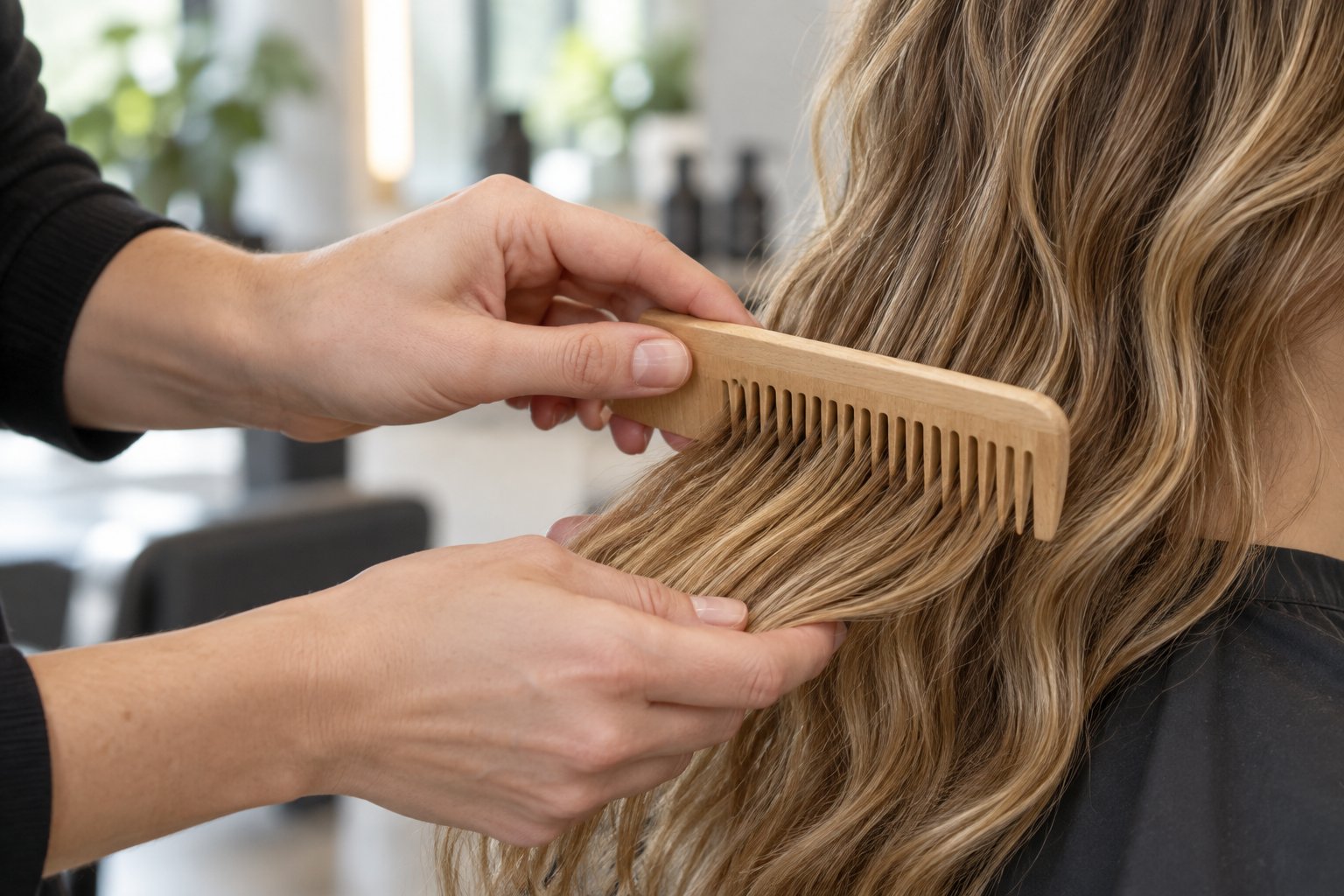
- Use a wide-tooth comb and work gently from the ends upward when detangling.
- Reduce heat exposure overall and avoid using a flat iron on wet hair.
- Persistent breakage or sudden changes may call for advice from a dermatologist.
What Everyday Hair Breakage Can Look Like
Breakage happens when a strand snaps along its length. Short pieces around the brush, sink, or clothing can be a clue, though the amount and pattern matter. This article is about routine-related stress, not a way to diagnose hair loss or a medical condition.
Several habits can add stress over time. Pulling a comb through knots, repeatedly brushing the same section, using high heat often, or wearing a very tight style can all make hair more vulnerable to damage. Chemical processing can also change how hair handles styling, which is why a personalized routine is safer than trying to copy someone else’s product list.
How to Prevent Hair Breakage With Gentler Detangling
The AAD advises using a wide-tooth comb to detangle wet hair because wet hair is delicate. It also makes an important distinction by hair type: people with straight hair can let it dry a bit before gently combing, while people with thick or curly hair may comb in the shower before rinsing out conditioner. The AAD’s curly-hair guidance also recommends working with thoroughly wet hair and conditioner when detangling curls.
For any texture, begin at the ends and move upward in short sections instead of forcing a comb through a knot from the roots down. If a section catches, pause and loosen it with your fingers or add the conditioner or detangler recommended for your hair. A few extra minutes are better than a hard tug.
After washing, avoid rough towel-rubbing. The AAD suggests wrapping hair in a towel or T-shirt to gently absorb moisture. That small change can reduce unnecessary friction while hair is still wet.
Reduce Heat and Repeated Styling Stress
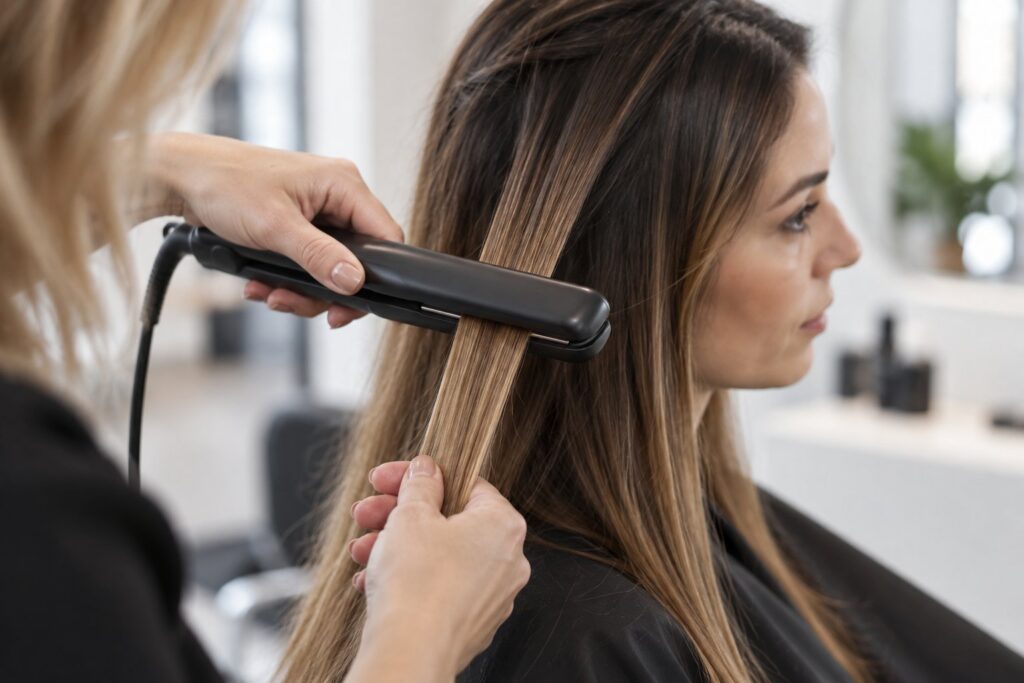
Heat tools can make a style easier to shape, but frequent use adds another source of stress. The AAD recommends allowing hair to partially air-dry before styling and reducing how often you blow-dry. If you use a flat iron, use it on dry hair and keep the setting low or medium; follow the tool and product instructions for safe use.
Try to avoid repeating several hot-tool passes on the same section. Work in manageable sections, use a setting that is appropriate for your hair, and give hair breaks from heat when you can. If a style requires frequent high heat to hold, ask a stylist whether a different finish or routine would be gentler for your hair.
Make Styles Comfortable, Not Tight

A hairstyle that pulls at the scalp can create ongoing tension. If a ponytail, bun, braid, or extension style feels painful or leaves a strong pulling sensation, loosen it and give your hair a break. Changing where you part or secure your hair can also help avoid putting the same sections under tension every day.
Comfort is a useful signal. A style should not hurt, and you should not need to pull tightly just to make it stay in place. The AAD’s hair-styling guidance recommends avoiding tight styles that pull on your hair.
Be Thoughtful With Chemical Services
Color and texture services should be chosen with your hair’s current condition in mind. If your hair is already breaking, tell your stylist before adding another chemical process or changing your routine. Ask what timing and at-home care make sense for your specific service, rather than layering treatments or home color based on a generic online schedule.
This does not mean you need to avoid color or styling altogether. It means that the condition of your hair, the service history, and the look you want should be discussed together. A stylist can help you make a plan that is realistic for your maintenance preferences.
A Simple Routine to Try This Week
Start with one or two changes and keep them consistent:
- Detangle in sections, using the approach that fits your hair texture.
- Blot or wrap hair to absorb water instead of rubbing it roughly with a towel.
- Reduce hot-tool use where possible and avoid applying a flat iron to wet hair.
- Choose comfortable styles that do not pull, and alternate how you wear your hair.
- Ask a stylist before changing chemical services if you are seeing continued breakage.
If you change everything at once, it can be hard to tell what helped. A simple routine makes it easier to notice which habits your hair responds to.
Small Habits Around the House That Add Up
Some of the stress on hair happens outside of wash day. Hair ties that snag, clips that grip the same spot, and ponytails that are pulled tight for hours can all add tension over time. Choose accessories that hold your hair without catching it, and change where you secure your hair from day to day so one area is not always under strain.
Friction can also come from habits you barely notice. Running your fingers through your hair over and over, tucking it behind your ears all day, or rubbing it against a seat back or a coat collar can leave the ends rough. You do not need to stop living your life to protect your hair; simply noticing these patterns helps you understand where wear may be coming from.
Before bed, consider loosening any tight style and gently detangling so knots do not build overnight. In the morning, take a moment to work through any tangles with your fingers or a wide-tooth comb instead of pulling a brush through quickly.
When to Get More Guidance
If breakage continues after you adjust your routine, or if you notice sudden thinning, bald patches, or scalp symptoms, contact a dermatologist. A stylist can help you review heat, tension, detangling, and service history, but medical concerns should be assessed by a medical professional.
For routine questions, a stylist at David Ryan Salon’s Flower Mound location can help you review styling and service-history factors. Visit the Flower Mound location page for current location details and appointment options.
Frequently Asked Questions
What Everyday Habits Can Contribute to Hair Breakage?
Repeated pulling or friction, frequent high-heat styling, and styles that create ongoing tension can add stress to hair. Looking at the habits that happen during washing, detangling, and styling can help you choose a practical first change.
How Should I Detangle to Help Reduce Breakage?
Work gently in small sections, starting at the ends and moving upward rather than pulling a comb through a knot from the roots. A wide-tooth comb and an approach suited to your hair texture can make detangling more manageable.
Is It Okay to Comb Wet Hair?
Wet hair is delicate, and the best approach can vary by texture. The American Academy of Dermatology advises using a wide-tooth comb for wet hair; it also suggests that straight hair may be combed gently after it dries a bit, while thick or curly hair may be detangled in the shower with conditioner.
Can Heat Styling Contribute to Hair Breakage?
Frequent heat styling can add stress, especially when you repeatedly work over the same section. The AAD recommends reducing heat exposure; if you use a flat iron, use it on dry hair and follow the tool instructions.
Should I Stop Wearing Tight Hairstyles?
If a ponytail, bun, braid, or other style feels painful or pulls strongly at your scalp, loosen it and give your hair a break. Varying where you secure or part your hair can also help avoid placing tension on the same sections every day.
When Should I Ask a Stylist or Dermatologist About Breakage?
A stylist can help review detangling, heat, tension, and service history. If you notice sudden thinning, bald patches, scalp symptoms, or continuing concerns, contact a dermatologist for medical guidance.
Ready to Visit Our Flower Mound Salon?
If you would like help reviewing your detangling and styling routine, our Flower Mound stylists can discuss the habits and products that fit your hair. Visit David Ryan Salon at 4151 Cross Timbers Rd. Suite 150, Flower Mound, TX 75028, or call (972) 691-0022 to book your appointment.