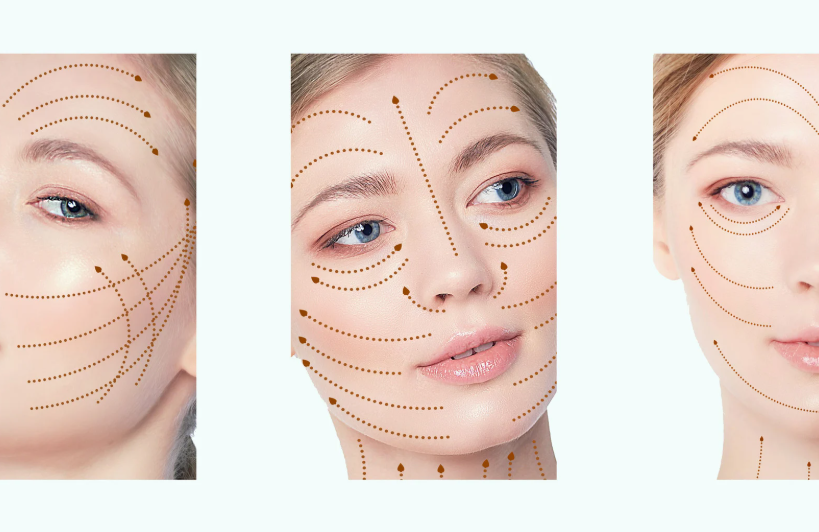
Most people walk into a salon with a photo and a vague sense of what they want. That works sometimes, but it leaves a lot to chance. The missing piece in most haircut conversations is face shape: the underlying structure that determines whether a specific cut will look polished and intentional on you, or slightly off in a way that is hard to explain.
Knowing how to determine your face shape before you sit in the chair changes the entire dynamic. You stop guessing and start making informed decisions. Your stylist can move faster, confirm what you have already figured out, and fine-tune the approach for your hair’s specific texture and density. The result is a cut that works with your features rather than around them.
This guide walks you through exactly how to identify your face shape at home, how to read the results, and what to do with that information at your next appointment at David Ryan Salon in Flower Mound or Trophy Club.
Why Face Shape Is the Foundation of Every Great Haircut
A haircut is not just about length or trend. It is a set of proportional decisions: where weight falls, where layers begin, how the hem interacts with the jaw, how fringe meets the forehead. Each of those decisions lands differently depending on the underlying structure of the face.
Two clients can sit in the same chair, ask for the same cut, and leave looking completely different from each other. The cut itself may have been executed perfectly in both cases. The difference is whether that cut was chosen with the face shape in mind.
Face shape guides the placement of layers, the ideal length, which type of fringe will flatter and which will fight the face, and whether to add volume at the crown, the sides, or the ends. Our stylists assess face shape as the first step in every consultation, alongside hair texture, density, and lifestyle. Starting with that information makes every other decision cleaner.
Step 1: Pull Your Hair Back and Set Up Your Photo
Before you can identify your face shape, you need a clear, unobstructed view of your facial outline. Hair falling around the face is the most common reason people misread their own shape. Even a few pieces framing the jaw or forehead change the apparent proportions enough to throw off the assessment.
Start by pulling every strand of hair away from your face. Use a headband, clips, or a ponytail, and tuck back any baby hairs along the hairline. If you have bangs, pin them fully off the forehead. The goal is to see exactly where your hairline begins and where your jaw ends with nothing in between.
Once your hair is back, stand in front of a well-lit mirror at eye level and look straight ahead. Do not tilt your chin up or down. A slight downward tilt can make the jaw look narrower than it is; a slight upward tilt can do the opposite. Take a front-facing photo on your phone at eye level with natural or even overhead light, no angle, no filter, and no selfie distortion from holding the camera too close.
With this photo, you can do a quick visual read before moving to measurements. Look at the overall silhouette your face makes from hairline to chin. Ask yourself: does it look closer to a circle, an oval, a rectangle, or something with a pointed chin or prominent cheekbones? You may be able to narrow it to two or three candidates before you even pick up a measuring tape.
Step 2: Take Four Key Measurements
A visual read is a good starting point, but the six face shapes have enough overlap that measurements often separate what the eye cannot. You only need four numbers and a soft fabric measuring tape. A rigid tape or a ruler will not follow the curves of your face accurately, so a flexible sewing tape is the right tool. If you do not have one, a piece of string and a ruler works just as well.
Forehead Width
Measure across the widest point of your forehead, which typically falls halfway between your eyebrows and your hairline. Place the tape at the hairline on one side and stretch it straight across to the same point on the other side. Keep the tape flush against the skin and record the number. This measurement is especially useful for identifying heart shapes and oblong shapes, where the forehead tends to be either notably wide or notably narrow relative to the rest of the face.
Cheekbone Width
This is the single most important measurement for distinguishing several face shapes from each other. Find the highest, most prominent point of each cheekbone, which sits just below and slightly outward from the outer corner of each eye. Measure from that point on one side to the same point on the other. The cheekbone measurement is the widest point on oval, round, and diamond faces, and identifying which of those you have comes down to comparing this number against the others.
Jawline Width
Place the tape at the outer corner of your jaw just below your ear and run it along the jaw’s edge to the center of your chin. Double that number to get your full jaw width. The jawline measurement distinguishes square faces, where the jaw is nearly as wide as the cheekbones, from round faces, where it is noticeably narrower. It also identifies triangle or pear shapes, where the jaw is the widest point of the face rather than the cheekbones or forehead.
Face Length
Measure from the center of your hairline straight down to the tip of your chin. This number, compared against your cheekbone width, tells you how elongated your face is. If your face length is roughly equal to your cheekbone width, you are in round or square territory. If it is noticeably larger, you are likely oval, oblong, diamond, or heart-shaped. Face length is the measurement that separates oval from round and oblong from square more reliably than any visual inspection can.
Step 3: Match Your Measurements to Your Face Shape
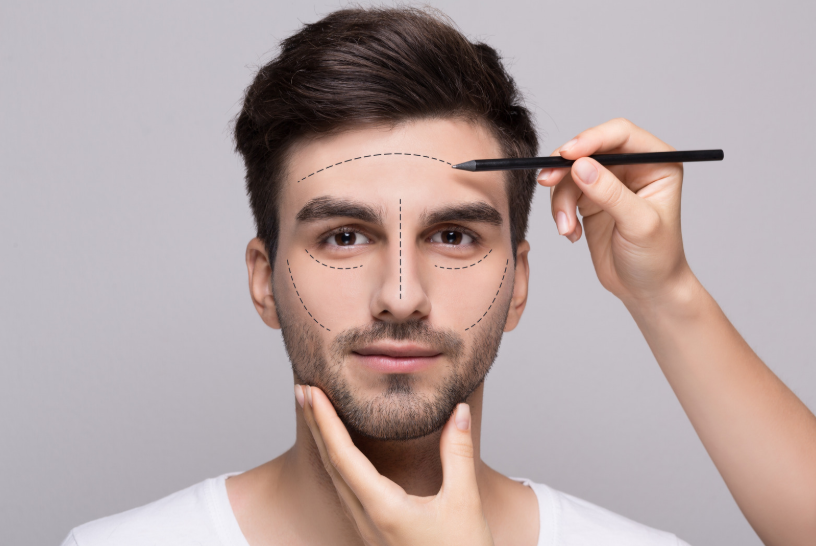
With your four numbers written down, compare them against the following shape descriptions. Look for the pattern that best fits your proportions rather than a perfect match. Most people have one dominant shape with traits from a second.
Oval: Face length is noticeably greater than cheekbone width, roughly in a 1.5 to 1 ratio. Cheekbones are the widest point. The forehead and jaw are similar in width, with the jaw slightly narrower. The jawline curves gently rather than angling sharply. Oval is the most balanced face shape, and it is often described as the easiest to work with because cuts rarely fight its proportions.
Round: Face length and cheekbone width are close to equal. Cheekbones are the widest point. The forehead and jaw are also similar in width. The key distinguishing feature from square is that the jawline is soft and curved rather than defined and angular. Round faces have a full, even quality that benefits from cuts that introduce vertical length and diagonal lines.
Square: All four measurements are close in value, or the jaw is nearly as wide as the cheekbones. The jawline is the defining feature here: it is strong, horizontal, and angular rather than rounded. If your jawline measurement is nearly equal to your cheekbone measurement and your jaw has visible definition, you likely have a square shape.
Heart: Forehead is the widest measurement. Cheekbones are slightly narrower, and the jaw is the narrowest point. The chin is often pointed or narrow. Heart-shaped faces tend to have a pronounced hairline or a widow’s peak. The widest point of the face is at or above the temples rather than at the cheekbones.
Diamond: Cheekbones are significantly the widest measurement. The forehead is narrow, the jaw is narrow, and the chin is often pointed. The face length is relatively long. Diamond is sometimes confused with oval, but the narrower forehead and more prominent cheekbones set it apart. If your cheekbone measurement stands out noticeably from all your other numbers, diamond is a strong candidate.
Oblong or Rectangle: Face length is the largest measurement by a clear margin. Forehead, cheekbone, and jaw widths are all similar to each other. The sides of the face read as relatively straight rather than curved. The jawline may be softly squared or rounded. Oblong is often confused with oval, but the longer proportions and straighter sides are the distinguishing factors.
What to Do When You Fall Between Two Shapes
Most people do not land cleanly in one category, and that is completely normal. Human faces are not geometric templates. You might have the cheekbone measurement of a diamond face but the jaw width of a heart. You might measure square on paper but have a jawline that curves more like a round face in person.
When this happens, the most useful approach is to identify which of the two candidates your face looks like from the front-facing photo, setting the numbers aside for a moment. The visual impression is the one your haircut will interact with. If your face reads as square to other people because of the strength of your jawline, cuts designed for square faces will tend to read correctly even if your cheekbones measure slightly wider than your jaw.
This is also where a consultation becomes particularly valuable. An experienced stylist reads proportions differently from a measuring tape. They look at how features fall in three dimensions, how the jaw angles and the cheekbones project, where the face carries weight, and how that will interact with a specific cut once styled. If you have done the measurements and the photo and still land between two shapes, bring your results to your consultation. Our stylists at David Ryan Salon work through exactly this kind of nuance every day and can confirm your shape and adjust the cut recommendation accordingly.
How Your Face Shape Translates to a Haircut
Once you know your shape, you have a framework that simplifies every haircut decision. The core principle is balance: good cuts add visual weight where the face needs width and remove it where the face is already dominant. Face shape tells you where those points are.
For oval faces, the goal is to preserve balance rather than disrupt it. Almost any cut works, but extremely long straight hair with no layers can pull an oval face downward and make it appear longer than it is. The layered lob and long loose waves with face-framing pieces are the cuts our stylists recommend most consistently for this shape.
Round faces benefit from cuts that create vertical length and introduce diagonal lines. Long layers past the collarbone, side parts, and side-swept or curtain bangs all elongate the face. Blunt bobs that end at the chin tend to amplify the roundness by adding horizontal weight at the widest point of the face.
Square faces are best served by cuts that soften the jaw rather than frame it. Layers that begin at the cheekbone and flow downward, curtain bangs, and lengths that fall past the jaw all reduce the angular impression. Anything that ends directly at the jawline, or that lies flat and sleek against the face, tends to read as harder rather than softer.
Heart-shaped faces need volume at or below the jawline to offset the wider forehead. The shoulder-length lob is a reliable choice because it adds width exactly where the face tapers. Deep side parts help break up the forehead’s width asymmetrically. Very long, straight hair with a center part tends to draw the eye straight down from a wide forehead to a narrow chin, emphasizing the contrast.
Diamond faces benefit from cuts that add width at both the forehead and jaw to balance the prominent cheekbones. Soft waves through the full length, side-swept bangs, and chin-length or collarbone-length bobs all work toward this goal. Very sleek styles that lie flat tend to make the cheekbones appear even more prominent by removing any softness around them.
Oblong faces benefit from shoulder-length cuts and horizontal movement. Curtain bangs reduce the forehead’s contribution to the face’s overall length, and waves or texture through the mid-lengths add width that offsets the vertical proportion. Very long, straight hair worn without texture makes an oblong face appear even longer.
Face Shape Is Only Part of the Equation
Knowing your face shape gives you a strong starting point, but a great haircut also accounts for your hair’s texture, density, and natural behavior. These factors change how the same cut actually performs once you leave the salon.
Fine hair tends to lie flat and may not hold the volume that certain cuts rely on to achieve their intended shape. A cut that softens a square jaw through layered waves needs enough density to hold those waves without going limp by midday. Thick hair presents the opposite challenge: a cut that depends on soft movement may sit too heavy and lose its shape unless the interior weight is removed correctly.
Curly and wavy hair also behaves differently wet and dry, which means your stylist needs to account for how much your natural texture will contract the finished length and how it will fall once it is fully dry. A collarbone-length cut on straight hair may land at the shoulder on hair with a tighter wave pattern once it dries.
The complement to the right cut is the right color. Lighter tones draw the eye toward wherever they are placed, which means hair color services can be used to reinforce what the cut is already doing. Brightening the hairline and jaw on a diamond face, for example, draws attention toward those narrower zones and reduces the visual dominance of the cheekbones. Balayage and dimensional color work especially well in this context because the placement can be tailored to your specific proportions.
Your lifestyle is the final variable. A cut that looks exceptional when styled may not suit someone who air-dries every morning and rarely uses heat tools. Our hair cuts and treatments are always calibrated against how much time and effort you realistically want to spend each day, so the cut works for your life and not just for the salon photos.
One Factor Specific to Flower Mound and Trophy Club: The North Texas Climate

Clients in the Flower Mound and Trophy Club area deal with a range of conditions that affect how haircuts perform in the real world. North Texas summers are hot and humid. The humidity does not sit at a consistent level the way it does in coastal climates but spikes sharply, which can cause styles that hold perfectly in a controlled environment to soften or frizz within an hour of stepping outside.
For clients with wavy or curly hair, this means cuts that depend on precise sleek lines may need more styling effort to maintain than they would elsewhere. For clients with fine straight hair, the added moisture in the air during summer actually provides a little extra body that can work in favor of cuts that rely on movement.
Winter in Denton County swings the other direction. Cold, dry air pulls moisture from the hair, which leaves color-treated and chemically processed hair more prone to brittleness and static. Cuts with blunt, clean lines hold better in dry conditions than heavily layered cuts, which can separate and appear thin when the hair loses moisture.
Our stylists factor these climate patterns into cut and treatment recommendations. A client who moves here from a more temperate region may find that cuts they wore easily before need minor adjustments to perform the same way in North Texas. These are the kinds of observations that only come from working with local clients year-round, and they are part of what makes a consultation at our Flower Mound salon or Trophy Club salon a different experience from looking up a recommendation online.
Frequently Asked Questions
Can I determine my face shape without a measuring tape?
Yes. A front-facing photo with your hair pulled completely back is often enough to make a confident identification. Look at where the face is widest, where it tapers, and whether it reads as longer than it is wide or roughly equal. The measuring tape removes ambiguity when you land between two shapes, but most people can narrow it to one or two candidates from the photo alone.
What if I have features from two different face shapes?
That is common. Most people sit between categories rather than fitting one perfectly. In those cases, focus on the proportional feature that is most visually dominant. If your jaw is angular but your cheekbones are not especially wide, a square-influenced approach may serve you better than an oval one even if your measurements do not land cleanly in either camp. Your stylist can sort this out during a consultation.
Does my face shape change over time?
It can change subtly. Weight gain or loss affects how prominent the jaw and cheeks appear. Natural aging shifts the distribution of volume in the face, sometimes softening a strong jaw or making the cheekbones appear more prominent. It is worth reassessing your face shape every few years rather than relying on a determination you made a decade ago, particularly if your body or weight has changed.
Is there a face shape that is hardest to cut for?
No face shape is inherently harder to cut for than another. Each shape has a clear set of principles that guide the cut toward balance. If past haircuts have not worked well, it is more likely that the cuts were not chosen with your shape in mind rather than that your shape is difficult. A proper consultation before the cut addresses this.
Should I tell my stylist my face shape, or let them determine it?
Both approaches work. Coming in with your face shape already identified helps the consultation move faster and gives you more context for understanding the recommendations your stylist makes. At the same time, your stylist will always verify the shape in person before committing to a direction, so there is no pressure to have it figured out perfectly before you arrive.
Does face shape affect hair color decisions as well as cuts?
It does. Color placement can reinforce what the cut is doing structurally. Lighter tones draw the eye toward where they are placed, so a colorist can use highlights or balayage to add apparent width at the hairline or jaw, or to draw attention away from a dominant feature like prominent cheekbones. The best color consultations account for face shape alongside hair condition and personal preference.
How often should I update my haircut once I know my face shape?
The face shape itself does not change the maintenance schedule. Most precision cuts benefit from a trim every six to eight weeks to keep the shape clean. What changes is that once your cut is designed with your face shape in mind, it tends to grow out more gracefully because the proportional decisions built into the cut remain flattering even as the length increases.
About David Ryan Salon
David Ryan Salon has served clients across North DFW from our locations in Flower Mound and Trophy Club since 2010. Founded by master stylist and educator David Ryan, our team specializes in precision cuts, custom color, extensions, and transformative treatments. Every appointment starts with a thorough consultation because we know that the right cut begins long before the scissors do. David Ryan Salon is here to help you find the style that works with your face, your hair, and your life.
Book Your Appointment at David Ryan Salon
Whether you have your face shape figured out or want help identifying it from scratch, our team at David Ryan Salon is ready. We serve clients throughout the Flower Mound and Trophy Club area from two full-service locations. Call us at (972) 691-0022 or book online through our website to schedule a consultation or your next cut and color appointment.