
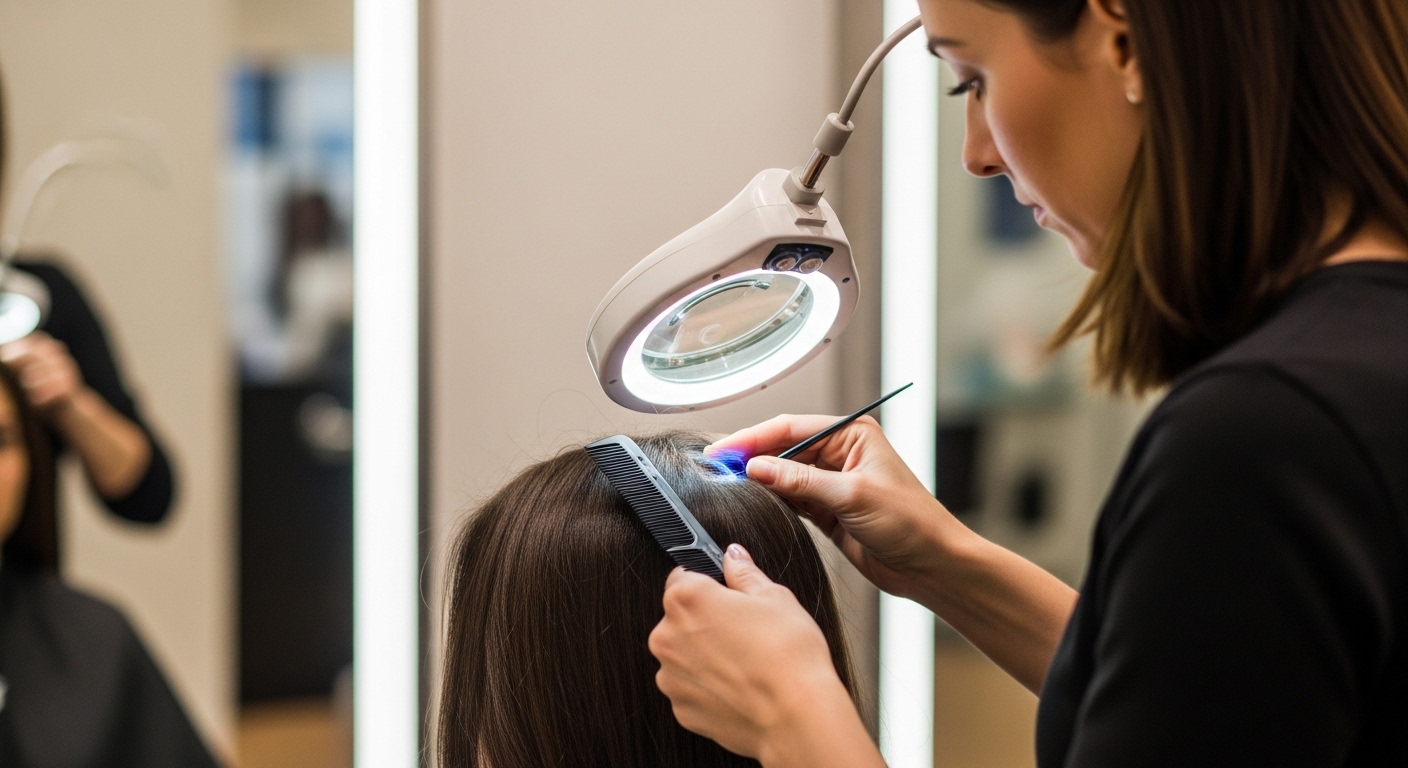
David Ryan Salon provides scalp health consultations and treatment services for clients throughout Trophy Club and the surrounding region. Our stylists analyze your scalp condition, hair density, and product buildup before recommending a targeted care protocol tailored to your specific needs. A healthy scalp is the foundation of strong hair growth, and small adjustments to your routine often produce noticeable results within weeks.
Ready for a professional scalp assessment? Call (972) 691-0022 to schedule your consultation today.
Key Takeaways
- Scalp health directly affects hair growth, shedding rates, and the overall condition of every strand on your head.
- Product buildup, infrequent cleansing, and harsh styling habits are the most common causes of scalp irritation we see in clients.
- A weekly clarifying treatment combined with targeted scalp massage improves circulation and supports stronger hair growth.
- Professional analysis identifies underlying issues that over-the-counter products often fail to address.
Scalp condition determines hair condition. The strand you see is the output; the scalp is the production line. When the production environment fails, follicle function degrades long before you notice thinning, dullness, or shedding at the sink.
Your scalp is living skin tissue. It produces sebum to lubricate the hair shaft, sheds corneocytes through normal cell turnover, and houses each follicle deep in the dermal layer. Product buildup, dehydration, and seborrheic conditions disrupt that ecosystem and compromise follicle output before visible symptoms appear. By the time a client books a consultation about texture changes or breakage, the underlying scalp issue has usually been present for months.
Our stylists work with clients across Trophy Club and the surrounding North Texas region, and we see how local climate, hard water, and seasonal humidity swings shape scalp behavior. In the sections ahead, we cover the biology of a healthy scalp, the regional factors that affect it, and the targeted protocols our team recommends. You will also see how scalp condition connects to routine cuts and treatments we perform daily at the chair.
Why Your Scalp Is the Foundation of Healthy Hair
Every strand you see starts as a living structure below the surface. The visible hair shaft is dead keratin, but its diameter, shine, elasticity, and porosity were all determined at the follicle. That means scalp health sets the ceiling for how your hair performs above the skin.
Follicle Biology and Why It Matters
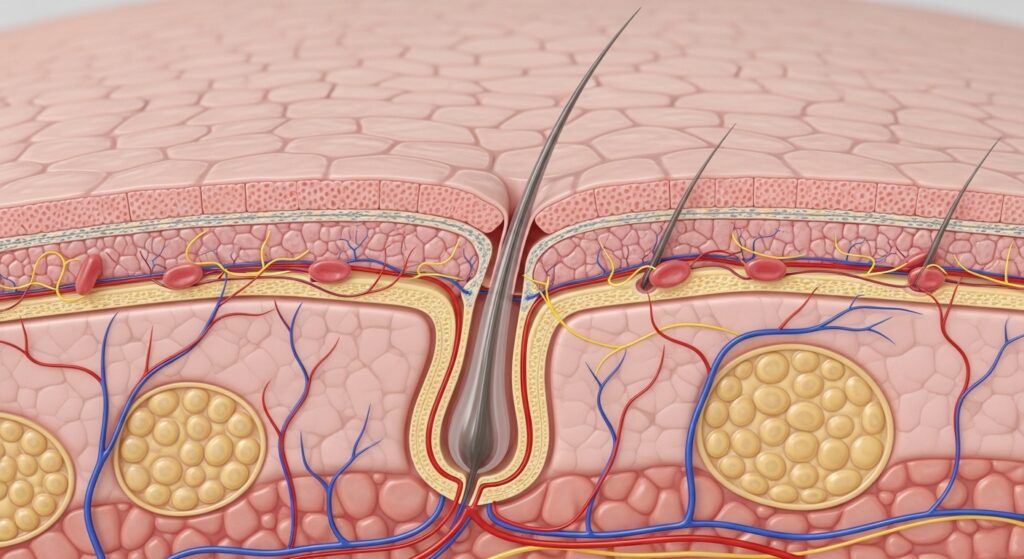
Each follicle functions as an independent mini-organ embedded in the dermis, complete with its own blood supply, nerve endings, and sebaceous gland. Follicles cycle through three distinct phases: anagen, the active growth phase lasting two to seven years; catagen, a brief transitional phase of two to three weeks; and telogen, a resting phase of three to four months before the strand sheds and a new one begins.
A chronically compromised scalp shortens the anagen phase. When growth windows shrink, strands shed before reaching full length, and overall density declines over time. This is why a targeted scalp treatment for hair growth focuses on the environment around the follicle, not the strand itself. Our stylists include a thorough scalp assessment as part of every cut and treatment service so we can identify early signs of follicular stress.
The Scalp-Hair Strand Connection
Sebaceous glands secrete sebum that coats the scalp and maintains a slightly acidic pH between 4.5 and 5.5. This acid mantle protects against bacterial overgrowth and keeps the cuticle layer flat and reflective. Alkaline shampoos, chlorinated water, and the hard water common across the region swell the cuticle, disrupt that pH balance, and inflame the follicular opening.
The downstream effects are predictable. A dehydrated scalp produces brittle, high-porosity strands that absorb moisture unevenly and lose it just as fast. An inflamed scalp yields uneven shaft diameter, dull surface reflection, and premature shedding well before telogen would naturally begin. Restoring moisture at the root level is foundational, which is why we often recommend deep conditioning protocols to support moisture retention from the scalp outward.
Scalp health, in short, is not cosmetic maintenance. It is the biological precondition for every strand you grow.
Common Scalp Conditions Our Stylists Identify at the Chair
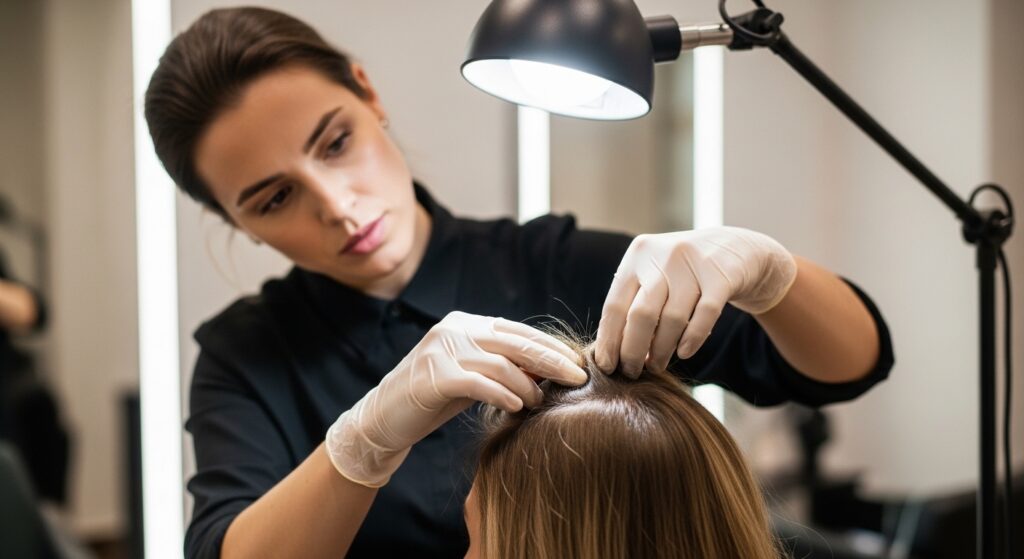
Sectioning hair for color or cuts gives our stylists a direct view of scalp condition before any service begins. We see consistent patterns among clients across Trophy Club, from flaking and redness to tenderness that signals deeper issues. Identifying the condition correctly determines whether we proceed with chemical services, recommend a clarifying protocol, or refer out to a dermatologist.
Seborrheic Dermatitis vs. Dry Scalp
Two flaking patterns appear at the chair, and they require different responses. Dry scalp produces small, white, powdery flakes caused by insufficient moisture and reduced lipid production, often worsened by winter heating and over-washing. Effective dry scalp remedies focus on gentle cleansing, hydrating masks, and limiting hot-tool exposure near the roots.
Seborrheic dermatitis presents differently: larger yellowish, oily flakes accompanied by redness, itching, and sometimes a waxy texture. This condition is driven by Malassezia yeast overgrowth and inflammation. We recommend a dermatologist evaluation before any color, lightening, or smoothing service, since active inflammation compromises the scalp barrier and amplifies chemical sensitivity.
Product Buildup and Its Effect on Follicle Function
Buildup accumulates faster than most clients realize. Silicone-heavy conditioners, dry shampoo aerosols, and styling residues coat the scalp, raise local pH, and impede natural sebum flow. The resulting anaerobic environment around the follicle disrupts the microbiome and can contribute to dullness, odor, and slowed regrowth.
Our protocol uses a clarifying, pH-balanced sulfate shampoo paired with an in-salon scalp treatment to dissolve residue without stripping the cuticle. For clients on regular color or bond-repair regimens, we coordinate clarifying timing with bond-builder treatments like the system explained in our overview of how Olaplex works on the hair structure.
Stress-Related Scalp Sensitivity and Hair Thinning
Yes, stress can directly cause hair thinning. Elevated cortisol pushes follicles prematurely into the resting phase, triggering telogen effluvium. Clients often report scalp tenderness, tingling, or burning two to three months before visible shedding appears at the part line or temples.
Scalp health and hair loss are tightly linked, so our approach addresses both. We pair a targeted scalp protocol with precision haircuts that restore perceived density while the underlying cycle recovers. Most clients see measurable improvement within one full growth cycle.
Concerned about flaking, tenderness, or shedding? Call our team at (972) 691-0022 for a scalp assessment.
How Trophy Club’s Climate Affects Your Scalp Year-Round
North Texas sits in USDA Hardiness Zone 8a, with summer highs above 100°F, humidity swings between 40 and 70 percent, and moderate to very hard municipal water. Each of these factors shifts your scalp environment across the calendar year. Clients across Trophy Club and the surrounding Denton County area report predictable seasonal patterns we address through targeted protocol adjustments.
Summer Heat and Sweat-Induced Scalp Stress
Sustained heat and humidity elevate sebum production and raise scalp surface pH through sweat residue, which irritates follicles and accelerates flaking. Clients who exercise outdoors or spend long hours in chlorinated pools see the fastest buildup.
Our healthy scalp tips for summer center on a pH-balanced shampoo formulated for oily scalps and thorough post-exercise rinsing, even on non-wash days. A cool-water final rinse helps close the cuticle and reduce surface inflammation.
Winter Dryness and Indoor Heating Effects
Your scalp gets drier in Texas winters because ambient humidity drops sharply and forced-air heating pulls moisture from the skin, with dehydration peaking in January and February. The mild outdoor temperatures mask how aggressive the indoor environment actually is.
For dry scalp remedies during these months, we recommend reducing shampoo frequency to two or three times per week and applying jojoba or argan oil sparingly to the scalp surface, not the lengths. A weekly hydrating mask supports your styling routine, which our stylists can pair with the right finishing approach through our hair styling services.
Hard Water in Denton County and Mineral Buildup
Denton County water typically tests between 200 and 300+ mg/L calcium carbonate, which classifies as moderately to very hard. Calcium and magnesium deposit on the scalp and hair shaft, dulling tone, stiffening texture, and accelerating color fade for clients invested in our hair color services.
We recommend a clarifying shampoo every two to three weeks for most clients, and a chelating shampoo formulated to bind metallic ions for anyone with color-treated or highlighted hair. This systematic removal of mineral residue protects both scalp condition and color longevity between salon visits.
A Systematic Scalp Care Routine Our Stylists Recommend
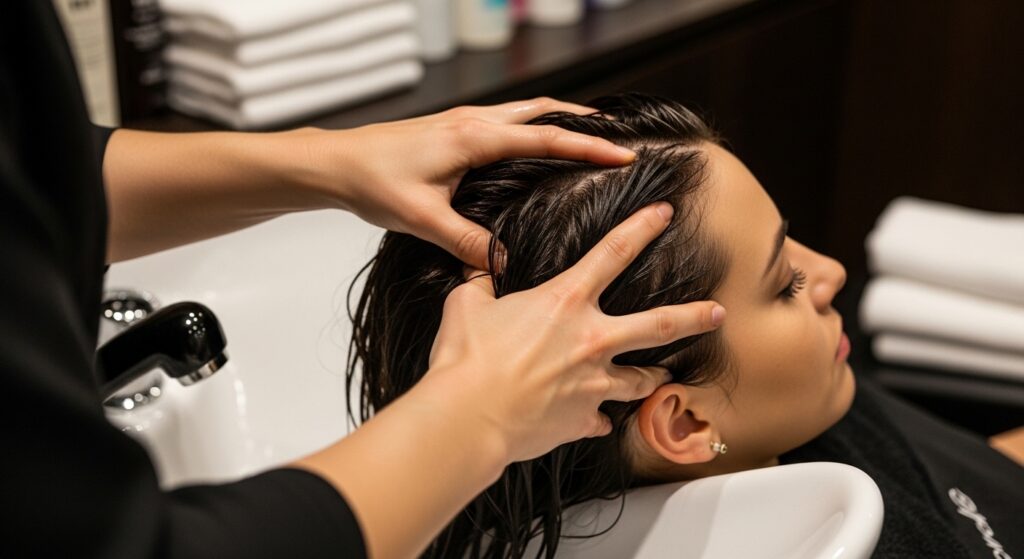
A consistent scalp care routine is the difference between reactive treatment and steady, long-term hair quality. Our stylists build each protocol around your scalp type, your color history, and the climate pressures clients face across Trophy Club and the surrounding region.
Cleansing Technique and Frequency
Wash frequency depends on sebum output. Oily scalps benefit from cleansing every other day, while normal-to-dry scalps do well with two to three washes per week. Over-washing strips the lipid barrier; under-washing allows sebum and product residue to accumulate at the follicle.
Technique matters as much as frequency. Apply shampoo to the scalp, not the lengths, and work the product in with fingertip pads using small circular motions across four quadrants: frontal, parietal, occipital, and temporal. Use warm water rather than hot, and rinse for a minimum of 60 seconds. Color-treated and balayage clients should stay on sulfate-free formulas, with a clarifying sulfate shampoo rotated in every two to three weeks if buildup is a concern.
Exfoliation and Targeted Scalp Treatments
Yes, you can exfoliate your scalp at home safely if you match the method to your condition. Physical exfoliation uses a fine sugar or sea salt scrub applied pre-shampoo once weekly to lift flakes and product residue. Chemical exfoliation relies on salicylic acid at 0.5 to 2 percent or glycolic acid at 3 to 5 percent to dissolve keratin buildup around the follicle.
Skip physical exfoliation entirely on active dermatitis or broken skin. For clients who want a deeper reset, our in-salon professional scalp treatments pair targeted exfoliation with conditioning protocols calibrated to your scalp assessment.
Protective Practices Between Visits
Texas sun is unforgiving, and Trophy Club summers expose the scalp to prolonged UV across pool days, patios, and sidelines. Use a UV-protective hair mist on the part line, or wear a wide-brim hat during peak hours. Never sleep with wet hair: the alkaline, damp environment favors fungal overgrowth and weakens the cuticle.
Clients who wear hair extensions need extra attention at the attachment points to prevent traction stress on the follicle. Gentle cleansing at the base, careful drying, and scheduled maintenance visits protect both the install and the natural hair underneath.
If you recognized your own scalp in one of the patterns covered here, book a consultation with our team. We will assess your scalp at the chair, recommend a routine tailored to your hair type and the local climate, and pair it with the cut or color service that best supports the result. Call (972) 691-0022 to schedule.
Frequently Asked Questions
How Long Does It Take to See Improvement in Scalp Health After Starting a New Routine?
Most clients notice a reduction in flaking, irritation, or excess oil within two to four weeks of consistently following a targeted scalp care routine. Full improvement, including stronger hair growth at the root, typically takes eight to twelve weeks because that aligns with the natural hair growth cycle. David Ryan Salon stylists often recommend a follow-up appointment at the six-week mark to assess progress and adjust any products if needed.
Can Color or Chemical Treatments Worsen an Already Sensitive Scalp?
Yes, chemical services like color, bleach, and relaxers can temporarily increase scalp sensitivity, especially if the scalp barrier is already compromised. David Ryan Salon stylists perform a brief scalp assessment before any chemical service to determine whether a barrier treatment or timing adjustment is appropriate. Waiting until active irritation or open sores have healed before booking a chemical service is strongly advised.
Is It Safe to Use a Scalp Massager or Brush Every Day?
Daily use of a soft silicone scalp massager is generally safe and can actually support circulation and product distribution when used gently. Stiff bristle brushes, however, can cause micro-abrasions on an already inflamed or flaky scalp and should be limited to two or three times per week at most. If you experience increased redness or tenderness after use, scale back frequency and mention it at your next David Ryan Salon visit.
Do Scalp Issues Affect Hair Color Results or How Long Color Lasts?
Excess sebum, mineral deposits from hard water, and product buildup can all create a barrier on the scalp and hair shaft that prevents color from processing evenly or adhering properly. Clients dealing with significant buildup often find their color fades faster or develops a brassy tone sooner than expected. A clarifying or chelating treatment performed at David Ryan Salon before a color appointment can make a noticeable difference in both vibrancy and longevity.
What Is the Difference Between a Dandruff Shampoo and a Scalp Treatment?
Dandruff shampoos typically contain active ingredients like zinc pyrithione or selenium sulfide that target fungal overgrowth and are meant to be rinsed out relatively quickly. Scalp treatments, on the other hand, are formulated to stay on the scalp longer, often featuring peptides, salicylic acid, or botanical extracts that address dryness, inflammation, or follicle congestion more deeply. Many clients benefit from using both, rotating a medicated shampoo with a nourishing leave-on treatment depending on their scalp condition.
Should I Avoid Dry Shampoo if I Am Concerned About Scalp Health?
Dry shampoo is fine for occasional use, but relying on it more than two or three times per week can lead to significant product and starch buildup that clogs follicles over time. This buildup can mimic or worsen conditions like scalp acne and diffuse thinning, especially in a humid climate like Trophy Club where sweat compounds the issue. If you regularly use dry shampoo, David Ryan Salon stylists recommend incorporating a weekly clarifying cleanse to keep the follicle environment clear.
At What Point Should I See a Dermatologist Instead of, or in Addition to, My Stylist?
Persistent symptoms like intense itching, bleeding, oozing, significant hair loss in patches, or scalp conditions that do not respond to salon-recommended products after eight weeks warrant a visit to a board-certified dermatologist. Stylists at David Ryan Salon are trained to recognize signs that go beyond typical scalp maintenance, and the team will refer clients to a dermatologist when symptoms suggest a medical diagnosis is needed. Working with both professionals simultaneously is often the most effective approach for conditions like psoriasis or alopecia areata.
Ready to Get Started with David Ryan Salon?
Call (972) 691-0022 to speak with our team directly.