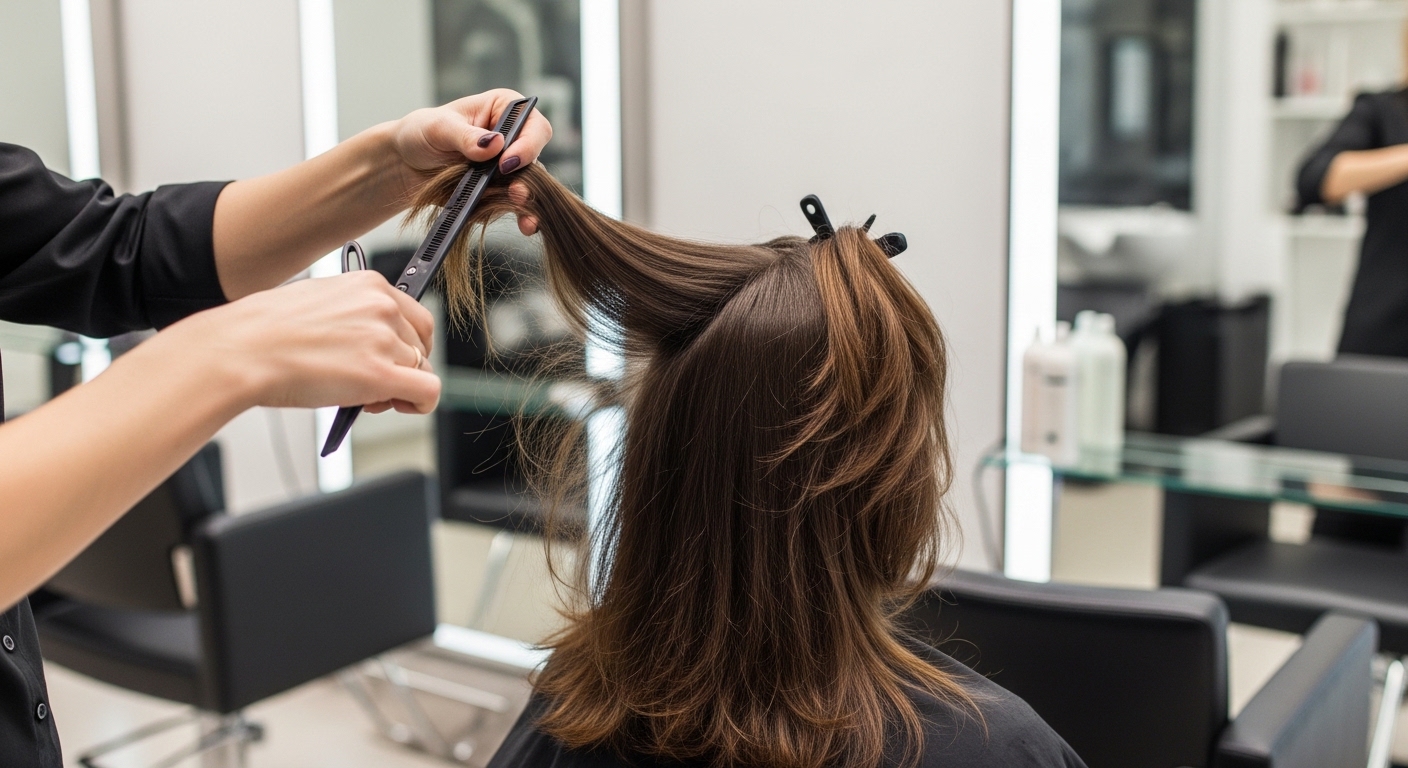
Thick hair carries weight, volume, and density that demand a different cutting approach. Our stylists at David Ryan Salon specialize in haircuts for thick hair, using systematic weight removal and precision layering to control bulk while preserving movement. Clients throughout Flower Mound and Trophy Club rely on our team to analyze density, texture, and growth patterns before a single section is cut, producing styles that feel lighter, sit cleaner, and require less daily effort.
Ready for a cut tailored to your density and texture? Call (972) 691-0022 to schedule with our team.
Key Takeaways
- The best haircuts for thick hair use internal layering and point cutting to remove weight without sacrificing shape or length.
- Long layers, shoulder-length layered cuts, and structured short hairstyles all suit dense hair when cut to the correct density.
- Face shape, natural texture, and growth pattern determine which thick-hair cut will hold its form between visits.
- A skilled consultation matters more than a reference photo, since two clients with thick hair rarely need the same technique.
Thick hair carries weight. By midafternoon in Flower Mound, you feel it at the nape, at the temples, along the part where humidity pushes the cuticle open and adds another half-inch of volume you did not ask for. Summer brings frizz from June through August. Winter brings static and dry ends. The cut you walked out with in March behaves like a different head of hair by July.
Thick hair is an asset. The wrong cut turns that asset into bulk: a triangular silhouette, ends that flip instead of fall, a blowout that takes 45 minutes and collapses by lunch. The right cut removes weight in the exact places it accumulates and leaves density where you want movement. Our stylists approach thick hair cuts in Flower Mound as a structural problem first, then a styling one, and our haircuts and hair treatments are built around that sequence.
This guide covers four areas: structural cuts that work with thick hair, layering technique and where weight should be removed, common mistakes to avoid, and how to describe what you want when you sit in the chair. By the end, you will know which haircuts for thick hair suit your texture and how to ask for them.
Why Thick Hair Requires a Different Structural Approach
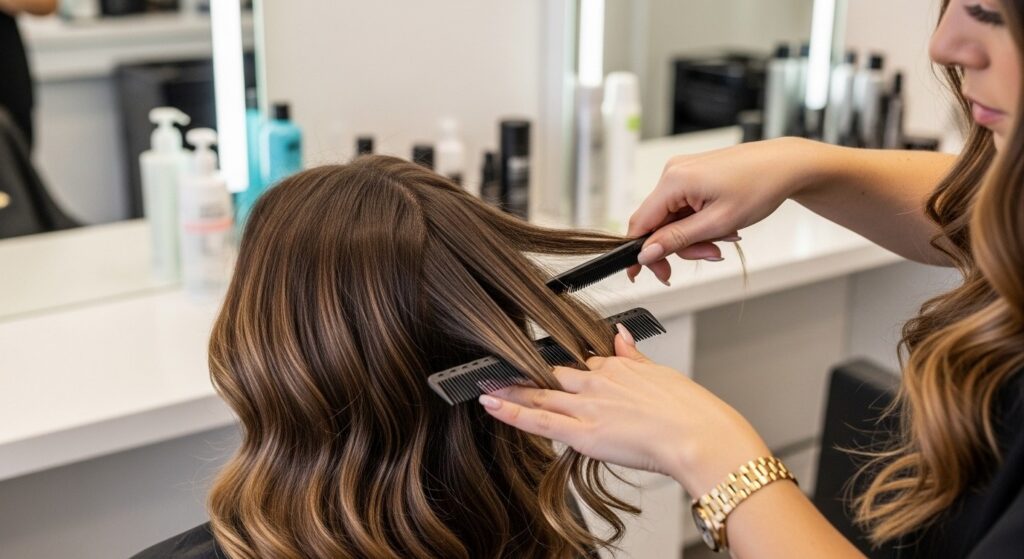
The word “thick” describes two different conditions that require opposite cutting strategies. Before any scissor work begins, our stylists conduct a haircut and color consultation that evaluates density, individual strand diameter, growth pattern, and how the hair behaves once dry.
High-Density vs. Coarse-Textured Hair
High-density hair carries a large number of strands per square centimeter, even when each individual strand is fine. The volume comes from quantity, not from the strand itself. Coarse-textured hair is the opposite condition, where each strand has a larger diameter and more internal rigidity, so even a moderate amount of hair feels heavy and wide.
The distinction matters because the two respond to different techniques. High-density hair improves when interior bulk is removed through thinning shears, point cutting, or slide cutting that thins the inner column without disturbing the outline. Coarse-textured hair responds better to careful perimeter shaping and controlled layering, since aggressive internal thinning can trigger frizz and unpredictable expansion as the shorter pieces push outward.
How Weight Distribution Determines Shape
Silhouette in any haircut is controlled by the weight line, the point where the heaviest concentration of hair sits along the length. Place that line incorrectly on thick hair and the result is the familiar mushroom shape: a collapsed crown sitting above a flared, triangular perimeter that widens at the jaw or shoulders.
Elevation, meaning the angle at which each section is held away from the head during cutting, redirects that weight. Higher elevation through the crown removes density where the hair tends to pack flat, while lower elevation along the perimeter preserves a clean outline. Strategic layer placement, usually long internal layers that stop well above the ends, keeps movement without sacrificing the weight that holds the shape down.
This is why two clients asking for the “same” haircut often need entirely different approaches. One has 200,000 fine strands; the other has 90,000 coarse ones. Our stylists identify which version of thick hair you actually have before recommending a length, layer pattern, or finishing technique.
The Best Haircut Styles for Thick Hair, by Length
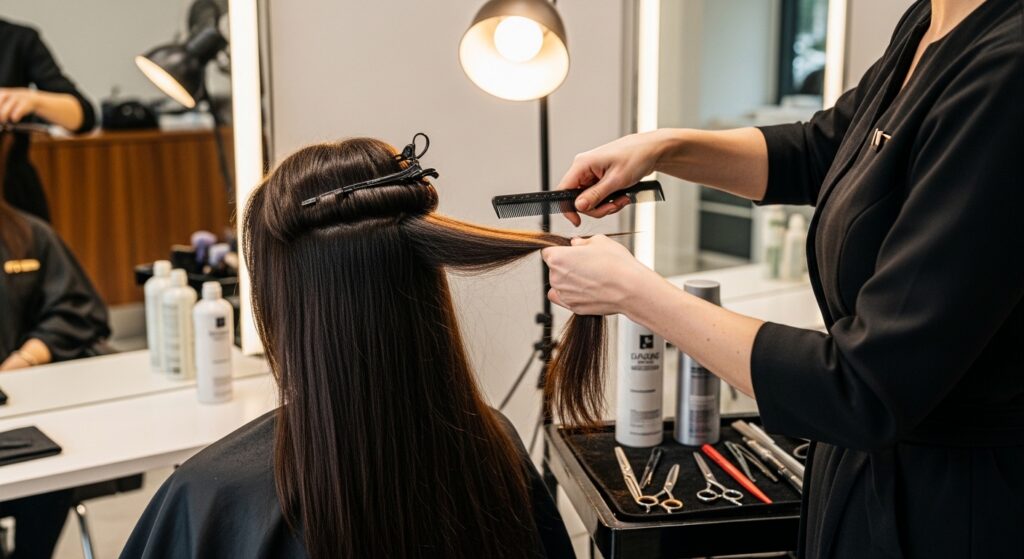
The best haircuts for thick hair share one principle: weight gets removed from the interior, not the perimeter. Length is a personal preference, but density dictates how that length must be cut. Below are the three length categories we cut most often for clients across Flower Mound and Trophy Club, with the technical reasoning behind each.
Long Layers
Long layers thick hair clients ask for the most because the style preserves length while solving the pyramid problem. We place the shortest interior layer at the chin or collarbone, then graduate downward. This removes interior weight without thinning the exterior silhouette, so the hair drapes rather than expands.
Technique matters more than placement. Razor cutting or slide-cutting distributes weight gradually across each section, while blunt shears leave hard internal shelves that flip out as the hair dries. Slide-cut layers also extend blowout life and pair well with smoothing services from our hair styling services, including Brazilian blowout treatments that reduce daily drying time.
Shoulder-Length Cuts and the Lob
The shoulder-length layered haircut is the most requested style among our Flower Mound clients with thick hair, and there is a structural reason for that. Shoulder length sits at the natural balance point where weight is heavy enough to pull the cuticle flat but short enough to avoid the triangular spread that long thick hair develops by midafternoon.
The lob, cut just below the chin, works for high-density hair because the shorter exterior reduces crown collapse and forces volume outward instead of downward. It does not work for every client. Fine-but-dense hair and strong cowlicks at the nape can push a lob into a wedge shape. We point-cut the perimeter to soften the line, because cutting straight across thick hair creates a blunt edge that reads heavier than the actual density.
Short Hairstyles for Thick Hair
Short hairstyles for thick hair, including the pixie with disconnected top layers, the textured bob, and the graduated bob, require phased weight removal across two or three appointments. The biggest mistake stylists make is removing too much density in a single session. Thick hair springs up unpredictably as internal weight disappears, and the shape that looks controlled wet often lifts an inch once dry.
Our stylists conduct a staged approach: establish the shape, let the hair settle for four to six weeks, then refine. This protects the silhouette and prevents the cut from outgrowing into an unmanageable phase.
Not sure which length suits your density? Book a consultation with our cutting team at (972) 691-0022.
Layering Techniques That Remove Weight Without Removing Shape
Weight removal is the technical core of cutting dense hair. Done well, the silhouette stays clean while the interior feels lighter and dries faster. Done poorly, the cut frays at the perimeter, frizzes through the mid-lengths, and loses its shape within two weeks.
Internal Thinning vs. Surface Layering
Internal thinning removes mid-shaft and interior bulk without altering the exterior line. Our stylists apply this technique through the occipital bone and nape, where density tends to concentrate on clients across Trophy Club and the surrounding region. The outer silhouette stays intact while the cut sits closer to the head.
Surface layering works on the outer layer to create visible movement and dimension. Most thick hair needs both approaches: internal thinning at the dense zones, and surface layers through the top and front to build shape around the face. Our team evaluates density quadrant by quadrant before any thinning tool touches the hair, which prevents over-removal and the frizz that follows.
Razor Cutting, Slide Cutting, and Point Cutting
Each cutting method produces a different finish, and the right one depends on your hair’s texture, growth pattern, and styling routine. Our stylists select among these techniques during the consultation portion of our haircut and treatment services:
- Razor cutting bevels the ends and softens weight along the strand. Best for clients with straight to wavy hair who want a lived-in finish.
- Slide cutting moves the shears along the hair shaft to redistribute weight gradually. This works well on coarse, dense hair that needs internal release without visible layer steps.
- Point cutting softens the perimeter and removes blunt weight at the ends. Useful for refining bobs and lobs on thick hair.
- Thinning shears are used sparingly on coarse hair, and never near the perimeter, where notching causes flyaways.
If your hair frizzes after a haircut, the likely cause is over-thinning or thinning shears used too close to the ends. Ask for slide cutting or razor work instead. Signs of over-thinning include uneven drying, short broken pieces sticking up through the top layer, and a perimeter that looks wispy rather than defined.
How Color and Treatments Interact with Thick Hair Cuts
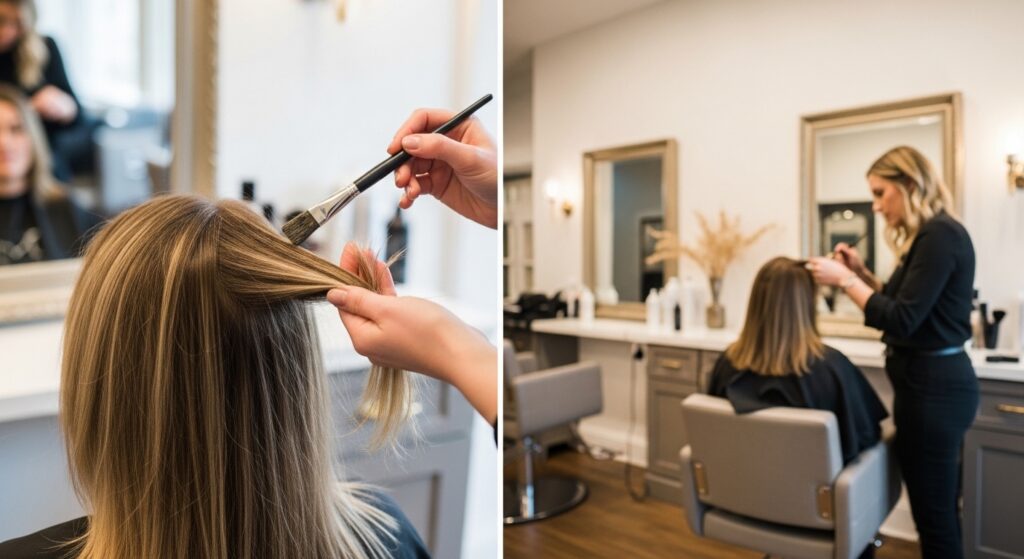
Color and smoothing services are not separate from the cut. They change how thick hair sits, moves, and reflects light, which directly affects whether a cut reads as heavy or balanced. Pairing the right hair color services with your structural shape is one of the fastest ways to make dense hair feel lighter without removing more weight.
Balayage and Highlights to Visually Reduce Density
Yes, color makes thick hair look less heavy. Variation in tone optically breaks up the solid mass that dark, high-density hair creates, so the same cut looks lighter before a single extra strand is removed. Our colorists often place dimensions from mid-shaft to ends to draw the eye downward and soften the perimeter.
The difference between techniques matters. Traditional foil highlights produce defined, striped dimensions that suit clients who want contrast and structure. Hand-painted balayage services create diffused transitions that blend into thick hair more naturally, especially around layered ends and face-framing pieces.
Brazilian Blowouts and Keratin Treatments
Brazilian blowouts seal the cuticle and reduce friction between strands, which helps thick hair hold its cut shape between appointments. Keratin treatments cut blow-dry time significantly and reduce daily heat exposure, which preserves the integrity of a precision cut over months.
In Trophy Club and across the region, summer dew points from June through August push thick hair to expand and frizz regardless of styling effort. A smoothing service is a practical decision in this climate, not a cosmetic one. Our team can walk you through hair styling and treatment options that match your texture and routine.
If you are ready to stop fighting your hair and start working with it, book a consultation with our stylists at David Ryan Salon by calling (972) 691-0022. We will evaluate your density, texture, and growth pattern, then build a cut and treatment plan around how your hair actually behaves between visits.
Frequently Asked Questions
How Often Should People With Thick Hair Get a Haircut?
Most clients with thick hair benefit from a trim every six to eight weeks, since dense strands tend to lose shape and become heavy faster than finer hair types. Waiting longer than ten weeks can cause the cut to lose its structure entirely, making styling much harder at home. The stylists at David Ryan Salon can recommend a personalized maintenance schedule based on your specific texture and the cut you choose.
Will Getting Layers Make Thick Hair Frizzy?
This is a common concern, but layers do not cause frizz on their own. Frizz usually results from the cutting technique used, specifically surface layers that expose too much cuticle to humidity. At David Ryan Salon, stylists use internal layering and point cutting methods that remove bulk without disrupting the outer surface of the hair, which helps keep frizz under control.
Can Thick Hair Be Straightened Easily After a Professional Haircut?
A well-structured cut significantly reduces the time and effort needed to straighten thick hair at home. When weight is removed correctly during the cut, the hair lies flatter and responds more evenly to heat tools. Clients who add a keratin treatment to their service at David Ryan Salon often report cutting their blow-dry time in half compared to before the treatment.
Is Thinning Shears the Same as the Thinning Techniques My Stylist Uses?
Thinning shears are just one tool in a broader set of techniques for managing density. Slide cutting, razor cutting, and internal point cutting each produce different results and are chosen based on your hair’s texture, porosity, and the target style. Over-reliance on thinning shears alone can leave blunt, choppy sections inside the hair, which is why the team at David Ryan Salon selects techniques based on your individual hair profile rather than using a one-size-fits-all approach.
What Should I Expect at My First Appointment for a Thick Hair Consultation?
At David Ryan Salon, a first appointment typically begins with a short consultation where your stylist assesses your hair density, texture, and natural growth patterns before recommending any cut. You can bring photos of styles you like, but your stylist will also explain which elements of those looks will translate well to your specific hair type. The goal is to set realistic expectations and build a cut that works with your natural texture rather than against it.
Does Thick Hair Require Special Products After a Haircut to Maintain the Shape?
Yes, using the right products after a cut makes a significant difference in how long the style holds between appointments. Thick hair generally benefits from lightweight smoothing creams or serums rather than heavy pomades, which can weigh the hair down and collapse the shape. Your stylist at David Ryan Salon can recommend specific products suited to your cut and whether your hair leans more toward coarse, high-density, or both.
Can People With Thick Hair Pull Off a Blunt Cut, or Will It Look Too Heavy?
A blunt cut can absolutely work for thick hair, but it requires careful consideration of length and face shape. At chin length or shorter, a blunt cut on thick hair can appear boxy without internal weight removal to support the shape. A skilled stylist at David Ryan Salon can build in subtle internal layers that preserve the clean blunt perimeter while preventing the heavy, triangular silhouette that many thick-haired clients want to avoid.
Ready to Get Started with David Ryan Salon?
Call (972) 691-0022 to speak with our team directly.